
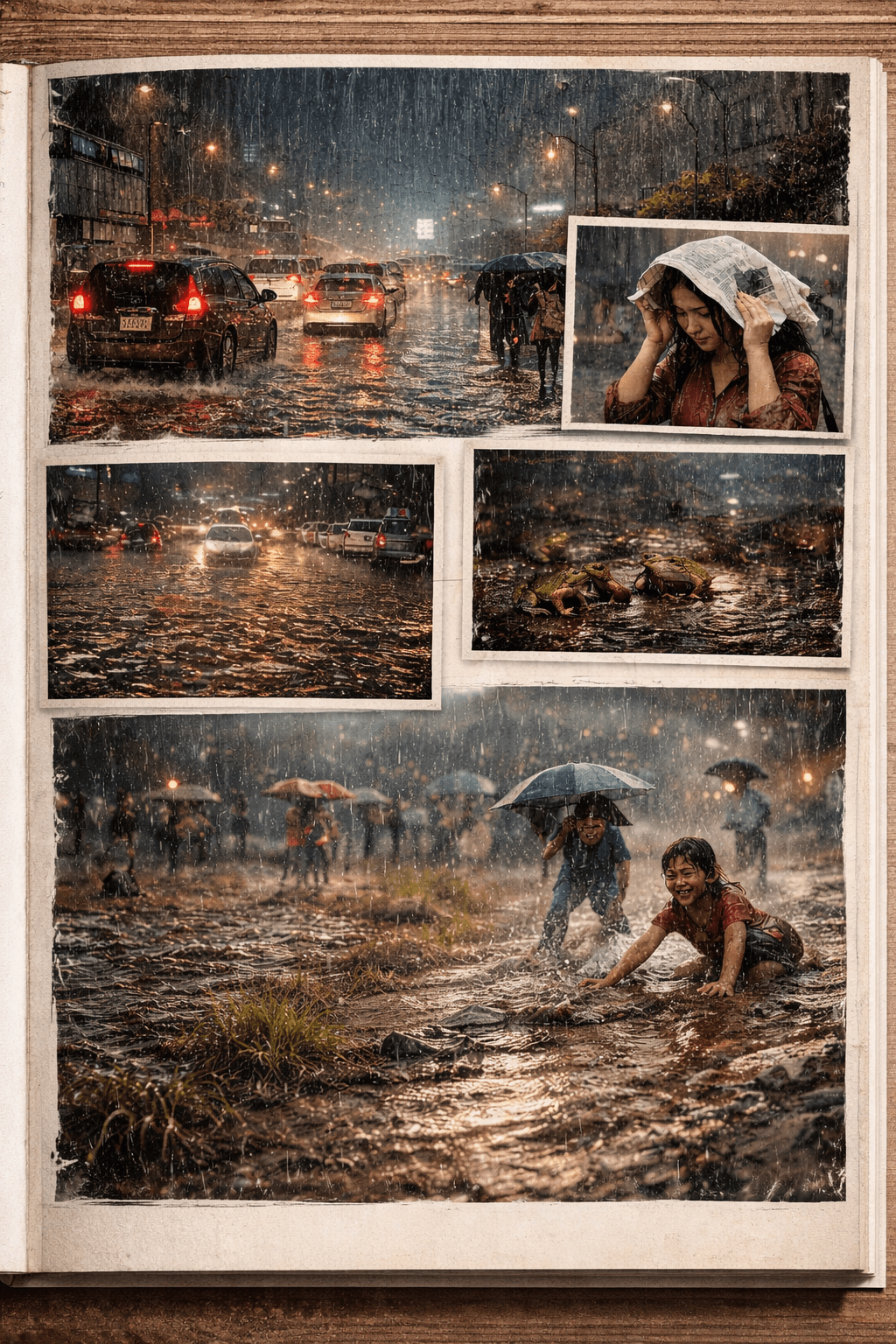
When rain begins to fall in the city, everything changes.
The first drops are usually gentle tapping softly on rooftops, whispering against windows, settling the dust. But within minutes, the rhythm grows heavier, louder, commanding attention. The sky darkens, the wind gathers courage and suddenly the city is no longer in control.
Traffic builds almost instantly. Cars crawl bumper to bumper, headlights reflecting off the shiny black roads like scattered stars. What would normally be a twenty-minute drive stretches into an hour of honking horns and impatient sighs. Drivers lean forward over steering wheels as if that will somehow move the line faster. Motorbikes squeeze into narrow spaces. Pedestrians calculate risky crossings. The rain does not negotiate; it simply pours.
Then come the floods.
Roads that were dry and dependable only moments ago begin to disappear under sheets of brown water. Drainage systems surrender. Potholes hide beneath murky puddles, waiting to surprise the unlucky. Shoes get soaked. Trousers cling uncomfortably. Businesses near low-lying streets hurriedly sweep water away from their doorways, fighting a losing battle against nature’s steady persistence.
And when night falls, another transformation takes place.
From the soaked grass and waterlogged trenches, frogs emerge. Their croaking fills the damp air in a chorus that feels almost ancient a reminder that while the city struggles, nature quietly celebrates. The frogs seem unbothered by traffic jams or flooded streets. To them, the rain is not an inconvenience but an invitation.
Humans, however, react differently.
You see people running for shelter under shop awnings, into office lobbies, beneath bus stops already crowded with strangers pressed shoulder to shoulder. Bags are raised over heads. Jackets become shields. And in particular, many women instinctively protect their hair wrapping it, covering it, shielding it from the moisture that threatens hours of careful styling. The rain becomes something to escape, something to outsmart.
Yet it wasn’t always this way.
There was a time when rain meant freedom.
When we were children, dark clouds were not warnings but promises. The first heavy drops were a signal to run outside, not inside. We would splash through puddles without hesitation, clothes clinging, laughter louder than thunder. The roads were not obstacles; they were playgrounds. Mud became art. Slippery ground became a challenge. We built tiny rivers with our hands and sent paper boats on daring journeys.
And the mud slides those glorious, messy adventures. A small slope and enough rainwater were all we needed. We would slide down again and again, uncaring about stains, soaked shoes or scolding waiting at home. Our joy was pure, uncomplicated. Rain was not a disruption to our schedule; it was the event of the day.
Somewhere between childhood and adulthood, the rain changed meaning.
Now it delays meetings, ruins hairstyles, soaks important documents, damages roads and clogs traffic. We check weather forecasts with concern instead of excitement. We calculate inconvenience instead of possibility.
But if you pause for a moment if you watch the frogs sing in the darkness, or notice a child jumping boldly into a puddle while adults rush past, you might feel it. That memory. That forgotten thrill.
The rain has not changed.
The city has not changed.
Perhaps only we have.
And maybe, just maybe, the next time it rains, we can allow ourselves even briefly to step into a puddle without fear, to feel the cool drops on our skin and to remember the simple joy of dancing under an open sky.

 Sure Media Magazine
Leave a comment