
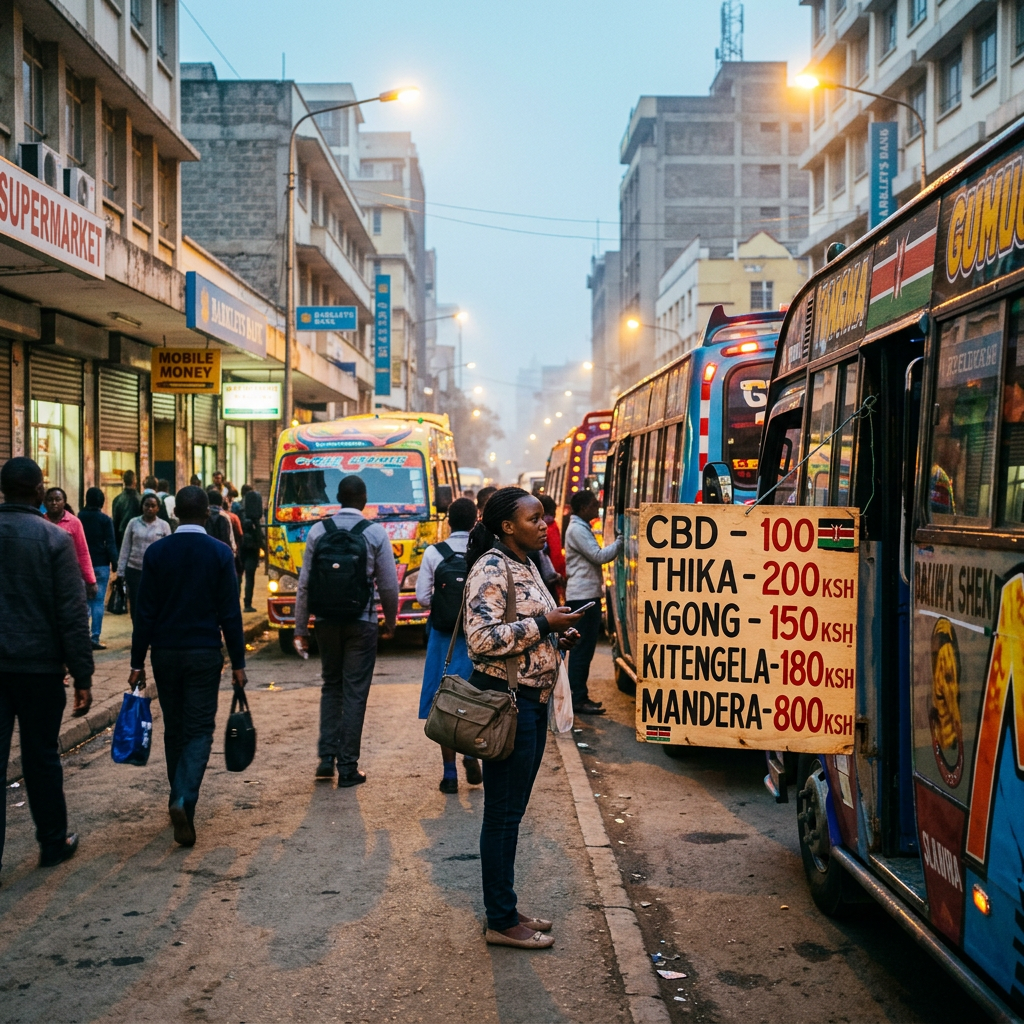
In a city that never sleeps and prices that never stop climbing, KSh 1,000 has quietly become a daily tightrope walk for millions of Nairobians. What once felt like decent pocket money for a young professional, student, or hustler now evaporates faster than morning mist over the Ngong Hills.
This isn’t dramatic poverty porn. It’s the quiet compression: skipping a meal here, walking an extra stage there, choosing between data and dinner. For many, KSh 1,000 is no longer a buffer — it’s the entire day’s battlefield.
So, what does it actually buy in May 2026?
Transport: The First Brutal Cut
Your budget often bleeds before you even reach the office.
Matatu fares into the CBD currently range from KSh 50–100 for shorter routes (Eastlands, South B/C, nearby Westlands) to KSh 100–200 for longer hauls like Rongai, Kitengela, or Ruiru during peak hours. Recent fuel-driven hikes have pushed some routes up by as much as 25% in recent months.
A typical commuter from Ongata Rongai or Kasarani can easily spend KSh 300–450 round trip. That’s nearly half your KSh 1,000 gone on transport alone. Ride-hailing (Uber/Bolt) during peak? Often double or more. Many now walk the last two stages or squeeze into overloaded matatus just to protect that fragile note.
Food: The Heart of the Squeeze
This is where the pain hits hardest.
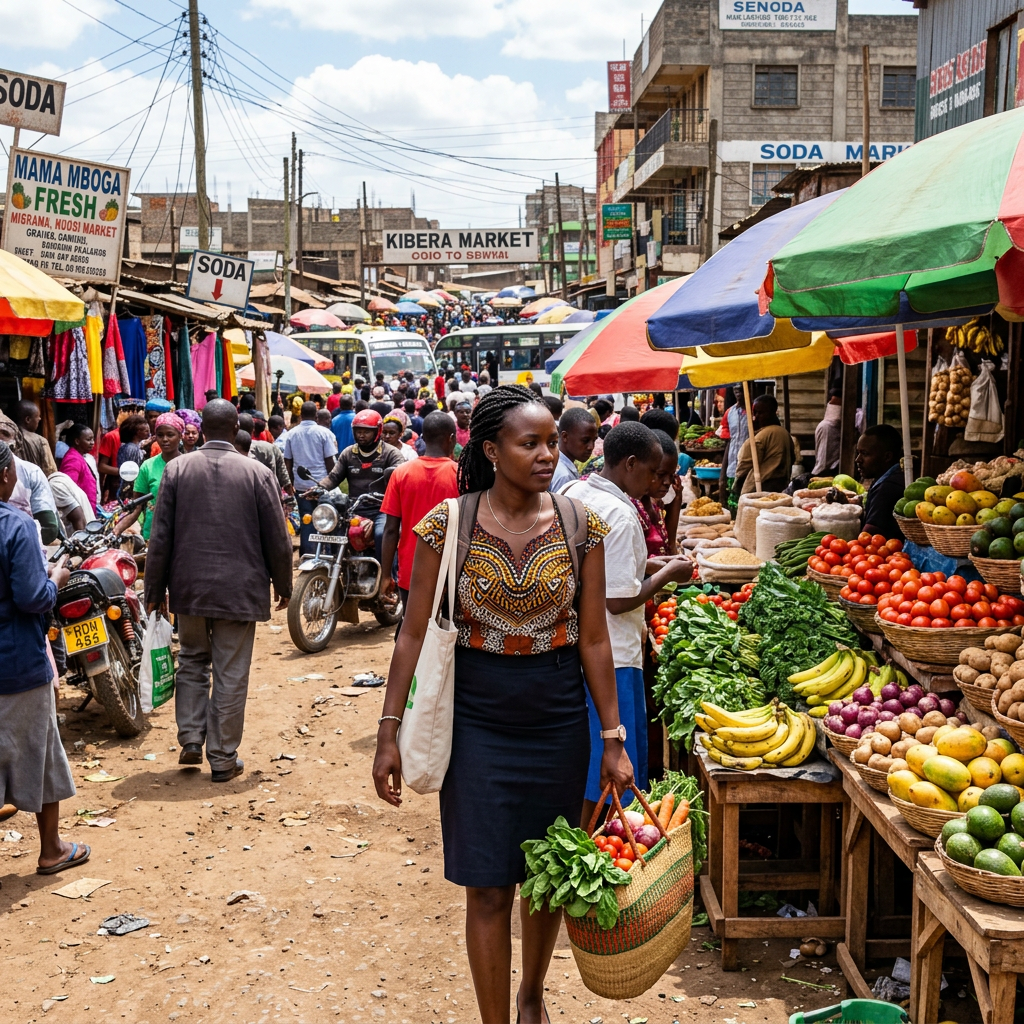
A basic decent meal — ugali + sukuma wiki + a bit of meat or beans, rice and stew, or chapati and ndengu — now easily costs KSh 150–350 depending on the joint and portion. Street-level options hover around KSh 200–250 for something filling; sit-down spots push higher.
With KSh 1,000 for the full day, you’re looking at perhaps two solid meals and a hurried breakfast or tea. Supermarket runs for basics have become surgical:
- 1 litre milk: ~KSh 70–115
- Loaf of bread: ~KSh 60–110
- Dozen eggs: ~KSh 200–300
- 1 litre cooking oil: ~KSh 290–380
- Vegetables (tomatoes, onions, sukuma): KSh 150–300 for modest quantities
A modest home basket — milk, bread, a few eggs, oil, and greens — can swallow KSh 600–900 quickly, leaving little margin. Families and individuals increasingly buy micro-portions from dukas because cashflow rules everything.
Data and Connectivity: The Non-Negotiable Tax
In 2026 Nairobi, staying offline is not an option. Job alerts, M-PESA sends, freelance gigs, emails, and family coordination all demand data.
Daily or short bundles eat into the budget relentlessly. Popular options include small daily/weekly packs from Safaricom and Airtel (hundreds of MBs for KSh 20–100), but heavy users juggling multiple apps watch KSh 100–300 disappear fast. Add airtime for calls and M-PESA fees, and connectivity quietly claims another 10–25% of your note.
The New Normal: Micro-Budgeting and Lifestyle Compression
Nairobians have become masters of granular survival:
- Buying ¼ litre of oil or half a loaf because that’s what cash allows today.
- Prioritizing liquidity over bulk savings.
- Calculating every single transaction in real time.
Young professionals earning “decent” salaries report living paycheck-to-paycheck, sharing flats, delaying savings or investments, and running side hustles just to create breathing room. Students and informal workers face even tighter margins.
According to recent cost-of-living trackers, a single person’s monthly expenses in Nairobi (excluding rent) hover around KSh 65,000–73,000. With average salaries lagging, KSh 1,000 days are the reality for far too many.
The Deeper Story
KSh 1,000 still technically buys food, movement, and connection. What it no longer reliably purchases is peace of mind, flexibility, or a margin for error. One unexpected boda ride, a medical need, or a family request, and the day collapses.
This erosion reflects Kenya’s broader urban reality: rising food and energy costs, fuel volatility, and wages that refuse to keep pace. It breeds ingenuity — incredible hustles, creative budgeting, tight communities — but also constant low-grade anxiety.
The Bottom Line
In Nairobi right now, KSh 1,000 is not nothing. But it is no longer enough to feel secure. It is the bare minimum to keep moving, eating, and staying plugged in — with almost zero room for life to happen.
For millions, every single day is a masterclass in stretching the shilling. The real question isn’t what KSh 1,000 buys anymore. It’s how long Nairobians can keep making it stretch before something has to give.


 Sure Media Magazine
Leave a comment