
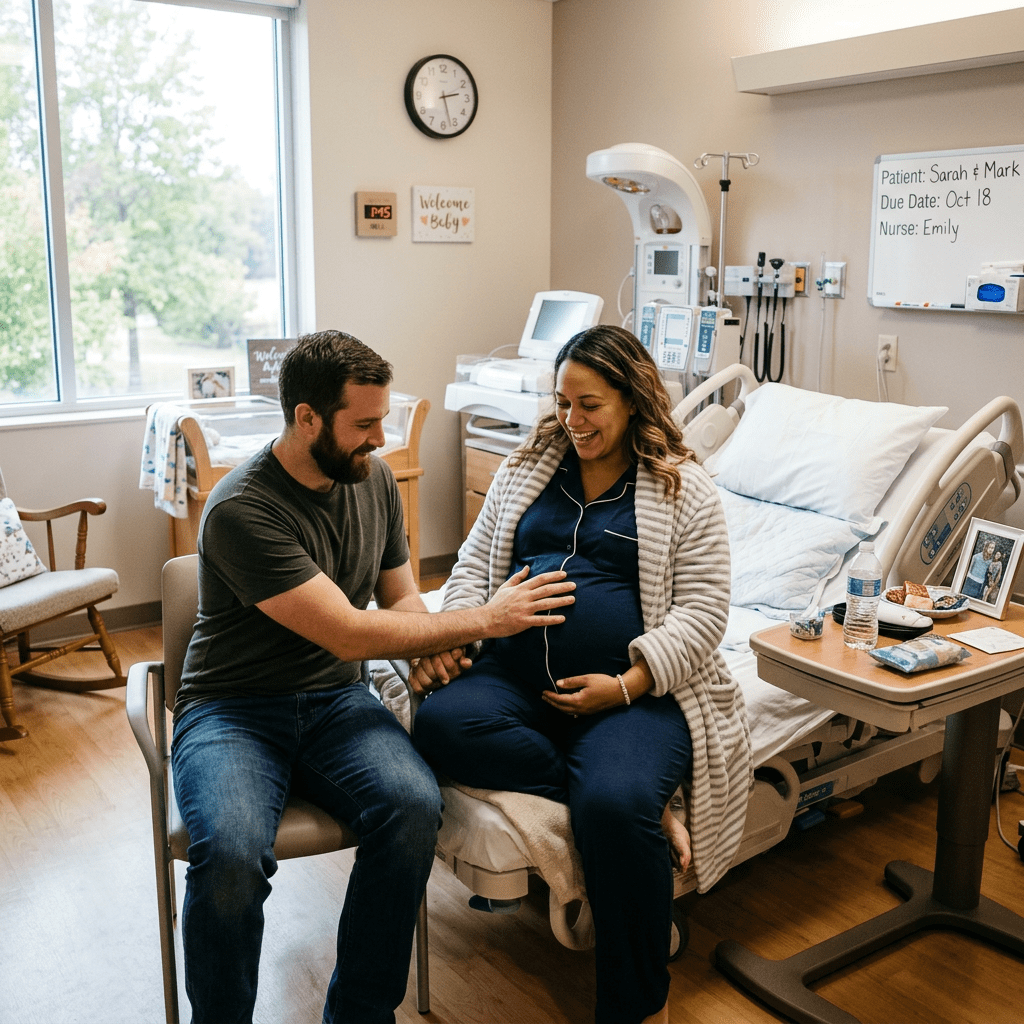
As global C-section rates climb from 7% to 21%, health experts are asking a difficult question: are all these surgeries truly necessary?
In operating rooms across the world, a quiet transformation has taken place in childbirth.
What was once considered an emergency procedure has become increasingly routine. Cesarean section—commonly known as C-section or CS—is now one of the most frequently performed surgeries globally.
In 1990, only around 7% of births worldwide were delivered through C-section. Today, that figure stands at approximately 21%, according to global health estimates. In some countries and private healthcare systems, the numbers are far higher, with rates exceeding 50%.
The rise has sparked concern among doctors, researchers, public health experts, and policymakers. Not because C-sections are inherently dangerous—they save millions of lives every year—but because the growing dependence on surgical birth may reflect deeper problems within modern healthcare systems.
This is not a story about blaming mothers or condemning medicine. It is about understanding why the world is moving steadily toward surgery in childbirth—and what that means for families, healthcare systems, and future policy.
A Life-Saving Procedure Becoming Routine
A Cesarean section is a surgical procedure used to deliver a baby through incisions made in the abdomen and uterus. In emergencies, it can mean the difference between life and death.
For decades, it has protected mothers experiencing obstructed labor, severe bleeding, fetal distress, or dangerous pregnancy complications.
But many experts now warn that the procedure is increasingly being used beyond medical necessity.
The World Health Organization has repeatedly emphasized that C-sections are most effective when medically justified. Beyond a certain level, rising rates do not necessarily improve maternal or newborn survival.
Yet globally, the numbers continue to rise.
Why?
The answer lies in a combination of medical realities, social change, economic incentives, legal pressure, and shifting attitudes toward childbirth itself.
When Labor Does Not Progress
The single leading medical cause behind many C-sections is labor dystocia, commonly called “failure to progress.”
This occurs when labor becomes unusually long or stops advancing altogether. For first-time mothers, labor lasting more than 20 hours may trigger concern. For women who have previously given birth, the threshold is often around 14 hours.
In these moments, doctors face difficult decisions.
Waiting longer may increase the risk of infection, exhaustion, or fetal distress. Acting quickly through surgery may appear safer and more controlled.
As modern medicine has become increasingly risk-averse, many hospitals now intervene earlier than in previous generations.
Part of this change comes from advances in fetal monitoring and emergency care. But part of it also reflects the realities of overstretched health systems, time pressure, and fear of complications.
The result is a lower tolerance for prolonged labor and a growing reliance on surgical delivery.
The Changing Face of Motherhood
The global rise in maternal age is another major factor.
Across many countries, women are having children later in life due to education, career development, financial pressures, and changing social norms.
But pregnancy at older ages often comes with increased medical complexity.
Conditions such as high blood pressure, gestational diabetes, obesity, and cardiovascular complications are more common among older mothers. These conditions raise the likelihood of interventions during labor and delivery.
At the same time, global obesity rates have increased dramatically. Obesity is associated with longer labor, reduced effectiveness of contractions, and higher rates of emergency complications.
In many ways, the increase in C-sections reflects broader demographic and public health trends—not simply changes inside delivery rooms.
The Influence of Healthcare Systems
Not all causes are medical.
Healthcare systems themselves may be contributing to the rise.
A vaginal delivery can take many unpredictable hours. A C-section is faster, scheduled, and easier to manage within busy hospital systems. In overcrowded facilities or private institutions driven by efficiency targets, scheduled surgeries can reduce staffing strain and simplify logistics.
There is also the growing influence of defensive medicine.
In many countries, childbirth-related lawsuits have become increasingly common. Doctors and hospitals often operate under intense legal pressure to avoid adverse outcomes.
As a result, some practitioners may choose surgery earlier to minimize the possibility of litigation if complications occur during labor.
For policymakers, this raises an uncomfortable question:
Are healthcare systems unintentionally encouraging intervention over patience?
When Financial Incentives Shape Birth Decisions
In private healthcare systems, economics cannot be ignored.
C-sections frequently generate higher professional fees and hospital revenues than vaginal births. Surgical deliveries involve operating theaters, anesthesia, specialist teams, and longer billing structures.
This creates a financial environment where intervention may become more attractive institutionally.
Few healthcare providers openly acknowledge financial motivation in birth decisions. Yet multiple studies have suggested that higher C-section rates are often associated with private healthcare settings where financial incentives are stronger.
This does not mean all surgical births are unnecessary. Many are absolutely essential.
But when healthcare structures reward procedures more heavily than natural labor support, system-wide behavior can gradually shift.
For governments and regulators, the challenge is clear: healthcare financing models influence medical outcomes.
The Rise of Elective C-Sections
Another major shift is patient preference.
An increasing number of women—particularly in middle- and upper-income populations—are choosing planned C-sections even without medical necessity.
Some want to avoid labor pain. Others fear traumatic childbirth experiences or want certainty around delivery timing. For working families, scheduled births can feel more manageable and predictable.
In some societies, surgical birth has also become associated with modernity, safety, or higher social status.
At the same time, fear-based information online has changed how many women perceive vaginal birth. Stories of complications spread rapidly across social media platforms, often without medical context.
The result is a growing normalization of surgical delivery.
Yet experts caution that informed choice requires balanced information. While C-sections can reduce certain risks, they also introduce others, including infection, blood clots, longer recovery, and complications in future pregnancies.
When the Baby’s Position Makes Surgery Necessary
Not all rising C-section rates are problematic.
Improved prenatal screening has helped doctors identify dangerous delivery situations earlier than ever before.
Babies in breech position—where the feet or buttocks come first—often require surgical delivery to reduce risk. The same applies to cases of cephalopelvic disproportion (CPD), where the baby’s head may be too large to safely pass through the mother’s pelvis.
Advances in ultrasound technology and prenatal care mean these complications are detected more accurately today.
In such cases, C-sections represent medical progress—not medical excess.
The challenge for health systems is distinguishing between necessary intervention and avoidable intervention.
A Global Imbalance
Ironically, the world now faces two opposite problems at the same time.
In some countries and private hospitals, C-sections may be overused. In poorer regions, however, women still die because they cannot access surgical care when they genuinely need it.
This imbalance exposes deep inequalities in global healthcare.
For wealthier populations, the concern is excessive intervention. For vulnerable populations, the concern is lack of access altogether.
Both failures carry consequences.
This is why many global health experts argue that the conversation should move beyond simply lowering or raising C-section rates. The real goal is achieving medically appropriate care.
Not too little.
Not too much.
But the right intervention at the right time.
Why Policymakers Should Pay Attention
The rise in C-sections is not only a medical issue. It is an economic, ethical, and public policy issue.
Higher surgical birth rates increase healthcare costs, operating room demand, postnatal recovery needs, and pressure on already strained health systems. They also influence maternal health outcomes for future pregnancies.
For lawmakers and health leaders, the implications are significant.
Policies around maternal care funding, malpractice law, hospital staffing, insurance reimbursement, and patient education all shape how childbirth is managed.
If healthcare systems reward speed, convenience, and legal protection more than patient-centered labor care, surgical births may continue to rise regardless of medical necessity.
The future of childbirth may therefore depend as much on policy reform as on medicine itself.
The Question the World Must Confront
Cesarean sections save lives. Modern medicine would be unimaginable without them.
But their growing normalization raises a difficult global question:
Has the world begun treating childbirth less as a natural human process—and more as a controlled medical procedure?
The increase from 7% to 21% is not merely a statistic. It is evidence of changing priorities inside healthcare systems and societies.
Some of those changes represent progress.
Others may reflect fear, pressure, inequality, and incentives that quietly shape medical decisions.
The challenge now is not to reject C-sections.
It is to ensure that every surgical birth happens for the right reason.
Because when medicine intervenes too little, lives are lost.
But when it intervenes too quickly, something else may also be lost—the balance between necessary care and unnecessary surgery.



 Sure Media Magazine
Leave a comment