
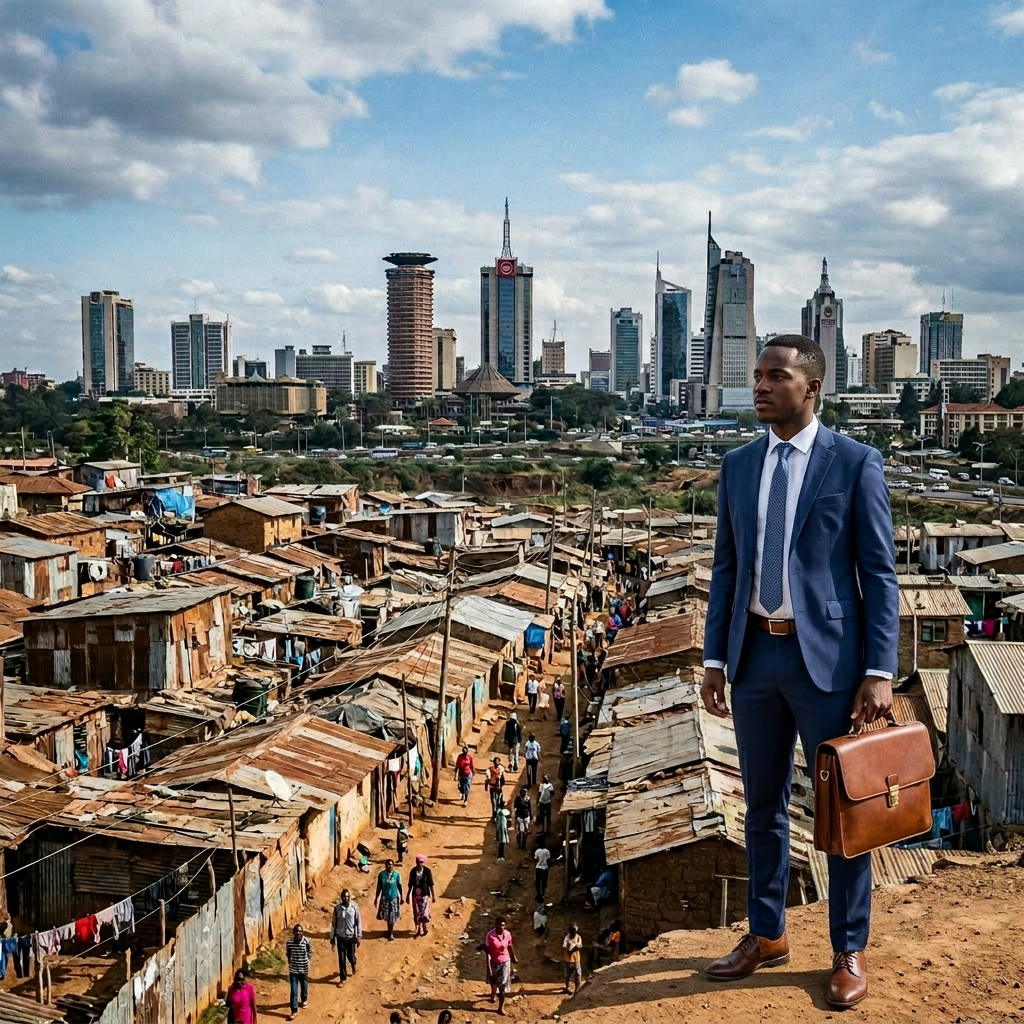
In Nairobi’s glossy high-rises and bustling streets, a quiet paradox is playing out. Young professionals wake up, log into jobs, close deals, run meetings, and send reports — yet month after month, they end up staring at near-zero balances, wondering where it all went.
This isn’t the classic story of unemployment or laziness. It’s the more frustrating reality: having a salary, working hard, and still feeling permanently broke. Salaries land and evaporate. Small expenses pile up like silent thieves. And the dream of financial stability keeps shifting further into the future.
So why does “making it” in Kenya increasingly feel like running on a treadmill that only gets faster?
The Arithmetic Gap: Costs Outrun Incomes
The numbers tell a brutal story.
Recent data shows the estimated monthly cost of living for a single person in Nairobi (excluding rent) hovers around KSh 72,000–73,000. Average net salaries, however, sit near KSh 52,000. Many entry-level and mid-tier roles in banking, teaching, admin, sales, and even some tech positions pay between KSh 35,000 and KSh 60,000.
Rent in decent areas adds another KSh 20,000–50,000 depending on location and sharing arrangements. Suddenly, the math stops working. Transport, food, data, utilities, and unexpected costs consume the rest.
This isn’t reckless spending for most. It’s structural: everyday essentials have risen faster than wages for years. Fuel prices, food inflation, and housing demand keep pushing the line higher while salary increments remain modest or stagnant. The result? Financial survival without any real stability.
The Death by a Thousand Small Cuts
Modern urban life in Kenya has become a minefield of micro-expenses that previous generations never faced at this scale:
- Daily matatu or boda fares that easily hit KSh 300–500 round trip.
- Multiple data bundles and airtime top-ups.
- M-PESA and bank transaction fees.
- Quick lunches, coffee runs, and delivery charges.
- Streaming subscriptions, gym fees, and digital payments that make spending feel frictionless.
What feels like “just KSh 200 here” or “KSh 500 there” adds up to tens of thousands by month’s end. Digital money has removed the psychological pain of handing over physical cash, making leakage almost invisible until it’s too late.
Social Pressure and Aspirational Spending
Layer on top the performance economy of Nairobi life. Young professionals feel compelled to:
- Dress sharp for the corporate or creative scene.
- Maintain an active social life (outings, birthdays, networking events).
- Own presentable gadgets and project success on social media.
This “aspirational consumption” is amplified by Instagram and TikTok highlight reels that normalize lifestyles few can actually afford. The pressure to look like you’re winning while quietly struggling is immense and expensive. Many call it “soft life” syndrome, but it often translates into debt cycles and chronic stress.
Side Hustles: Ambition or Survival?
The explosion of side hustles tells its own truth. Surveys show that anywhere from 26% to over 70% of employed young Kenyans run additional gigs : from freelancing and online sales to weekend businesses and content creation.
For some, it’s genuine entrepreneurship. For many more, it’s not about building wealth but plugging holes in the primary income. The hustle culture has blurred the line between work and life. Rest feels like a luxury few can afford, leading to burnout on top of financial fatigue.
Lifestyle Inflation: The Silent Trap
Here’s the cruel twist: even when income rises, the feeling of being broke often follows.
A promotion or better-paying job triggers upgraded spending — better housing, nicer outings, helping more family members, smarter gadgets. Responsibilities expand. Family obligations (a deeply Kenyan reality) grow. Before long, the new salary feels just as tight as the old one. Economists call this lifestyle inflation, and it keeps many young Kenyans trapped in the same emotional space despite objective progress.
The Psychological Toll
Constant financial anxiety reshapes lives in invisible ways:
- Postponing medical check-ups.
- Avoiding long-term plans like marriage, children, or investments.
- Living in permanent short-term survival mode.
- Carrying low-grade exhaustion that seeps into mental health and relationships.
Being “broke” here isn’t always about having zero shillings. It’s the chronic absence of breathing room — the inability to save meaningfully, handle emergencies, or invest in the future without panic.
The Deeper Reality
Young Kenyans aren’t failing. They’re navigating an economic environment where staying functional in a major city demands continuous spending, while building real security feels increasingly out of reach. Rising costs, modest wage growth, social expectations, and digital-era spending patterns have created a perfect storm.
The conversation needs to move beyond individual blame (“just budget better” or “stop buying avocado toast”) toward honest examination of urban economics in Kenya today.
The Bottom Line
Many young working Kenyans feel broke because, in practical terms, the system is extracting their income almost as fast as they earn it. They are not lazy or undisciplined — they are adapting, hustling, and enduring in an economy that rewards motion but punishes any pause.
Until incomes grow faster than expenses, and financial systems better support wealth-building for the average young professional, this quiet exhaustion will remain the soundtrack for an entire generation trying to build a life in one of Africa’s most dynamic and demanding cities.


 Sure Media Magazine
Leave a comment