
The Beauty And Anxiety of Life in the Great Rift Valley

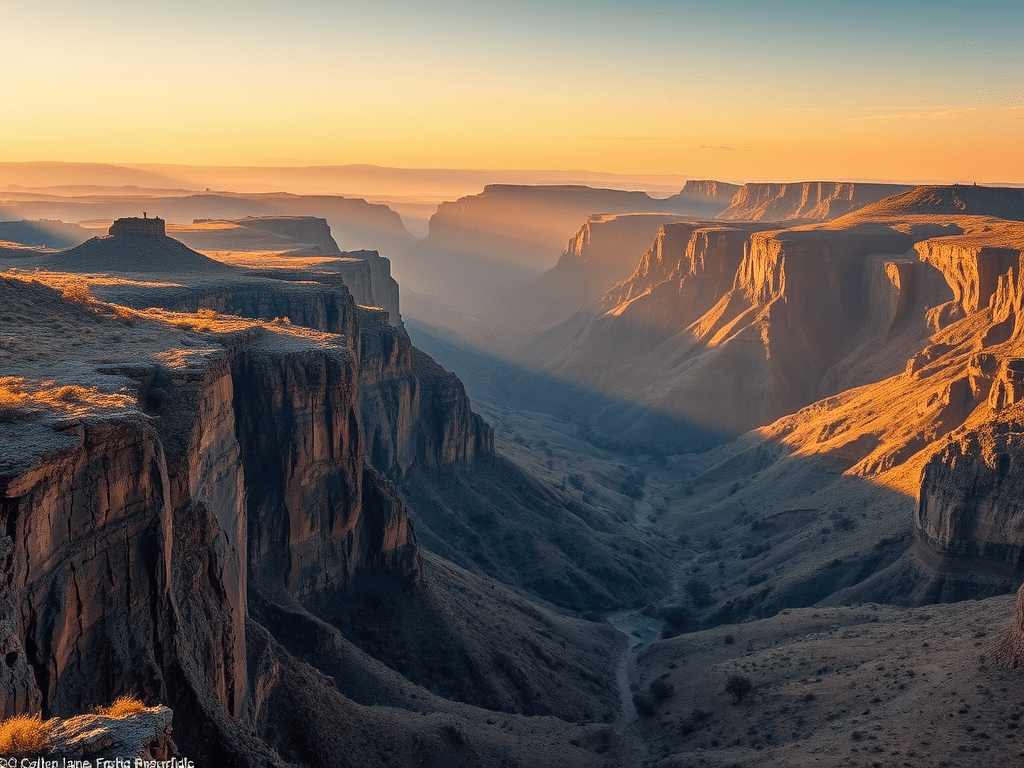
Stand at the edge of Kenya’s escarpment and look down. The land appears torn open — dramatic cliffs plunging into a vast basin dotted with lakes, volcanic cones, and long shadows of acacia trees. It is breathtaking. It is ancient. It is also unstable.
The Great Rift Valley is one of the most extraordinary geological features on Earth. Stretching from Lebanon to Mozambique, it slices through East Africa like a scar that never healed. Beneath the romance of the view lies a restless Earth slowly pulling itself apart.
To live here is to live beautifully — and precariously.
A Continent in Motion
Geologists explain the Rift Valley as a place where tectonic plates are diverging. The African continent is gradually splitting into two: the Nubian Plate and the Somali Plate. The process is slow — millimeters per year — but relentless. Over millions of years, this separation could form a new ocean.
In Kenya, this geological drama is visible and visceral. Volcanic mountains like Mount Longonot rise from the valley floor. Hot springs bubble quietly near Lake Bogoria. Occasional tremors ripple through towns, reminding residents that the ground beneath their homes is not entirely still.
The Rift is not merely scenery. It is active geology.
And yet, millions live within it.
Everyday Life on Uncertain Ground
Drive along the Nairobi–Nakuru highway and you descend sharply into the valley — a daily commute that doubles as a geological lesson. Farmers cultivate rich volcanic soil. Fishermen cast nets in Lake Naivasha. Tourists snap photographs at scenic viewpoints. Children walk to school along dusty roads framed by escarpments formed over millions of years.
The same volcanic history that threatens instability also gifts fertility. Rift soils are nutrient-rich, supporting agriculture and flower farms that feed both local markets and European export chains. The land’s danger and generosity coexist.
This paradox defines life on a fault line: risk woven into routine.
In 2018, heavy rains exposed visible cracks along parts of the Rift in Kenya, sparking alarmist headlines that “Africa is splitting apart.” Scientists were quick to clarify that continental drift unfolds over geological timescales, not human ones. Yet the imagery was powerful. A literal crack in the Earth triggers something primal in us — fear of collapse, of loss of control.
For residents, however, fear rarely dominates. Adaptation does.
The Rift as Cradle of Humanity
The irony of the Rift Valley is profound: instability gave birth to us.
Paleoanthropologists have long studied sites around Lake Turkana and Ethiopia’s Afar region, where some of the oldest hominin fossils have been discovered. Shifting landscapes, fluctuating climates, and tectonic activity may have created the ecological pressures that shaped early human evolution.
In that sense, the Rift is not just a fault line in rock — it is a fault line in time. It is where humanity learned to adapt, migrate, and innovate.
We are, in many ways, children of geological uncertainty.
Climate Change on a Geological Stage


Today, a new layer of instability overlays the ancient one: climate change.
Lakes in the Rift Valley have expanded dramatically in recent years due to extreme rainfall events, displacing communities and submerging infrastructure. Meanwhile, glaciers on Mount Kenya — visible from parts of the Rift — are retreating at alarming rates.
The ground may split over millions of years, but climate volatility is unfolding within decades.
Living on a fault line now means navigating two kinds of uncertainty: tectonic and atmospheric.
For pastoralist communities and small-scale farmers, this is not abstract science. It is crop loss, livestock death, relocation. It is rebuilding homes after floods. It is recalculating planting seasons. It is adapting traditions to new environmental rhythms.
Psychological Fault Lines
There is also a metaphorical dimension to fault lines.
To live atop shifting ground is to develop a certain psychological elasticity. Residents of the Rift Valley often display pragmatic resilience. Earthquakes are rare but possible. Floods are disruptive but survivable. The land demands respect, not panic.
This mindset mirrors a broader Kenyan adaptability — the ability to improvise, to adjust, to innovate in response to instability, whether political, economic, or environmental.
Geography shapes temperament. A society living amid tectonic tension may unconsciously cultivate flexibility.
But resilience should not romanticize vulnerability. Infrastructure planning in seismically active regions matters. Urban expansion without geological consideration increases risk. As towns grow and construction accelerates, understanding the land’s history becomes more urgent.
The Earth remembers. It keeps records in rock layers and fault lines. The question is whether we are paying attention.
Beauty as Distraction
One of the Rift Valley’s great seductions is its beauty.
Sunsets spill orange and purple across the escarpment. Flamingos gather along alkaline lakes. Safari vehicles roll across savannah plains framed by volcanic silhouettes.
The aesthetic power of the landscape can distract from its fragility. Tourism brochures rarely mention tectonic divergence. Instagram captions rarely discuss seismic monitoring.
Yet the very drama that attracts visitors is the result of geological upheaval. Beauty, here, is born of rupture.
Perhaps that is why the Rift feels emotionally resonant. It mirrors something internal: the way growth often follows disruption, the way landscapes — and lives — are shaped by pressure.
Planning for an Uncertain Future
Scientists monitor seismic activity across East Africa, studying patterns and modeling long-term changes. Policymakers must balance development with geological awareness. Infrastructure — roads, railways, dams — must account for fault systems and soil stability.
Urban planners in Rift towns face difficult questions: Where is it safe to build? How should zoning laws reflect tectonic data? How can communities prepare without inducing unnecessary alarm?
The splitting of a continent may take millions of years. But responsible planning operates on human timescales — decades, budgets, elections.
The challenge is to think geologically while living politically.
What the Fault Line Teaches Us
To live on a fault line is to accept that stability is an illusion.
The Earth beneath Kenya is moving. It always has been. Continents drift. Mountains rise and erode. Lakes expand and shrink. Glaciers melt. Plates diverge.
And yet life continues — farming, trading, laughing, loving.
Perhaps the deeper lesson of the Rift Valley is humility. We inhabit a planet in motion. Our cities, borders, and economies rest atop forces vastly older and stronger than us.
Standing at the escarpment viewpoint, you can see both permanence and impermanence at once: ancient rock formations and shifting clouds, hardened lava and growing grass.
The ground feels solid beneath your feet.
But far below, the Earth is still pulling itself apart.
And somehow, we call it home.

 Sure Media Magazine
Leave a comment