
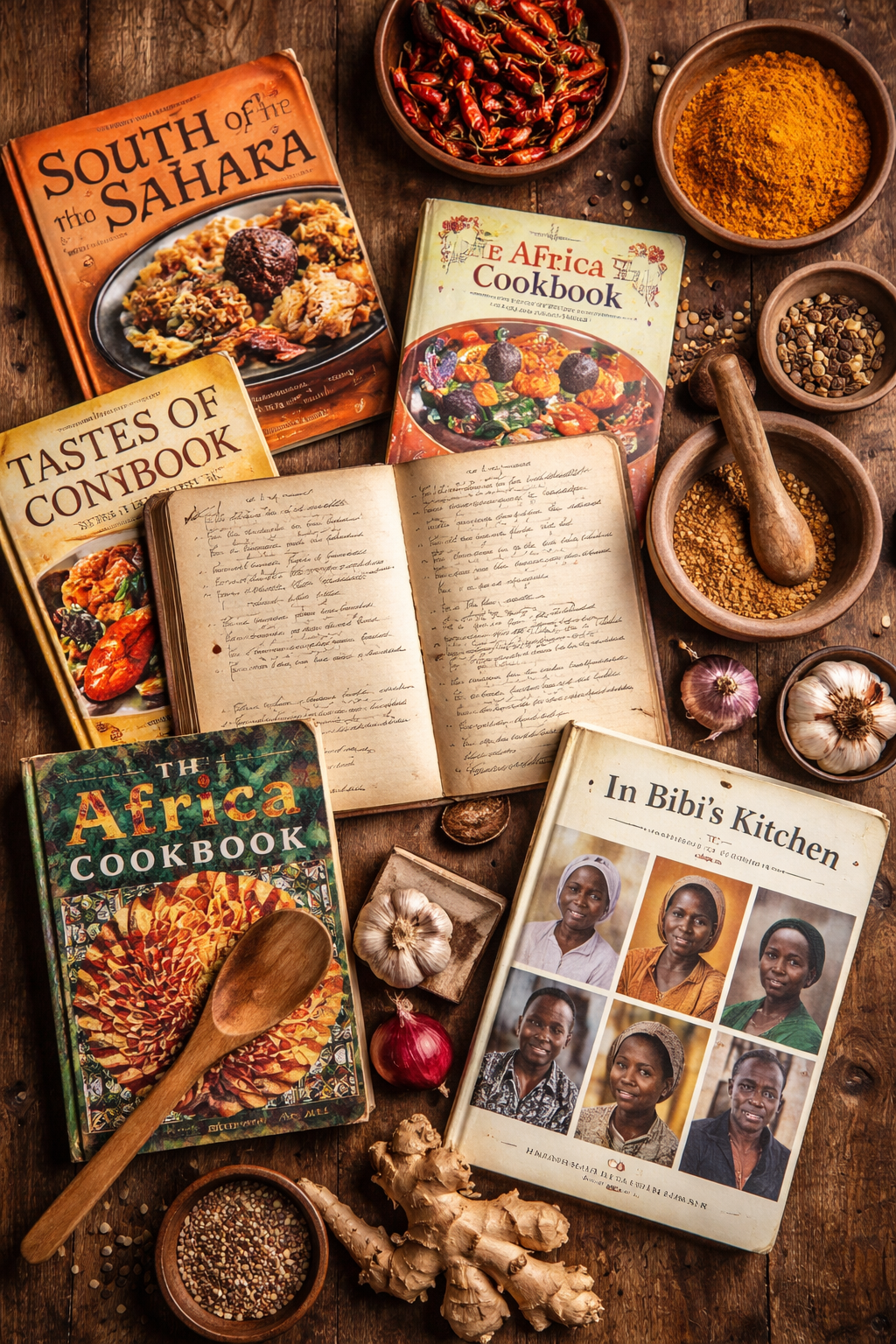
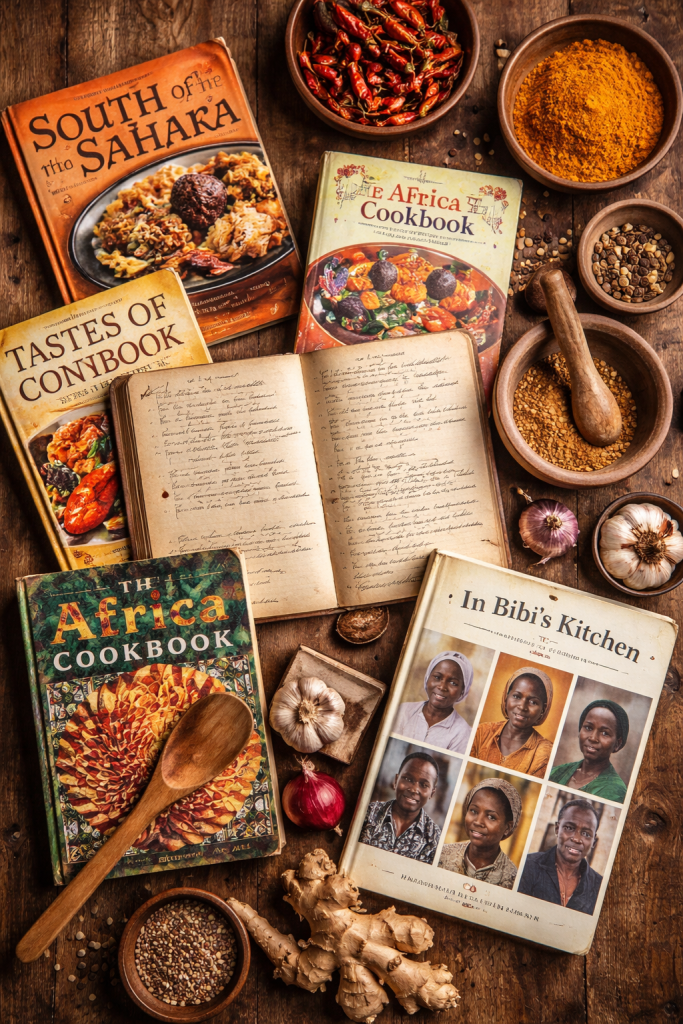
In many African households, cookbooks are not dusty tomes pulled from shelves, they are living memories. Recipes circulate through conversation, gesture, correction, and repetition. A dish is mastered by watching elders at work, not poring over pages; refined by taste, not precise measurements. Yet when this culinary knowledge finally enters written form, it often disappears once again, misclassified, marginalized, or stripped of context within institutional archives. This absence is not accidental. It is the result of archival politics.
Archives do not merely preserve history; they actively construct it. Decisions about what is collected, how it is catalogued, and where it is shelved determine what knowledge becomes legible. In Western institutions, European cookbooks are frequently treated as historical documents, sources for understanding class formation, domestic ideology, industrialization, or national identity. African cookbooks, by contrast, are more often categorized as ethnography, folklore, or lifestyle material. This quiet distinction shapes whose food is understood as culture and whose is reduced to curiosity.
Many African culinary texts exist in archival limbo. They are privately held, informally circulated, or published through small presses with limited institutional reach. When they do enter museum or library collections, they are often detached from authorship and context, described through generalized metadata that erases specificity. A recipe becomes anonymous. A voice dissolves into an undifferentiated “tradition.”
This erasure is deeply gendered. Across Africa and its diasporas, women have been the primary authors, translators, and transmitters of culinary knowledge. Yet archival systems that privilege named authorship, formal credentials, and written authority frequently render their labor invisible. A handwritten recipe notebook passed down through generations, rich with adaptation, historical memory, and social instruction, rarely qualifies as an object of record. When women’s knowledge goes undocumented, its absence is treated as inevitable rather than structural.
The problem is not that African cookbooks do not exist. It is that they often fail to register as legitimate archives. Early culinary texts were frequently mediated through colonial languages, edited for Western audiences, or framed as anthropological artifacts rather than intellectual contributions. Contextual details, who cooked the food, under what conditions, and for whom, were stripped away in favor of generalized descriptions of “tradition.” Flavor remained; voice did not.
Diasporic publishing adds another layer of distortion. African food often enters institutional archives only after translation through Western markets. Recipes are standardized, narratives softened, and political histories muted. The dish endures, but the forces that shaped it, migration, rationing, resistance, and improvisation, are rarely documented with equal care. The archive records the outcome, not the conditions that made survival necessary.
Absence itself becomes evidence. Missing cookbooks reveal how power operates within systems of cultural preservation. What is considered too domestic, too oral, too feminine, or too African is less likely to be collected. This is not a failure of documentation, but a consequence of archival priorities shaped by colonial epistemologies. Knowledge that does not conform to institutional formats is excluded rather than adapted for inclusion.
Object-centered archival practices further compound the problem. A spice box, cooking vessel, or storage jar may be preserved and displayed, yet divorced from the gestures that gave it meaning, the grinding, stirring, fermenting, and tasting. Without these practices, objects become static symbols. Culinary knowledge, however, exists precisely in motion. It is procedural, relational, and temporal.
Some contemporary initiatives gesture toward repair. Digital platforms, oral history projects, and community-led documentation efforts are expanding definitions of what counts as archival material. Recent cookbooks by African and diasporic writers increasingly foreground memory, politics, and authorship alongside recipes. Works such as In Bibi’s Kitchen weave personal narrative with culinary instruction, resisting rigid categorization and insisting on recognition as historical testimony.
Institutional change, however, remains uneven. Meaningful repair requires rethinking classification systems, authorship recognition, and collection practices. Cookbooks must be catalogued alongside other historical texts rather than relegated to cultural margins. Oral annotations, flexible measurements, and narrative digressions should be understood as features, not deficiencies. Archival gaps must be interrogated, not normalized.
African cookbooks do more than preserve recipes. They document survival strategies, trade histories, ecological knowledge, and social organization. They encode how communities adapted under constraint and maintained continuity amid rupture. When these texts are missing from archives, it is not only food history that disappears, but entire ways of knowing.
The question, then, is not whether African culinary knowledge belongs in archives. It is whether archives are willing to change in order to receive it. Until they do, many of the most vital historical records will continue to live elsewhere, on kitchen shelves, in memory, and in practice, carried forward not by institutions, but by the people who cook them into being.



 Sure Media Magazine
Leave a comment