
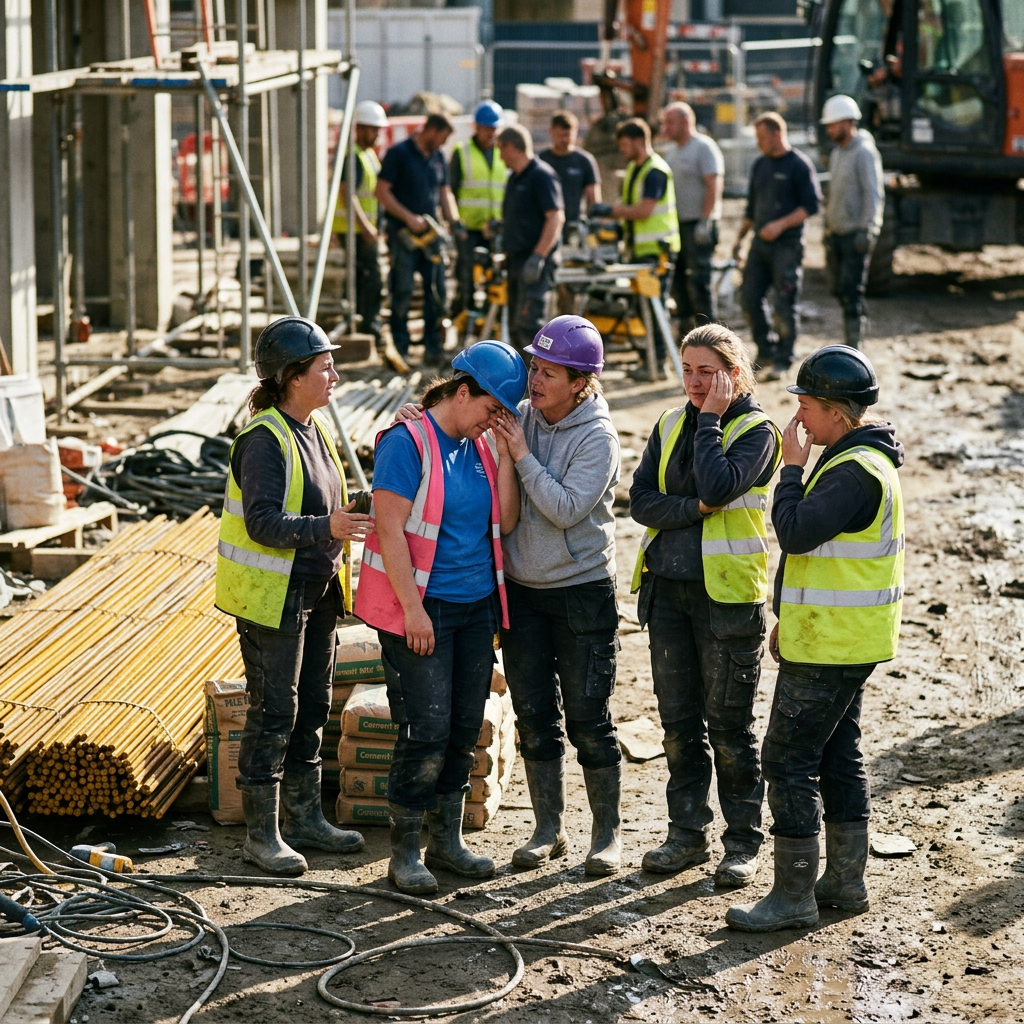
Across Kenya, more young women are enrolling in building and construction courses than ever before. Technical institutions are encouraging female enrollment in engineering, masonry, quantity surveying, plumbing, welding, and site management. On the surface, this looks like progress.
But behind the graduation photos and empowerment campaigns lies a difficult reality many institutions rarely discuss openly.
A significant number of young women leave the construction industry shortly after internship or during the early years of work.
The problem is not lack of intelligence or ability. Many female students perform well academically and complete their training successfully. The challenge begins when they enter the field and experience the realities of the industry firsthand.
This is a conversation institutions, employers, and young women considering these careers need to have honestly.
Hostile and Male-Dominated Work Environments
Construction remains one of the most male-dominated industries in Kenya and many parts of the world.
For many women entering the field, the environment can feel isolating. Some sites still operate under “macho culture,” where toughness and masculinity are seen as part of the job identity.
Female interns and young professionals often face stereotypes about their abilities. Some male coworkers assume women are physically weak, less technically capable, or unsuitable for demanding site work.
Because of these assumptions, some women are excluded from important technical tasks or denied opportunities to gain hands-on experience.
Others experience discrimination, condescending behavior, or even sexual harassment from supervisors and coworkers. In some cases, women report pressure to tolerate inappropriate comments or advances simply to avoid conflict at work.
Such environments slowly push many talented women away from the industry
Lack of Career Growth and Mentorship
Another major challenge is career progression.
Many women in construction report slower promotion compared to their male colleagues. Despite qualifications and hard work, they often feel invisible when leadership opportunities arise.
The industry also suffers from a shortage of female mentors. Young women entering construction rarely find enough experienced female professionals to guide them through workplace challenges.
Without mentorship, many struggle to navigate career growth, workplace politics, and professional confidence.
There is also the issue of role clustering.
Instead of being assigned technical responsibilities, some women are pushed toward clerical, administrative, or supportive duties. Meanwhile, male colleagues gain more exposure to practical fieldwork and complex projects that build stronger career experience.
Work-Life Balance and Inflexible Working Conditions
Construction work is demanding by nature.
Long working hours, site relocations, travel, and physically exhausting conditions make it difficult for many workers to maintain balance between career and personal life.
For women, the pressure can become even heavier.
Some projects require workers to move frequently from one location to another depending on contracts. Others involve working in remote areas with limited accommodation and poor sanitation.
Many women also carry caregiving responsibilities at home. Balancing family responsibilities with unpredictable site schedules becomes extremely difficult.
The industry’s inflexible structure forces many women to choose between career growth and personal stability.
Maternity leave and caregiving responsibilities can also negatively affect career progression. Some women feel penalized professionally for taking time away from work to care for children or family.
Psychological Pressure and Social Isolation
Being constantly outnumbered in the workplace creates psychological pressure.
Many women in construction feel they must work twice as hard to prove they belong. This often leads to self-doubt and what professionals call “imposter syndrome” — the feeling of never being good enough despite qualifications and achievements.
A male employee may be allowed to learn through mistakes. A female employee often feels every mistake confirms negative stereotypes about women in technical fields.
The pressure becomes emotionally exhausting.
Some women also report feeling undervalued or ignored even after contributing significantly to projects. Lack of recognition reduces motivation and job satisfaction.
Eventually, many begin searching for alternative career paths where they feel more respected and included.
Unequal Pay and Financial Instability
Pay inequality remains another concern.
Some women feel their skills and contributions are not valued equally compared to male counterparts. Persistent gender pay gaps discourage many from staying in the field long-term.
The nature of construction employment also creates financial instability.
Most construction jobs are project-based rather than permanent. Once one project ends, workers must search for another opportunity.
For young women trying to build stable lives, this uncertainty becomes stressful.
Many entry-level workers also earn low wages compared to the profits earned by contractors managing projects. Some female workers cannot afford accommodation near work sites, especially when projects are located far from home.
This makes mobile construction work difficult and unsustainable for many.
The Need for Better Career Guidance
One important issue institutions must address is proper career guidance.
Many students join construction courses without fully understanding the realities of the field. During admission and training, institutions often focus on opportunities and empowerment but fail to explain the challenges graduates may face on actual work sites.
Young women deserve honest preparation.
They should understand:
- the physical demands,
- the workplace culture,
- possible safety concerns,
- career growth realities,
- and the mental resilience required in the industry.
This awareness is not meant to discourage women. It is meant to prepare them properly.
A Call for Change
The solution is not to discourage women from joining construction and engineering fields.
The solution is to improve the environment waiting for them after graduation.
Institutions must provide realistic career guidance and mentorship programs. Employers must create safer and more inclusive workplaces. Industry leaders must address harassment, unequal opportunities, and poor working conditions.
At the same time, young women entering these careers should do so with awareness, preparation, confidence, and strong support systems.
Construction needs women.
But women also deserve an industry that respects, protects, and values their contribution beyond enrollment numbers and graduation ceremonies.




 Sure Media Magazine
Leave a comment