
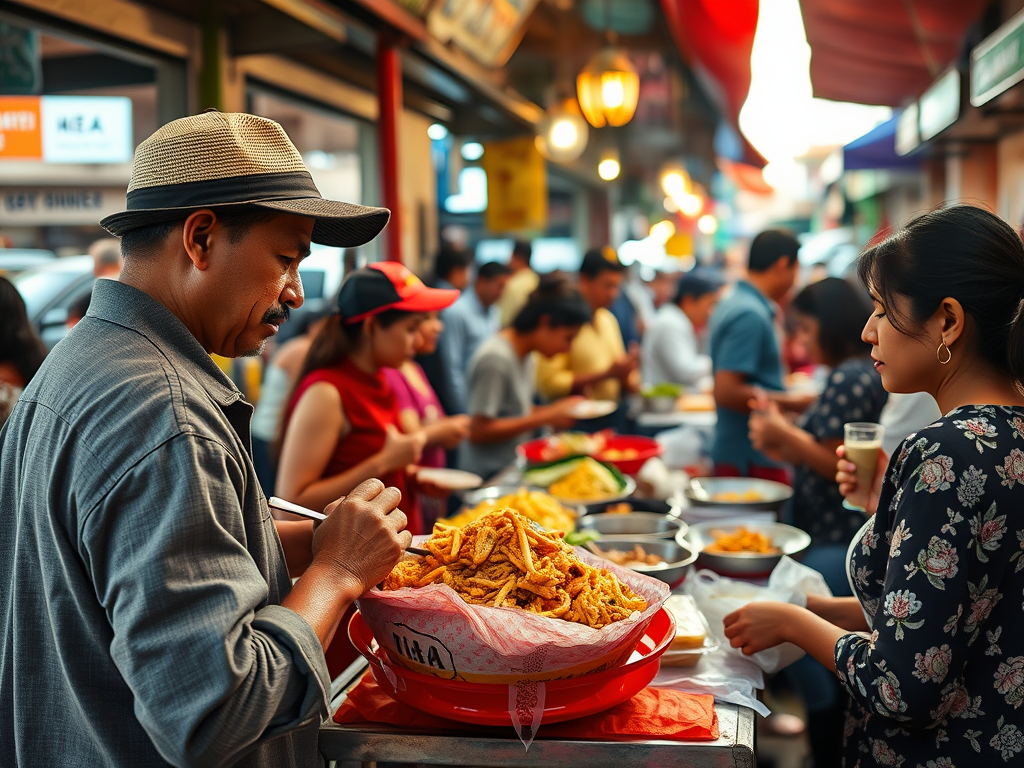
The meal that changed how I understood travel wasn’t expensive or made to be photographed. It was practical, familiar, and quietly revealing. It was a simple plate of food, eaten standing up, handed to me across a narrow counter by someone who had likely cooked the same dish every day for decades. I don’t remember the exact price, but I remember how cheap it felt compared to how much it revealed.
Until then, I thought food while traveling was mostly about pleasure trying new flavors, chasing authenticity, collecting stories to tell later. But somewhere between street stalls, family-run kitchens, and glossy restaurants designed for visitors like me, I began to see food differently. What we eat while traveling, I learned, is never just about taste. It’s about power: who owns the land, who controls the narrative, who profits, and who remains invisible.
Who Gets to Cook—and Who Gets to Be Celebrated
In many places I traveled, the most celebrated dishes, the ones featured in guidebooks and “must-try” lists originated from working-class communities. They were foods born out of necessity: cheap ingredients, long cooking times, techniques passed down quietly. Yet the faces associated with those dishes were rarely the same people who created them.
I noticed how often traditional foods were re-packaged for tourists. The prices rose. The decor changed. The menus were translated, simplified, polished. Suddenly, the dish wasn’t just food, it was an “experience.” And the people who had cooked it for generations were often no longer in the room.
This pattern wasn’t accidental. It mirrored older power structures shaped by colonialism, migration, and economic inequality. In many former colonies, local cuisines were once dismissed as unsophisticated. Today, they are celebrated—just not always by the communities that created them. Recognition, like profit, tends to travel upward.
Street Food and the Economics of Survival
Street food taught me more about class than any museum ever did.
In city after city, I noticed how locals ate quickly, efficiently, often standing or sitting on low stools. Street food wasn’t a novelty; it was survival. These meals were affordable, filling, and designed for people who couldn’t afford to waste time or money.
Tourists, on the other hand, were warned to “be careful” of these same foods. We were told they were risky, unsanitary, unsafe—language that subtly reinforced class divides. Yet these were the foods feeding millions of people every day.
I began to understand that food safety warnings weren’t always about health. Sometimes, they were about comfort. About protecting visitors from confronting realities that didn’t align with their expectations of leisure. Eating where locals ate meant acknowledging wage gaps, informal economies, and systems that depended on underpaid labor.
Restaurants as a Mirror of Inequality
Restaurants revealed another layer of power. In many countries, the most expensive restaurants were designed almost entirely for foreigners. The menus featured local dishes—but adapted, toned down, made more “palatable.” Prices were set in a way that quietly excluded locals.
Meanwhile, the people working in these restaurants, servers, cleaners, kitchen staff—often earned wages that made dining there impossible. The irony was hard to ignore: they cooked the food, served the food, cleaned up afterward, yet could never afford to sit at the tables they maintained.
Travel taught me that dining spaces are social maps. They show who belongs, who is welcome, and who is meant to stay behind the scenes.
History on the Plate
Food also carried history, sometimes painful, often unresolved.
Certain ingredients told stories of forced labor and trade routes shaped by exploitation. Others reflected migration, displacement, and resilience. Dishes that seemed comforting and familiar were often born from scarcity or oppression, created by people making something edible out of very little.
Once I started paying attention, I couldn’t stop seeing these histories. Food became a record of who had power in the past—and how that power still shaped the present.
How This Changed the Way I Travel
I didn’t stop enjoying food while traveling. But I stopped consuming it uncritically.
I began asking different questions: Who owns this place? Who is cooking? Who is missing from the story being sold? I sought out markets instead of curated experiences. I listened more than I photographed. I became more aware of how my money moved through local economies.
Most importantly, I learned that being a “good traveler” isn’t about checking off dishes or chasing authenticity. It’s about humility. About recognizing that travel places us temporarily inside systems that others live within permanently.
The Quiet Power of Paying Attention
Food taught me that travel is never neutral. Every meal exists within a web of history, class, and power. We can ignore that reality or we can let it deepen how we see the world.
The plate in front of us is never just a plate. It’s a story. And once you learn how to read it, traveling stops being just about where you go. It becomes about what, and who you choose to see.



 Sure Media Magazine
Leave a comment