

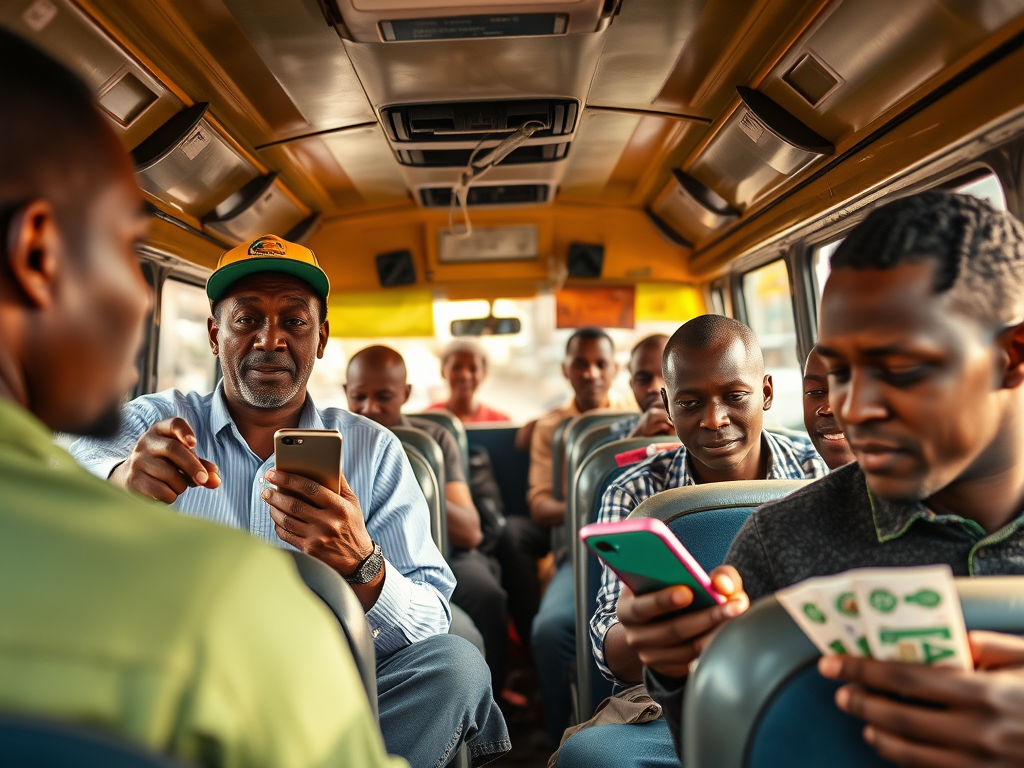
Kenya has changed in ways no one could have predicted twenty years ago. Back then, most of us lived hand-to-mouth with crumpled notes in our pockets, praying we wouldn’t get pickpocketed on the way home. We folded KSh 1,000 notes into tiny squares, hid them in socks, or entrusted them to matatu touts who sometimes vanished. Money was fragile. It burned in house fires. It vanished in floods. It disappeared in the hands of strangers.
Then came M-Pesa—a quiet revolution born in 2007 that turned our basic phones into something magical. Today, it’s hard to imagine life without it. From the matatu conductor in Nairobi shouting “Lipa na M-Pesa!” to the mama mboga in Kisumu weighing sukuma wiki while checking her phone, mobile money isn’t just convenient. It’s family. It’s security. It’s hope.
The Day Everything Changed
I was 14 in 2007, living in a small village outside Kitale. My cousin John, who had just landed a job in Nairobi, promised to send money for my Form One school fees. I waited three days. No bus. No letter. Just anxiety.Then, one evening, my battered Nokia 3310 buzzed:“You have received KSh 5,000 from JOHN DOE. M-Pesa.”I stared at the screen. My mother cried. My teacher smiled. That single beep wasn’t just money—it was possibility.That was M-Pesa’s promise: send money home. http://Safaricom launched it on March 6, 2007 with little fanfare. But within a year, over 1 million Kenyans were using it. By 2010, it was part of daily life: “Nitumie via M-Pesa.” Today, over 34 million of us use it—nearly the entire adult population.
Why We Trust Our Phones More Than Wallets
Let’s be real: carrying cash in Kenya used to feel like carrying a target on your back. I’ve seen friends mugged outside KCB and Equity branches. I’ve watched floods sweep away entire savings hidden under mattresses. One neighbor lost KSh 20,000 when his house burned down in Kayole.With M-Pesa, your money stays yours. Lose your phone? Dial 333, lock the account, breathe easy.http://Learn how to secure your account I once sent my sister in Eldoret KSh 8,000 for emergency surgery at 2 a.m. She got it before the nurse finished the forms. That’s not just fast—that’s life-saving.
The Little SMS That Keeps Families Together
Every payday, millions of Kenyans do the same ritual:Beep.“You have sent KSh 2,000 to MAMA MBOGA.”Beep.“Thank you, my son. God bless you.” That’s not just a transaction. That’s love in digital form.Urban workers in Nairobi send rent to parents in Siaya.Students in campus get lunch money mid-week.Grandmas in the village pay for BP medication without leaving home.M-Pesa didn’t just move money—it kept families close, even when jobs pulled them apart.http://Read how remittances power rural Kenya
How Small Businesses Survived and Thrived
Talk to any boda boda rider in Dandora:“Before M-Pesa, customers said ‘No change.’ Now? ‘Nitumie.’ I work longer, earn more, sleep safer.”Market traders in Gikomba used to close by 4 p.m. to rush to the bank. Now? They sell past dusk. Their earnings are already in the cloud.Till numbers and paybills turned dusty kiosks into professional businesses. My friend Amina used her M-Pesa history to get a KSh 200,000 loan through KCB M-Pesa. She bought a second-hand mitumba bale. Now she employs two girls from the estate.
The Unbanked Finally Got a Seat at the Table
Before M-Pesa, banks were for the suited few. If you lived past the tarmac, forget it. You needed:
- A suit
- A job letter
- Three months’ bank statements
- A prayer
But with just a national ID and a SIM card, anyone could join the financial system.
- Farmers in Nyeri get paid the moment coffee is weighed.
- Women’s groups in Kibera run chamas with perfect digital records.
- Youth in Mathare save KSh 50 a day into M-Shwari.
One tap at a time, dreams got bank accounts.http://See Kenya’s financial inclusion rise (FinAccess 2021)
Even Grandmas Are Cashless Now
My grandma is 78. She used to hide money under the mattress, wrapped in a leso. Last Christmas, she sent me KSh 1,000 via M-Pesa with a voice note:“For your data, my dear. Don’t walk in the rain.”I cried. If shosh can do it, anyone can.http://Download my safaricom app
Where Cash Still Lingers (For Now)
Cash hasn’t vanished. In Turkana or Marsabit, where networks flicker, people still trade in notes. Roadside fundis coins for KSh 50 jobs. Some elders say:“I want to see my money.”Fair. But even there, change is coming—one bar of signal at a time. http://Check network coverage.
The Price We Pay (And Why It’s Worth It)
Yes, fees sting. Sending KSh 100 costs KSh 10. Network outages frustrate. Scammers call pretending to be “Safaricom support.”But here’s the truth: peace of mind is priceless.I’d rather pay KSh 10 to send KSh 500 safely than risk losing the whole amount.View current rates | Report fraud
The Future? It’s Already in Our Hands
We’re not waiting for the future. We’re living it:
- Pay KPLC pre-paid tokens
- Settle NHIF contributions
- Clear traffic fines
- Pay school fees via eCitizen
With Fuliza, M-Shwari, and business tools, we’re not just transacting. We’re building wealth.
Kenya didn’t follow the world’s financial system.We rewrote it.
And every beep you hear?That’s the sound of a nation moving forward—together.
Your Turn to Beep with Hope
Right now, someone you love needs you.Dial *334# this second—send school fees, medicine money, or just “I’m thinking of you.”
- No cash? No problem. Pay matatu, mama mboga, or rent in one tap.
- Lost your wallet? Your money’s safe in M-Pesa.
- Want to grow? Save with M-Shwari. Borrow with Fuliza.
Kenya didn’t wait for the future—we built it.
Your beep is the next step.Dial *334# NOW.#LipaNaMPesa #SendLoveNotCash
Conclusion
M-Pesa isn’t just an app—it’s the heartbeat of modern Kenya. From village chamas to Nairobi’s bustling markets, it has turned phones into lifelines, cash into confidence, and dreams into reality. Today, November 11, 2025, over 34 million Kenyans live safer, closer, and more empowered lives because of one simple beep. The cash era is fading. The mobile money future is here—and we’re leading it.


 Sure Media Magazine
Leave a comment