
By Davis Mandela
Davis Mandela is an AI specialist and linguist focusing on digital policy and media ethics in East Africa.
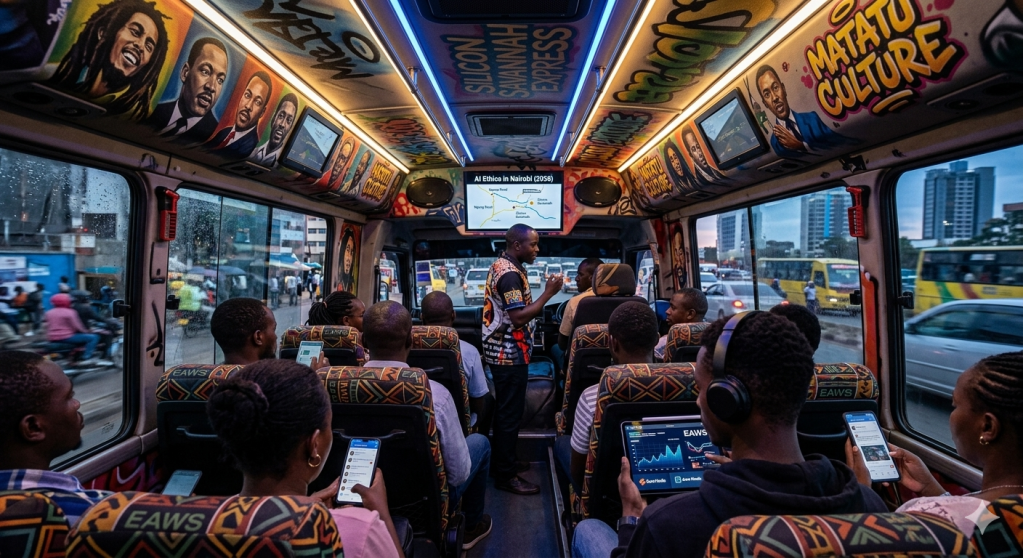
The first time I really noticed it was on a Thursday evening in 2024, squeezed between two passengers on a matatu headed from Tom Mboya to Pipeline. The driver had just turned up a track — one of those classic gengetone bangers with the bass so heavy it vibrated the loose bolts in the seats. Nobody complained. Instead, a woman in the row behind me let out a long, tired “aaahhh” — not annoyance, but relief. The kind you make when someone finally scratches an itch you didn’t know was there.
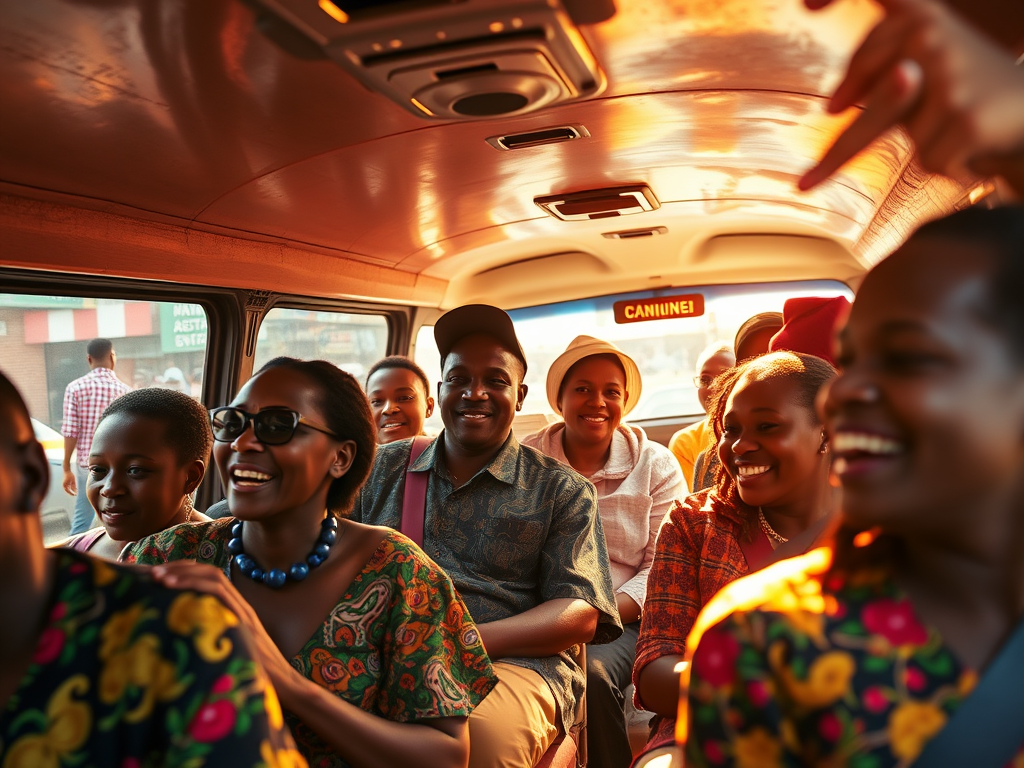
That sound — loud, chaotic, unapologetic — has become something more than background noise for thousands of us riding Nairobi’s roads every day. It has quietly turned the matatu into an informal therapy room on wheels.
The Commute That Never Ends Quietly
Most mornings start the same way: you step into a matatu still half-asleep, already bracing for the next two hours of traffic, hawkers tapping on windows, touts shouting destinations, bodies pressed close. The city is loud before you even sit down. Then the music begins.
It is never subtle. One day it is Diamond Platnumz reminding everyone that “Number One” is still the goal; the next it is Wakadinali dropping bars so fast you can’t catch them all. Sometimes it’s old-school gospel — Marya Okoth or Reuben Kigame — lifting the mood just as the jam on Jogoo Road feels unbearable. The playlist is democratic in the strangest way: the driver chooses, the passengers vote with groans or nods or the occasional “hii ni poa sana,” and the music keeps rolling.
What I’ve come to understand, after years of riding these routes, is that the volume is not an accident. It is medicine.
Joy in the Middle of the Grind
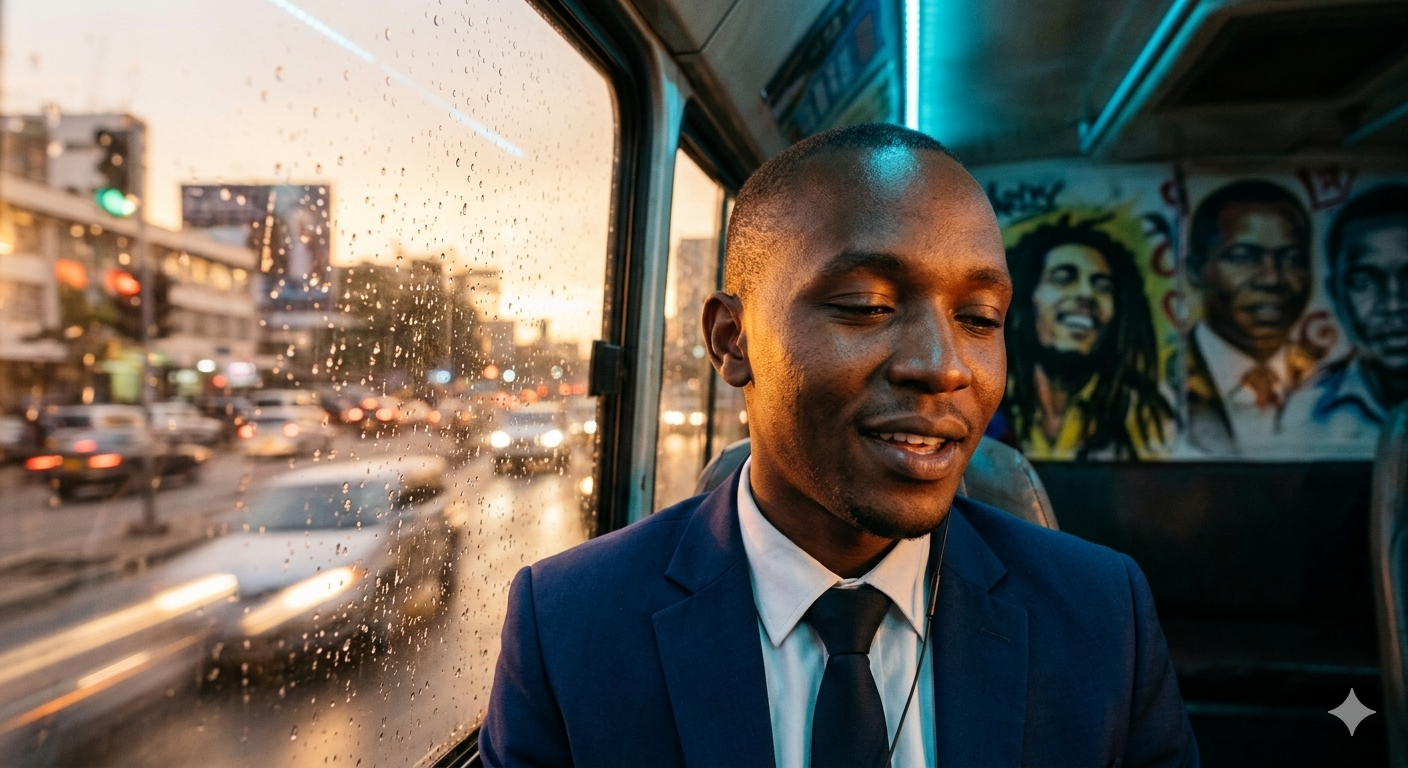
There is something about the sheer loudness that cuts through exhaustion. When the bass hits your chest and the lyrics are fast enough to match your heartbeat, the mind stops looping the same worries — rent due, boss waiting, child’s school fees. For those minutes, the matatu becomes a space where you are allowed to feel something else.
I’ve seen passengers close their eyes and move their shoulders just enough to dance without standing up. I’ve watched a young man in a suit mouth every word to “Sura Yako” like it was written for him. I’ve heard older women sing along to “Maua” with the kind of smile you only see when someone remembers who they used to be.
That is therapy, too — not the clinical kind, but the kind that happens when the body is reminded it can still feel joy.
Nostalgia as Survival
Sometimes the music pulls you back instead of forward. An old Benga track comes on and suddenly the whole matatu is humming “Shauri Yako” like it’s 1985 again. A passenger in the back row laughs and says, ‘Hii ilikuwa ya mama yangu.’ Another nods: ‘Na babako pia.’
In a city where everything moves so fast that memory can feel like a luxury, those three minutes of shared nostalgia are a small rebellion. They remind you that you come from somewhere, that your parents danced to this, that the struggles are not new. The matatu becomes a rolling archive of collective remembering.
Stress Relief You Didn’t Ask For
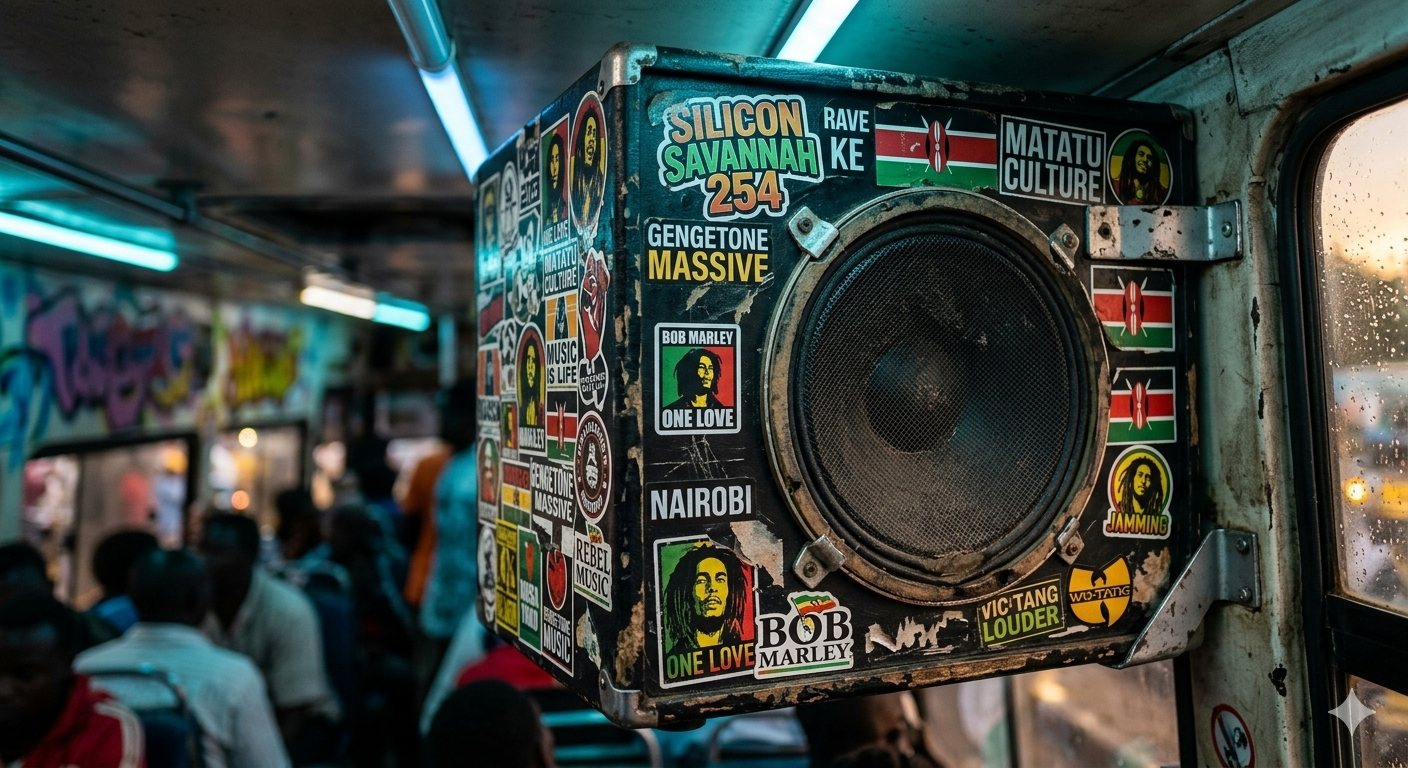
And when the day has been long — when the boss shouted, the client delayed payment, the landlord sent the third reminder — the music doesn’t judge. It simply turns up louder. The tout cracks a joke, someone in the back laughs, the driver switches to a slower jam, and for a moment the stress is carried by the speakers instead of your shoulders.
I’ve left matatus feeling lighter than when I entered, even though nothing in my life changed. The music didn’t fix the problem — it just gave me room to breathe beside it.
The Cost of Silence
Which is why the occasional quiet matatu feels wrong. A few months ago I rode one where the radio was off. No music, no banter, just the sound of traffic and tired breathing. Everyone stared straight ahead. The silence was heavier than any jam. We were all still going to the same places, but we were travelling alone.
That is the real therapy of matatu music: it insists that even in the middle of a crowded, stressful city, you do not have to carry the weight by yourself.
So the next time you step into a matatu and the speakers wake up, notice it. Let the bass hit your chest. Let the lyrics remind you of someone you used to be. Let the volume drown out the part of your mind that keeps saying “you should be doing more.”
Because sometimes the best therapy is the one that doesn’t ask you to speak — it just turns up the sound and lets you ride.
Call to Action
What’s the one matatu song that always feels like therapy to you? Drop it in the comments below — the old classics, the new bangers, the ones that make you smile even when the traffic is hell. Share this piece with someone who rides the same route. Because in Nairobi, the soundtrack isn’t just music — it’s how we keep going.
References
- Matatu Culture and Urban Identity in Nairobi – academic overview of matatu as social space (2010s, still cited in 2026)
- Recent Nairobi matatu regulation debates – Standard Media, early 2026
- Gikomba market and matatu sound systems – Nation Media, 2025







 Sure Media Magazine
Leave a reply to Davis Mandela Wamaya Cancel reply