
Introduction
Early pregnancy, also known as adolescent or teenage pregnancy, refers to a situation where a girl becomes pregnant before the age of 18. It is a major public health, educational, and social issue affecting many countries, particularly in developing regions. Early pregnancy can have serious consequences for the health of the mother and child, disrupt education, increase poverty, and limit future opportunities. Understanding the factors that contribute to early pregnancy is essential for developing effective prevention strategies.
Lack of Comprehensive Sex Education
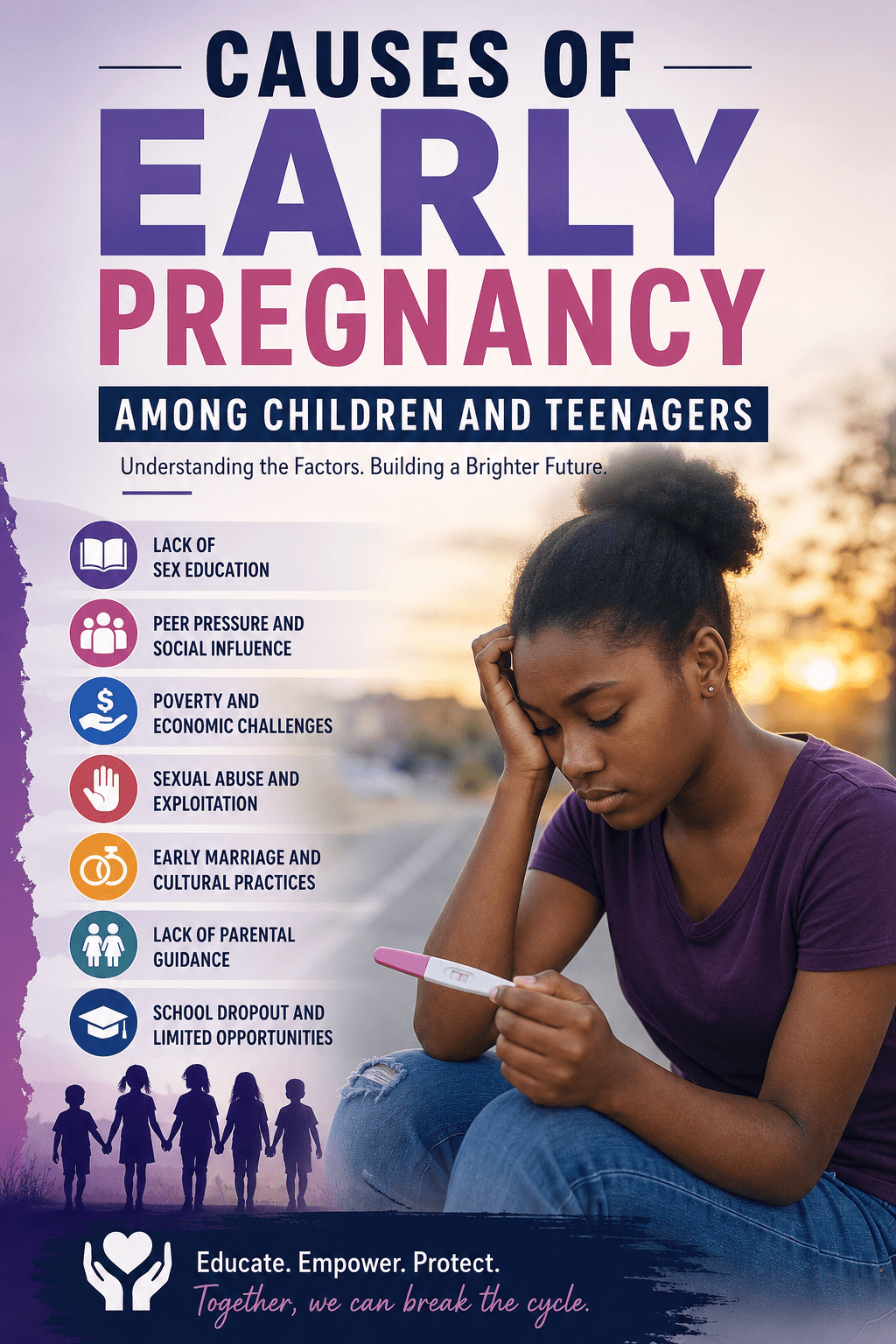
One of the leading causes of early pregnancy is the lack of comprehensive sex education. Many children and teenagers do not receive accurate information about human reproduction, contraception, sexually transmitted infections (STIs), and responsible relationships. In some communities, discussions about sexual health are considered taboo, leaving young people uninformed about the consequences of unprotected sex. Without proper knowledge, adolescents are more likely to engage in risky sexual behavior that may result in unintended pregnancy.
Poverty and Economic Challenges
Poverty is closely linked to early pregnancy. Children from low-income families often face limited educational opportunities and inadequate access to healthcare services. In some cases, young girls may enter relationships with older men who provide financial support, gifts, or basic necessities. These relationships can increase the likelihood of early pregnancy. Poverty can also force some children to drop out of school, making them more vulnerable to exploitation and early parenthood.
Peer Pressure and Social Influence
Peer pressure plays a significant role in influencing adolescent behavior. Young people often seek acceptance from their friends and social groups. Some teenagers may feel pressured to engage in romantic or sexual relationships because they believe it is normal or expected among their peers. Social media and popular culture can also influence young people’s attitudes toward relationships and sexuality, sometimes encouraging behaviors for which they are not emotionally or physically prepared.
Sexual Abuse and Exploitation
Many cases of early pregnancy result from sexual abuse, coercion, or exploitation. Children who experience sexual violence may become pregnant against their will. Such experiences often cause severe emotional, psychological, and physical harm. In some situations, perpetrators take advantage of children’s vulnerability, lack of protection, or economic difficulties. Preventing child abuse and ensuring legal protection for children are important steps in reducing early pregnancies.
Early Marriage
Early marriage remains a challenge in some communities around the world. Cultural traditions, economic pressures, and gender inequalities may encourage families to marry off their daughters at a young age. Once married, young girls are often expected to begin having children immediately. Early marriage not only increases the risk of pregnancy but also exposes girls to health complications due to their physical immaturity.
Lack of Parental Guidance and Communication
Parents play a crucial role in guiding children through adolescence. However, some parents find it difficult to discuss topics such as relationships, sexuality, and reproductive health. As a result, children may rely on friends, social media, or unreliable sources for information. Open communication between parents and children can help young people make informed decisions and avoid risky behaviors.
School Dropout and Limited Educational Opportunities
Education is one of the strongest protective factors against early pregnancy. Girls who remain in school are more likely to delay marriage and childbearing. However, children who drop out of school often have fewer opportunities and may become vulnerable to early sexual activity, exploitation, and pregnancy. Keeping children in school helps them develop knowledge, skills, and aspirations for the future.
Effects of Early Pregnancy
Early pregnancy has numerous negative consequences. Health risks include complications during pregnancy and childbirth, which can threaten the lives of both the mother and baby. Educationally, many young mothers are forced to leave school, reducing their chances of obtaining good employment in the future. Economically, early pregnancy can increase dependence on family members and contribute to the cycle of poverty. Emotionally, young mothers may experience stress, stigma, depression, and social isolation.
Solutions to Early Pregnancy
Addressing early pregnancy requires a combined effort from families, schools, communities, and governments. Comprehensive sex education should be provided in schools to equip young people with accurate information. Access to healthcare and reproductive health services should be improved. Communities should work to eliminate child marriage and protect children from abuse and exploitation. Parents should maintain open communication with their children, while governments should support programs that keep girls in school and create opportunities for youth development.
Conclusion
Early pregnancy among children and teenagers is a complex issue caused by a combination of social, economic, cultural, and educational factors. Poverty, lack of sex education, peer pressure, sexual abuse, early marriage, and limited parental guidance all contribute to the problem. The effects of early pregnancy can be long-lasting, affecting health, education, and future economic prospects. Therefore, society must work together to address the root causes and ensure that every child has the opportunity to grow, learn, and achieve their full potential.




 Sure Media Magazine
Leave a comment