
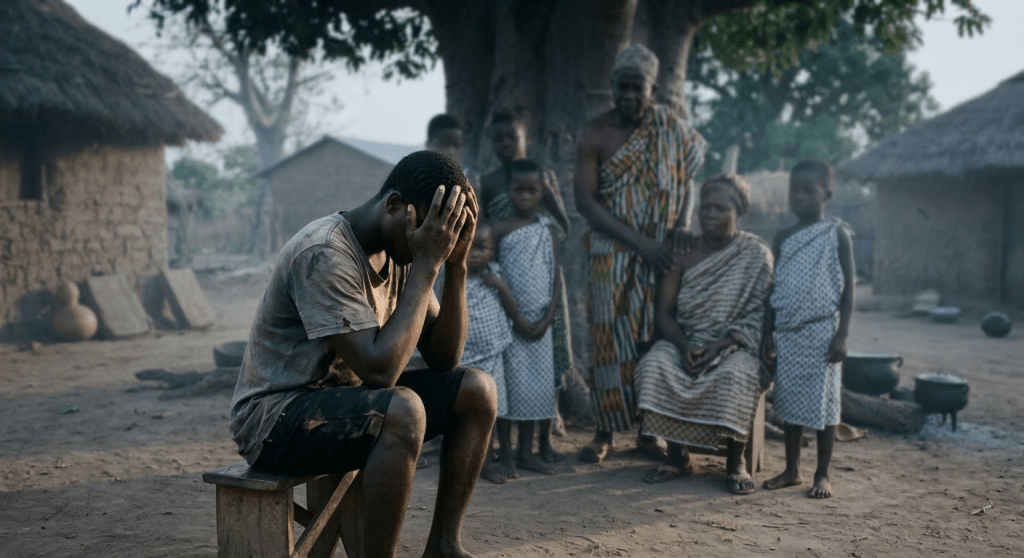
A generation raised to respect authority is now quietly asking the uncomfortable question: what happens when that authority refuses to be accountable?
African parents have long been praised for their sacrifices. They worked endless hours. They stretched every shilling to pay school fees, rent, and put food on the table. Many carried entire households through pressures that left little room for softness or emotional availability. For most of us, that endurance literally made our survival possible.
We owe them respect for that.
But respect should not silence the rest of the story.
Beneath the polite family calls and holiday gatherings sits a quieter truth. What happens when parents love you fiercely yet don’t know how to meet you emotionally? For many young Africans, the answer only becomes clear in our twenties. It appears as anxiety that feels outsized. Guilt that rushes in too quickly. Boundaries we struggle to set. And a deep exhaustion we can’t quite name.
We call it stress. Overthinking. Sometimes depression.
Few of us trace it back to childhood homes where feelings weren’t discussed — they were managed. A crying child was told to stop. A child who questioned decisions risked being called disrespectful. Sadness was often met with “others have it worse.” Emotional discomfort wasn’t explored. It was corrected. So many of us adapted. We became quiet. Agreeable. High-achieving. Easy to raise. On the surface, everything looked fine. Underneath, we were learning that obedience felt safe while honest expression felt dangerous.
That lesson didn’t vanish when we grew up.
It followed us into adulthood — showing up as difficulty handling criticism, a habit of over-apologizing, and that nagging fear of disappointing authority figures at work or in relationships. What started as cultural respect quietly became self-suppression.
This isn’t about blaming parents. Most of them never received emotional tools themselves. They grew up in eras where survival trumped introspection, and discipline mattered more than dialogue. They simply passed on what they knew. Still, the impact remains.
The real challenge is holding two truths at once. Our parents sacrificed enormously, often under crushing pressure. And many lacked the tools to nurture our emotional world. These realities don’t cancel each other out. They coexist. Acknowledging both is where healing actually begins.Across Africa and the diaspora, mental health talk is growing louder. We hear more about anxiety, burnout, and trauma. Yet the conversation still focuses mostly on treatment. Far less on how these patterns were formed through an upbringing that prized obedience over emotional literacy.
Talking about this honestly isn’t condemnation. It’s clarity. A generation raised under pressure can’t be understood without naming that pressure. A generation taught to stay silent can’t break those patterns overnight. Healing doesn’t require rejecting our upbringing. It starts with seeing it fully: what was generously given, what was painfully missing, and what we must now build for ourselves.
This is bigger than parenting. It’s about inheritance. Not just money or opportunity, but emotional language — or the absence of it. And right now, across the continent, a new generation is finding the courage to speak it.
The silence we inherited is finally breaking. That, in itself, is real progress.




 Sure Media Magazine
Leave a comment