
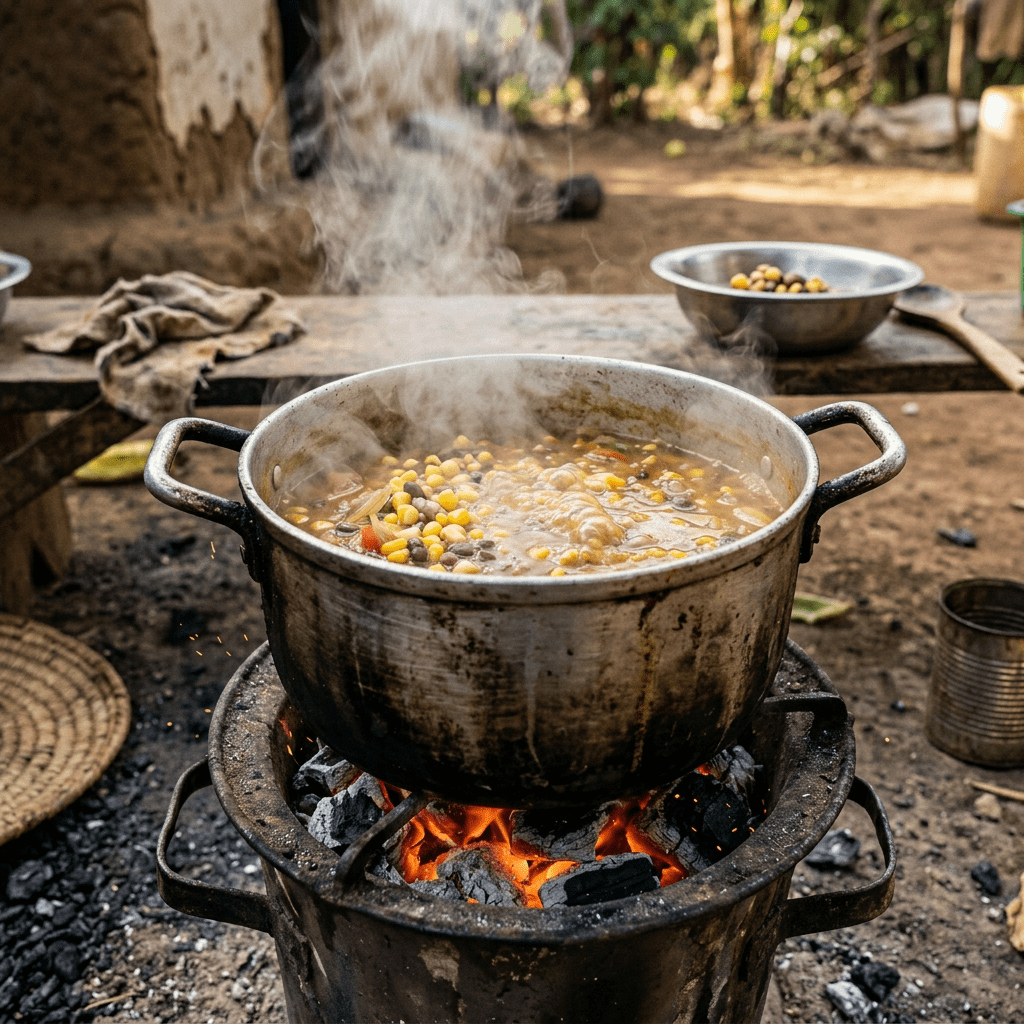
Before sleek kitchens, imported cookware and glossy non-stick pots became common, there was one kitchen item almost every home trusted the sufuria. It sat proudly on charcoal jikos, firewood stoves, kerosene cookers and later gas burners. It was dependable, practical and strong enough to survive years of cooking.
For many families, the sufuria was not simply a cooking pot; it was part of everyday life. Meals that fed households, visitors and celebrations often came from the same trusted pot. Whether in rural homes or growing towns, the familiar sound of a metal lid rattling as food simmered was a normal part of life.
In earlier years, traditional sufurias were used for nearly everything. They boiled tea in the morning, cooked beans for lunch and simmered supper late into the evening. They were especially trusted for foods that needed patience and time meals that could stay on fire for hours without concern.
A pot of githeri slowly boiling, beans softening over heat, maize cooking for long periods or bone soup simmering for hours often relied on the strength of the sufuria. In many homes, no special instructions were needed; everyone simply knew: this is the pot for the heavy cooking.
Then came modern cookware.
As kitchens changed, non-stick pots arrived promising convenience, beauty and easier cleaning. Their smooth surfaces and modern designs quickly became attractive to many households. Cooking appeared easier. Food was less likely to stick and cleaning required less effort.
For a moment, it seemed as though the traditional sufuria might disappear.
But something interesting happened it survived.
Even in homes filled with modern cookware, one corner of the kitchen often still holds a familiar old sufuria, sometimes slightly blackened at the bottom, slightly dented from years of use, yet still dependable. Why? Because some foods simply “belong” to the sufuria.
Need to boil githeri for hours? Bring out the sufuria. Making rich bone soup that needs time to release flavor and nutrients? The sufuria appears again. Cooking foods that require patience, heat and durability? The old kitchen companion still earns its place.
Many people hesitate to use non-stick pots for long boiling sessions, rough stirring or foods that may scratch delicate surfaces. The sufuria, however, asks for no special treatment. It withstands high heat, heavy cooking and constant use.
Beyond function, the sufuria carries something deeper: memory.
For many, seeing one brings back images of mothers, grandmothers, village kitchens, smoke rising from a jiko and family meals shared together. It represents resilience, simplicity and a way of life where things were built to last.
Today, kitchens may look modern, but the survival of the sufuria tells an important story: not everything old becomes useless. Sometimes, what survives does so because it continues to serve a purpose.
The sufuria may no longer be the only pot in the kitchen, but it remains one of the most trusted a quiet reminder that some traditions never truly disappear.



 Sure Media Magazine
Leave a comment