
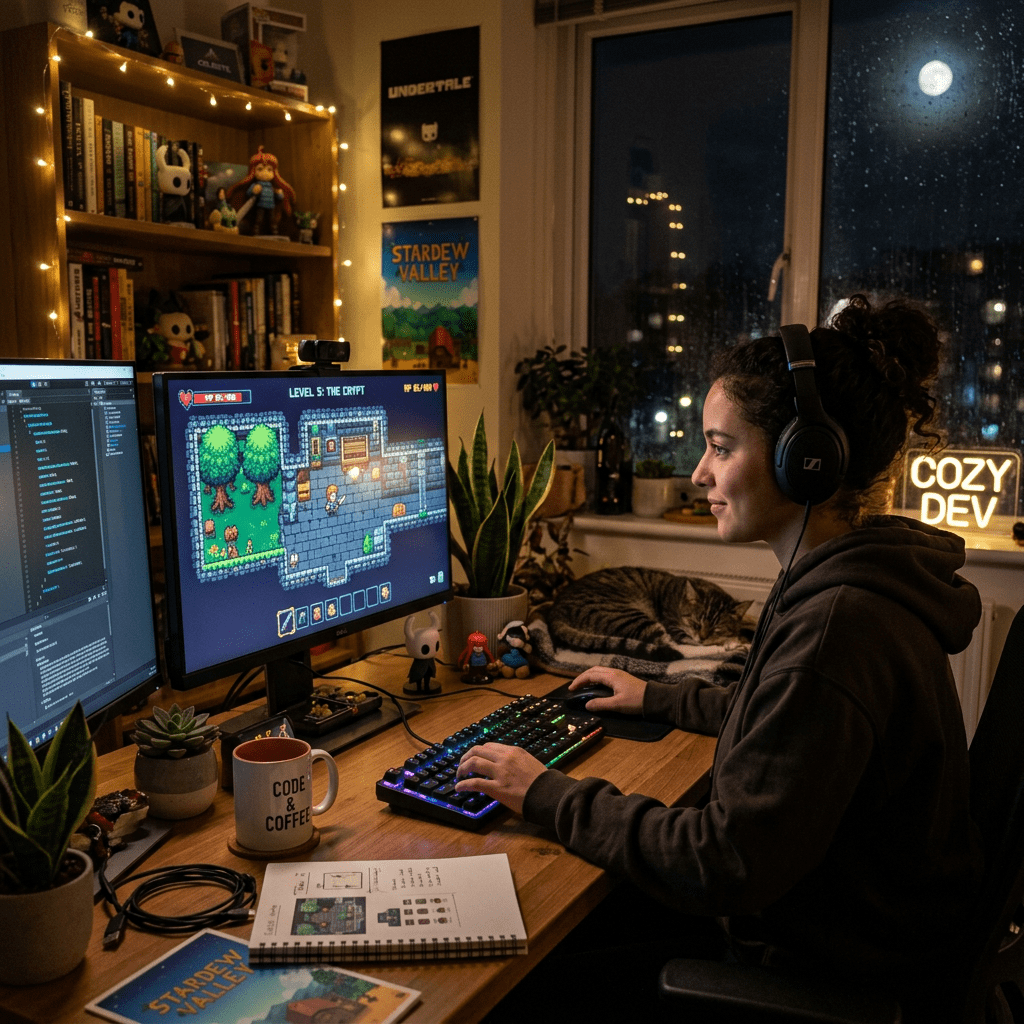
Personally, games like Mario, Dave, Prince of Persia, Excitebike, have really shaped my childhood. And growing up playing those games also helped me develop a social background with my young friendships.
Gaming can be really formative in childhood. It’s not just about entertainment; it shapes how we engage with others, build teamwork, and even understand different perspectives. Games like mario, mentioned gave kids shared experiences—they became a language we used to bond, to collaborate, and even to dream beyond our everyday lives. And those early social ties often carried forward into how we connected as we grew up.
Beyond indie gaming, there are other categories. For instance, AAA games are big-budget productions from major studios, often focused on cutting-edge graphics and mass appeal. Then you have mobile gaming, which reaches huge audiences through smartphones and casual play. There’s also browser gaming, often free-to-play and quick to access, and experimental gaming, which pushes boundaries in form and interaction. Each type of gaming has its own culture, audience, and impact on the market
Indie gaming refers to video games created by individual developers or small teams without major financial backing from large publishers. Indie developers typically have more creative freedom, often exploring experimental concepts, unique art styles, or niche themes. They tend to distribute their games independently, often through digital platforms like Steam or itch.io.
Indie gaming is typically shaped by a few core principles. Unlike big studio productions, indie developers usually work with limited budgets and smaller teams, which can lead to really innovative or socially conscious games. that freedom allows them to explore topics that might be too risky or unconventional for larger studios, so they can really push boundaries in storytelling and gameplay.
First, the rise of indie gaming began in the early 2000s, as developers gained access to affordable software tools and digital marketplaces. Platforms like Steam, itch.io, and later Epic Games Store gave global exposure to small teams. Without the need for large publishers, these developers could self-fund, often using personal savings or crowdfunding. This democratized game creation, allowing diverse voices to emerge, though it also meant developers faced significant financial uncertainty. In terms of revenue, most indie games rely on one-time purchases, but subscription models, episodic content, and in-game purchases also help diversify income. The political dimension of indie gaming is crucial: many developers use their creative freedom to address systemic inequality, labor conditions, and identity politics. By staying independent, they aren’t bound by corporate norms, allowing them to push boundaries in how games represent race, gender, and power. Thus, the intersection of indie business models and politics is redefining who gets to tell stories and how those stories shape public discourse.
At its core, gaming is a form of interactive technology, and as it evolves, it shapes—and is shaped by—social and political forces. Indie developers, for example, often leverage tech not just to entertain, but to interrogate societal structures—like labor exploitation, surveillance, or identity politics. Technologically, advances in game engines, online networks, and AI allow for more immersive experiences, but they also mirror and amplify societal inequalities—like who has access to tech, who controls data, and who gets represented. Thus, when we tie gaming and tech to deeper social narratives, we see how digital spaces become arenas for activism, critique, and reimagining what society can be.
When indie games embed real-world politics or social dynamics, they don’t just entertain—they prompt reflection. For instance, a game set in a dystopian economy might mirror real-world labor exploitation, making players confront how tech shapes inequality. Similarly, a game that explores identity or migration might use digital worlds to give voice to marginalized groups. In that way, the technology isn’t neutral; it acts as a lens, making abstract systems tangible. By inviting players to inhabit these narratives, indie games push us to reconsider the intersection of power, technology, and everyday life.
One example is “Celeste,” which uses the platformer format to explore mental health and perseverance. Another is “1979 Revolution: Black Friday,” a narrative game set during the Iranian Revolution that brings history to life. “Disco Elysium” blends noir detective work with political philosophy. And “Paradise Killer” uses a surreal open world to question systems of authority. These games show how tech and design can carry powerful social or political commentary.
Indie gaming is not just a niche hobby; it’s a powerful vehicle for marginalized voices and social critique. As big studios often prioritize profit and mass appeal, indie developers can take risks, addressing real-world inequities, labor rights, and personal identities. By embedding political themes, indie games invite players to reflect on how technology shapes—and is shaped by—the world around them.
Moreover, this matters because gaming is now one of the most influential forms of media. As more people engage with these digital worlds, they become spaces for empathy, learning, and reimagining possibilities. By democratizing who gets to tell stories and what those stories can say, indie gaming breaks open the boundaries of traditional entertainment, allowing us to rethink power, access, and who gets to shape the future of our digital lives.
Arsi Patala, developer of ULTRAKILL, said, “As creator of said game, you should support indies if you can, but culture shouldn’t exist only for those who can afford it.” Meghna Jayanth, a writer and designer, emphasized, “I don’t see the point of me without the politics.” And an anonymous indie developer noted, “Make games for other people; the joy of making a game comes when you show it to the world.”




 Sure Media Magazine
Leave a comment