
Agriculture worldwide is under pressure — feeding a projected 9.7 billion people by 2050, managing climate-driven yield shocks, and using resources more sustainably. AI presents a powerful way forward across the whole farm-to-consumer chain, from sourcing inputs and growing crops to processing, shipping, and consumption. Using tools like machine learning, computer vision, predictive analytics, and IoT sensors, AI drives greater precision, efficiency, and resilience. The AI in agriculture market sat at roughly $4.7 billion in 2024 and is forecast to expand at a 26.3% CAGR through 2034, thanks to solutions that increase harvests, reduce waste, and streamline logistics.
This article looks at global AI use in agriculture, highlighting the most impactful applications, case studies by region, key obstacles, and steps to ensure broader access — with special attention to low- and middle-income countries, where smallholders grow about a third of the world’s food.
AI in Precision Agriculture and On-Farm Production
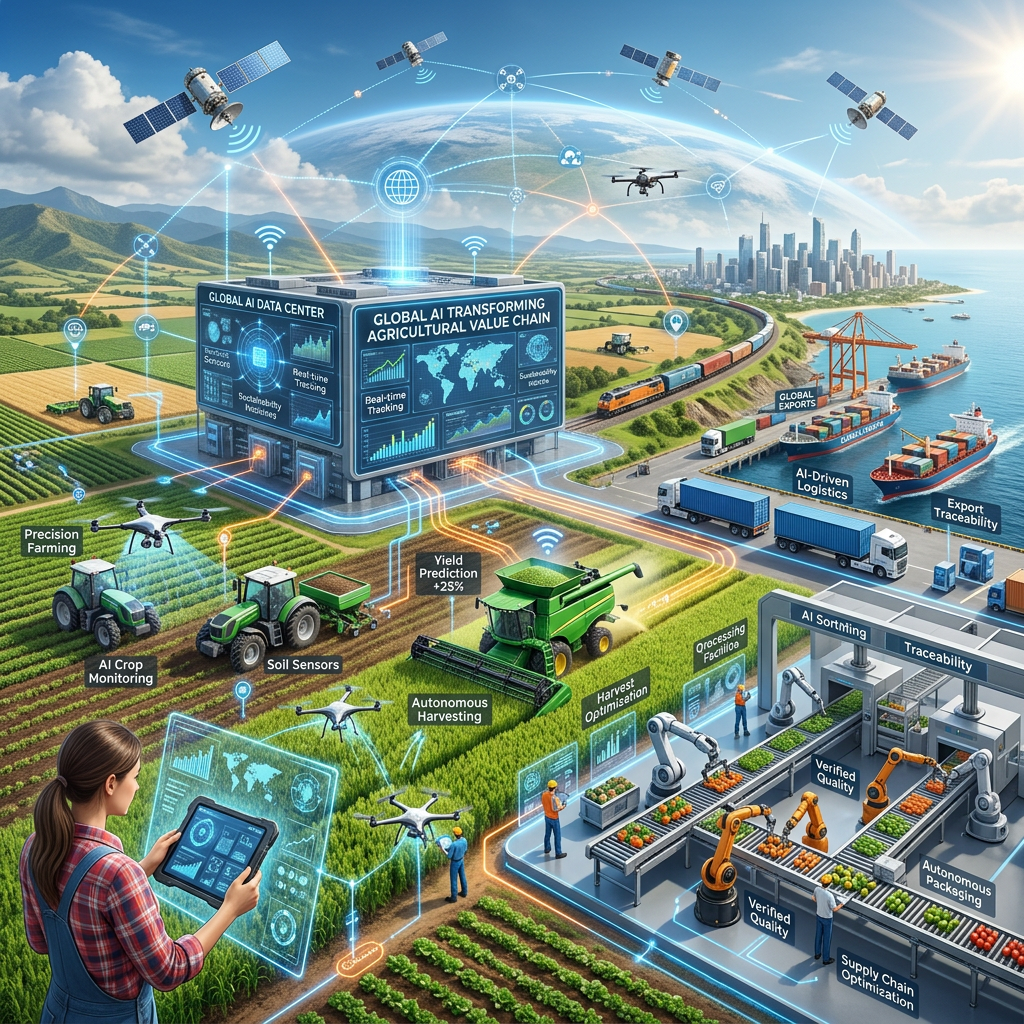
On the farm, AI drives precision agriculture by pulling together data from satellites, drones, in-field sensors, and weather stations. Using computer vision and deep learning, it can spot pests, crop diseases, and nutrient gaps instantly, often through a phone app. Predictive models then forecast harvests and fine-tune planting, watering, and fertilizer schedules — sometimes cutting input use by as much as 30% while still raising yields.
For livestock, AI-powered wearables and camera systems track animal health, monitor behavior, and flag early signs of illness to reduce losses. On bigger farms, autonomous robots take on tasks like planting, weeding, and harvesting. Together, these technologies move farming from reacting to problems toward preventing them — a shift that’s especially helpful for smallholders dealing with labor gaps and unpredictable weather.
AI Across Supply Chain and Post-Harvest Management
After harvest, AI keeps things running smoothly across processing and logistics. Forecasting models predict demand, map efficient transport routes, and limit spoilage using traceability tools that combine blockchain with image-based quality grading. Smart contracts and AI price forecasts also strengthen farmers’ market access, while automated inventory systems help slash supply chain food waste — which runs 30–40% globally.
In processing, AI automates sorting, packaging, and quality control. For distribution and retail, it enhances cold-chain monitoring and last-mile delivery efficiency. These applications create transparent, resilient value chains that benefit producers and consumers alike.
Enhancing Sustainability and Climate Resilience
AI helps meet sustainability targets by making climate-smart farming possible. It crunches huge datasets to deliver ultra-local weather forecasts, map soil health, and monitor carbon storage in fields. With precise application of water, fertilizer, and pesticides, overuse drops and greenhouse gas emissions fall. AI also backs regenerative methods by guiding cover crop planning and tracking biodiversity.
The World Bank’s 2025 report points to AI as key for helping smallholders withstand shocks. It enables early alerts for droughts, pest outbreaks, and market swings, and provides tools that support breeding of climate-resilient crop varieties.
Regional Perspectives and Case Studies
Uptake isn’t uniform worldwide. North America and Europe have the infrastructure for broad rollout of AI robotics and data platforms — CropX, for instance, runs soil-water optimization across several continents. The EU’s Coordinated Plan on AI also pushes for using it to boost yields and lighten farm workloads.
Asia shows strong traction too. In India, the Plantix app leans on image recognition to give millions of farmers guidance on pests and diseases. Africa — including your region near Nairobi — is using AI to bypass older constraints. Kenya’s http://Farmer.Chat, a generative AI tool from Digital Green, helps extension agents give smallholders customized farming advice in local languages across Kenya, Nigeria, and India. In Ethiopia, AI-based advisories have driven yield gains of 38%.
The World Bank backs projects such as Kenya’s National Agricultural Observatory, which provides real-time analytics on droughts and pest risks. Cases like these show AI can meaningfully support smallholders when it’s delivered through simple channels like SMS or voice messages.
Challenges and Barriers to Widespread Adoption
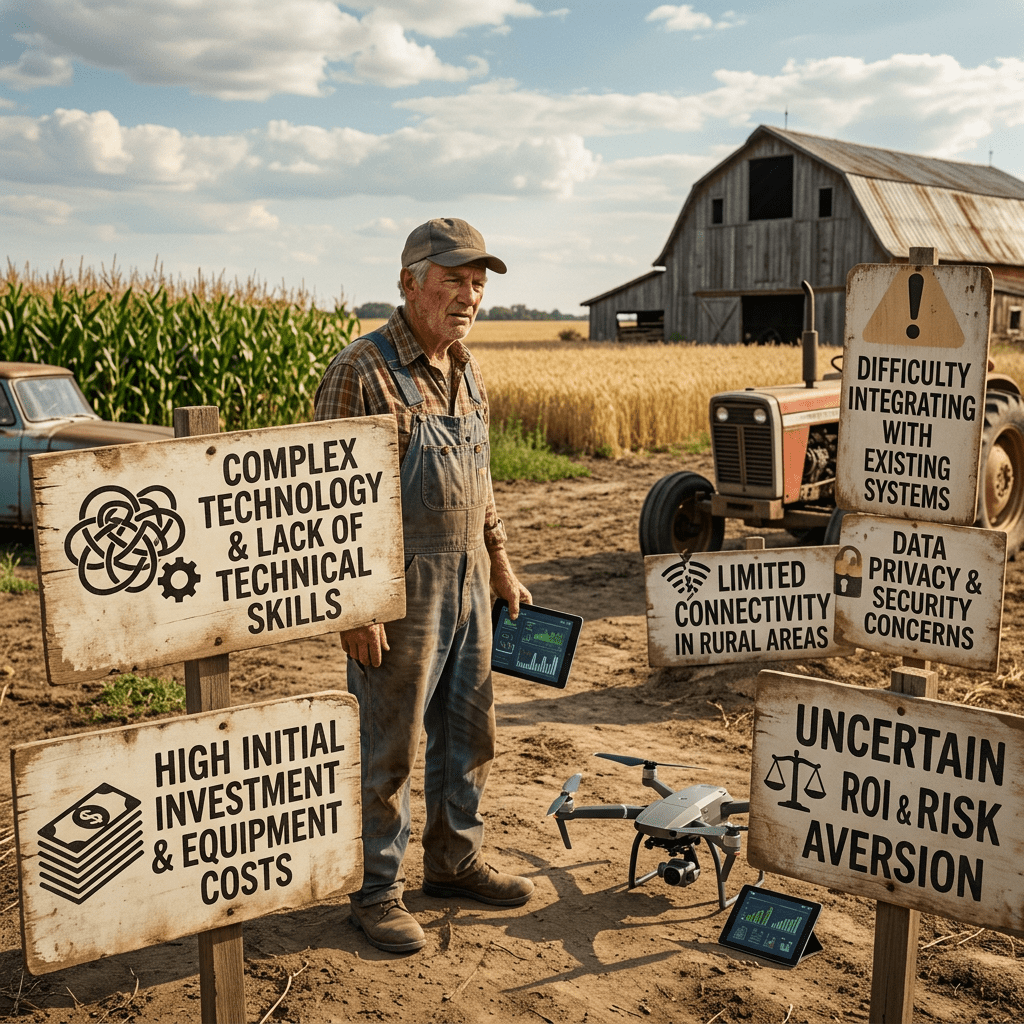
While the potential is clear, obstacles remain. Hardware, data systems, and upkeep are expensive, putting them out of reach for many smallholders. Gaps in rural internet access, power, and digital skills deepen the divide, especially in LMICs. Issues with data quality, privacy, and biased models can also lead to unfair results. On top of that, older farmer populations and uncertainty about returns make adoption slower.
Equity is a major concern — big farms in wealthier countries are adopting AI more quickly, which could leave small producers behind. There are also ethical questions around job loss and the environmental downsides of leaning too heavily on technology, both of which need thoughtful oversight.
Future Outlook and Recommendations
Looking ahead to 2030, AI could boost agricultural GDP in LMICs by hundreds of billions through higher productivity and more sustainable practices. The World Bank suggests embedding national AI plans into agrifood policy, building open data systems based on FAIR principles, and forming public-private partnerships. Key steps include investing in digital public infrastructure, upskilling extension agents, and developing “Small AI” tools designed for local crops and languages. It also recommends testing high-impact applications like pest identification and market insights before rolling them out widely.
Governments, development organizations, and private companies need to work together for fair, responsible rollout — with a focus on smallholders and areas most at risk from climate change.
In conclusion, harnessing AI globally for the agricultural value chain is not just about technology but about reimagining food systems for equity, resilience, and sustainability. With targeted investments and inclusive policies, AI can help feed a growing world while protecting the planet. The time to act is now.
References
1. Global Market Insights. (2025). AI in Agriculture Market Size & Share 2025-2034.
2. OECD. (2026). AI in Agriculture: Progress in Implementing the European Union Coordinated Plan on Artificial Intelligence.
3. World Bank. (2025). Harnessing Artificial Intelligence for Agricultural Transformation.
4. CAST. (2025). AI in Agriculture: Opportunities, Challenges, and Recommendations.
5. Gupta, G. et al. (2025). Applications of AI in Precision Agriculture. Springer Nature.
6. Digital Green. (Various). Farmer.Chat Case Studies (Kenya, Nigeria, India).
7. Zion Market Research. (2025). Agriculture AI Market Report.
8. Brookings Institution. (2024). How AI Can Inclusively Transform Agri-Food Systems in Africa.




 Sure Media Magazine
Leave a comment