

She was young. The antivenom was not there. And somewhere in the distance, a practice our grandparents knew could have saved her.
I heard about her the way you hear about most tragedies in Kenya — through someone who knew someone who was there. A young woman. A snake bite. Hospitals in the area with no antivenom in stock. And a death that did not have to happen.
What stayed with me was not just the grief of it. It was the knowledge of what could have been done — what our grandparents would have done — before modernity decided that anything without a pharmaceutical patent was superstition.
The black stone.
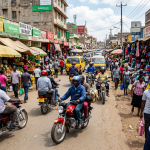
It is one of the oldest snake bite treatments in East Africa. Animal bones — any animal — burnt until they turn completely black, then ground into fine powder. When a snake bites, you apply the powder directly to the fang marks. It draws the venom out. You tie the area above the bite to slow the poison’s movement up the body. You keep the person calm. You act immediately, with what is already in your hands, before a bodaboda can navigate the broken road to the nearest hospital three hours away.
This is not folklore. Peer-reviewed research published in the Journal of Toxicology confirms the black stone’s documented use across Kenya — described as carbonised bone material placed on the bite site where it attaches and draws out venom. A survey of rural communities in Kenya found that 57% of snakebite victims who sought traditional treatment used a black stone or healing plants as their primary intervention. In communities where the nearest health facility is far away and antivenom is unreliable, this knowledge is not a backup plan. It is the only plan.
Except fewer and fewer people remember it.
What we traded and what we lost
Between 2007 and 2016, 7,772 Kenyans were bitten by snakes. 614 of them died. Kenya currently imports antivenom from South Africa — and as one snake expert at the National Museums of Kenya has noted, antivenom produced from venom extracted in one environment may not be effective in a different environment. Meanwhile, in Baringo County alone, conservative estimates put snakebite cases at between 200 and 300 per month, with a third of victims dying.
We have a crisis. And we have a body of indigenous knowledge that addressed this crisis for centuries. The two exist in the same country, in the same communities, largely unable to speak to each other — because one has been institutionalised and the other has been dismissed.
This is what concerns me. Not as an academic. As a Kenyan woman who has spent two years building a wellness brand called Roots & Resonance — rooted in African herbal wisdom and healing frequencies — and who has watched, up close, how systematically we have been taught to distrust what our own continent knows.
My personal practice
I want to be honest about where I stand, because honesty matters more than authority here.
I am self-taught. I study herbs — what they are used for, how they interact with the body, what tradition says and what emerging research confirms. And then I try them on myself. I take a pain medication here and there when I must. But the last time I visited a hospital was 2015.
For my mental health, I use frequencies — nature sounds, solfeggio tones, Tibetan singing bowls which have become a deep personal practice and source of peace I did not expect. I bounce back from dark periods faster with sound than I ever did with anything a doctor prescribed.
For my children, I go to the doctor. I am still learning, still self-taught, and I will not carry the weight of getting it wrong with their bodies. That boundary matters to me.
But for myself — I choose African healing as my first response. Not out of stubbornness. Out of trust. A trust that has been earned slowly, through study and through experience, and that deepens every time it works.
What the world misunderstands
Here is what I wish people understood about African healing traditions — the thing that gets erased every time a Western wellness brand packages “ancestral wisdom” in a $90 bottle:
Most modern pharmaceutical medicine is based on plants. The active compounds in aspirin come from willow bark. Morphine from the poppy. Quinine — the foundation of malaria treatment — from the cinchona tree, knowledge of which came from indigenous South American communities. The Luo people of western Kenya alone have documented the use of 24 herbaceous plants for snakebite treatment — each one chosen through generations of careful, accumulated observation. That is not superstition. That is science practiced without a laboratory.
Eastern medicine understood this and never abandoned it. Traditional Chinese medicine, Ayurveda — these systems were preserved, studied, integrated, and are now embraced globally. Africa had equivalent systems. We were colonised out of trusting them.
What the wellness industry now sells as “plant medicine” and “frequency healing” and “ancestral practices” — they are selling the container without the knowledge inside it. The form without the lineage. The aesthetic without the understanding. And communities like ours, who held the original knowledge, are watching it be monetised by people who learned it from a weekend retreat.
What building Roots & Resonance taught me
I did not expect my wellness brand to change my relationship with my own body. But it has — in ways I could not have predicted.
Studying the herbs has made me more fluent in what my body is asking for. Sitting with Tibetan bowls has taken me deeper into sound than I imagined possible — there is a frequency that the body recognises before the mind does, and learning to follow that recognition is a different kind of intelligence than anything formal education gave me.
More than anything, Roots & Resonance has made me feel the weight of what we are losing in real time. When I research a plant and find that the elders who knew it are dying and the plant itself is becoming harder to find — that is not abstract. That is a library burning. Slowly. Quietly. In a language no one thought to translate before it was too late.
I am trying to bring it back alive. Not perfectly. Not with all the answers. But with enough conviction that the knowledge deserves to exist — that it deserves to be written down, spoken about, passed forward, and taken seriously.
The young woman who died from that snake bite deserved to live in a world where someone nearby still remembered the black stone.
We all do.
Lillian Maina is a Nairobi-based HR professional and writer with over 15 years of experience. She is the founder of Roots & Resonance (Mizizi na Mawimbi), a wellness brand rooted in African herbal wisdom and healing frequencies.

 Sure Media Magazine
Leave a comment