
I have observed something weird regarding life in Kenya. Those earning the least amount usually possess the most dignity. Not out of life’s favorability towards them. Not because of their innate humility. Rather, it is due to their perception of value, which many people ignore.
It was just another busy, hot afternoon. The sun was harshly hot. The air was thick with dust and smoke. Horns of matatus could be heard hooting loudly while conductors shouted directions with full force. “Tao! Tao! Tao!” Those who have been in Gikomba you know how hectic it is.
The passengers were running all over, some of them with shopping bags, while others had big sacks placed over their heads. Chaos was usual. It was just another day in market.
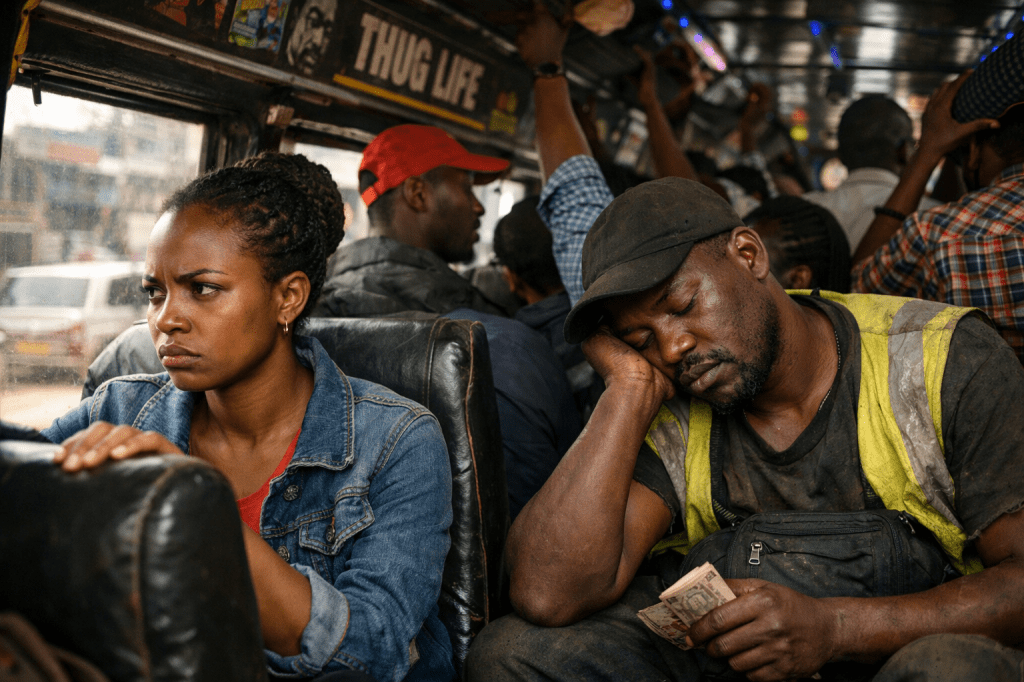
I had just gotten into a matatu going to town and was seated by the window. I had a lady beside me, a well-dressed one at that, a lady who seemed to have just left the workplace. Clean clothes, ironed clothes, and the handbag was also tidy. A person who likes everything to be done in silence.
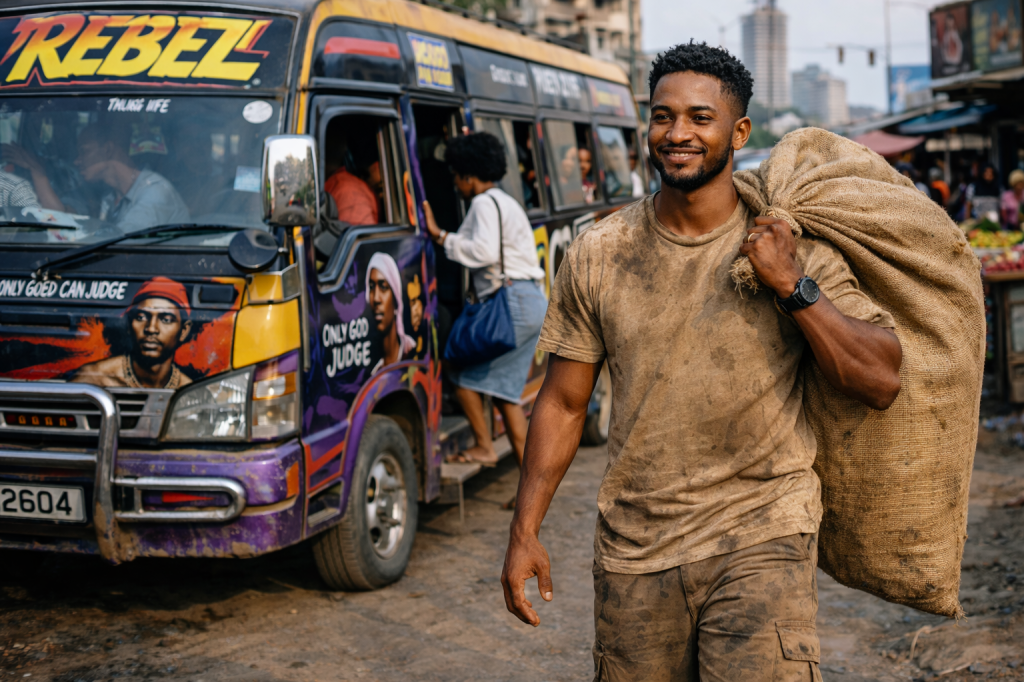
Out of the matatu before it set off, I could see a young man with a big sack. All Kenyans know about those beba beba guys. Those men who survive by helping passengers carry their luggage into matatus at the stage. Some people call them beba guys. Their work is simple but hard. Lift bags. Carry sacks. Help passengers. Of course, for a few coins.
This particular young man looked exhausted. His shirt was faded, his trousers dusty, and sweat ran down his face. The sack was heavy on him and he was standing aimlessly at the entrance of the matatu. He stood beside the door. Not begging. Not demanding but just waiting.
Because everyone knows the routine in Nairobi town. When someone helps you carry luggage, you give them something small. Maybe twenty shillings. Maybe thirty. Maybe fifty if you’re feeling generous. It’s not about the amount. It’s about acknowledging the effort. But something strange happened. The woman calmly sat down beside me… completely ignoring the young man.
She looked straight ahead as if nothing had happened. The young man stood there quietly, still hoping she would notice. Seconds passed. Nothing. The conductor saw everything. Conductors are loud, impatient, sometimes rude, but they also have a strong sense of fairness when it comes to these street economies. He leaned into the matatu and said loudly, “Wee mama… lipa mtu wa mzigo. Wacha kujifanya hujui ni pesa anangoja.”
The whole matatu went silent for a moment. You could feel the tension immediately. The woman froze and felt embarrassed. Now she had been called out publicly. Slowly, and with clear annoyance, she opened her purse. Her movements were stiff, like someone forced to do something they didn’t want to do. After digging through her bag, she pulled out a single twenty-shilling coin.
She handed it to the young man like it was costing her something precious. You could almost feel the pain in that gesture. The young man received the coin with both hands. Then something surprising happened. He smiled slightly and said softly, “Asante sana.” Thank you very much. Then he leaned forward politely, nodded, and walked away. No complaints. No attitude. Just gratitude.
The matatu door slammed shut, and we drove off. But the story didn’t end there. The woman beside me was now clearly annoyed. Her face was tight. Her lips pressed together. She stared out the window with the expression of someone who had been deeply offended. Not by losing twenty shillings. But by being reminded that she owed someone.
Meanwhile, I was sitting beside her… typing on my phone. And yes, I will admit something. My screen brightness was at 200 percent. Completely unnecessary. But I was typing this story. And she could see every word glowing brightly from my screen like a billboard of judgment. Every few seconds, she glanced sideways. Each time her expression tightened a little more. At this point, her annoyance had multiplied. Maybe twenty times. But what fascinated me was the strange scene I had just witnessed.
Think about it. The person who did the hardest work walked away thankful for twenty shillings. The person who gave the twenty shillings looked personally offended for giving it.
Same moment. Two completely different experiences. And that is when something clicked in my mind. The people who are underpaid often understand value better than anyone else. That young man knows exactly what twenty shillings means. To some people, it is nothing.
To him, it might be lunch. Or fare home. Or the difference between having tea that evening… or going without. For him, money is never theoretical. It is practical. Immediate and real. That is why gratitude becomes part of survival. Not performance. He didn’t say thank you to look polite. He said it because he truly meant it.
Now look at the other side. The woman wasn’t angry about the twenty shillings itself. She was angry because she had been reminded she owed someone. People hate that feeling, especially when it happens in public. The conductor didn’t just ask her to pay. He exposed her hesitation. And suddenly her ego felt bruised. So instead of the twenty shillings feeling like a fair exchange for the work done, it felt like an insult to her pride. That’s how ego works. It twists simple situations. And the truth is something else I have noticed over the years.
People with fewer options tend to be more loyal. Not because they lack ambition, but because when you don’t have ten backup plans, you protect the one opportunity you have. You show up on time. You respect people. You say thank you. Even when the world gives you very little. Meanwhile, people who have more choices sometimes confuse independence with entitlement. Not always. But often enough to notice patterns. They begin asking strange questions like: “How do people survive using matatus every day?” “How can someone live without a car?”
Yet millions of Kenyans wake up every morning, board crowded matatus, work long hours, and still manage to build honest lives. Humility grows easily when life teaches you the value of small things. A plate of food. A safe ride home. Twenty shillings. That young man walked away lighter, grateful for a small coin.
The woman sat beside me heavier, annoyed about losing the same coin. Two people. Two completely different worlds. And as the matatu continued through Nairobi traffic, I kept typing with my glowing screen beside her. Petty? Maybe, but also strangely effective. Because every time she glanced at the bright words on my phone, her expression shifted again.
Perhaps she was replaying the moment in her head. Perhaps she was wondering if people had judged her. Or maybe she was simply regretting that twenty-shilling decision… now displayed in full high definition. But somewhere outside, that young man was already helping another passenger. Lifting another bag. Waiting patiently again. Still grateful. Still humble. Still working. And in that moment I realized something important.
Sometimes the people with the least money carry the greatest wealth. The wealth of humility. The wealth of gratitude. And the quiet strength to say “thank you”… even when the world gives them very little.




 Sure Media Magazine
Leave a comment