
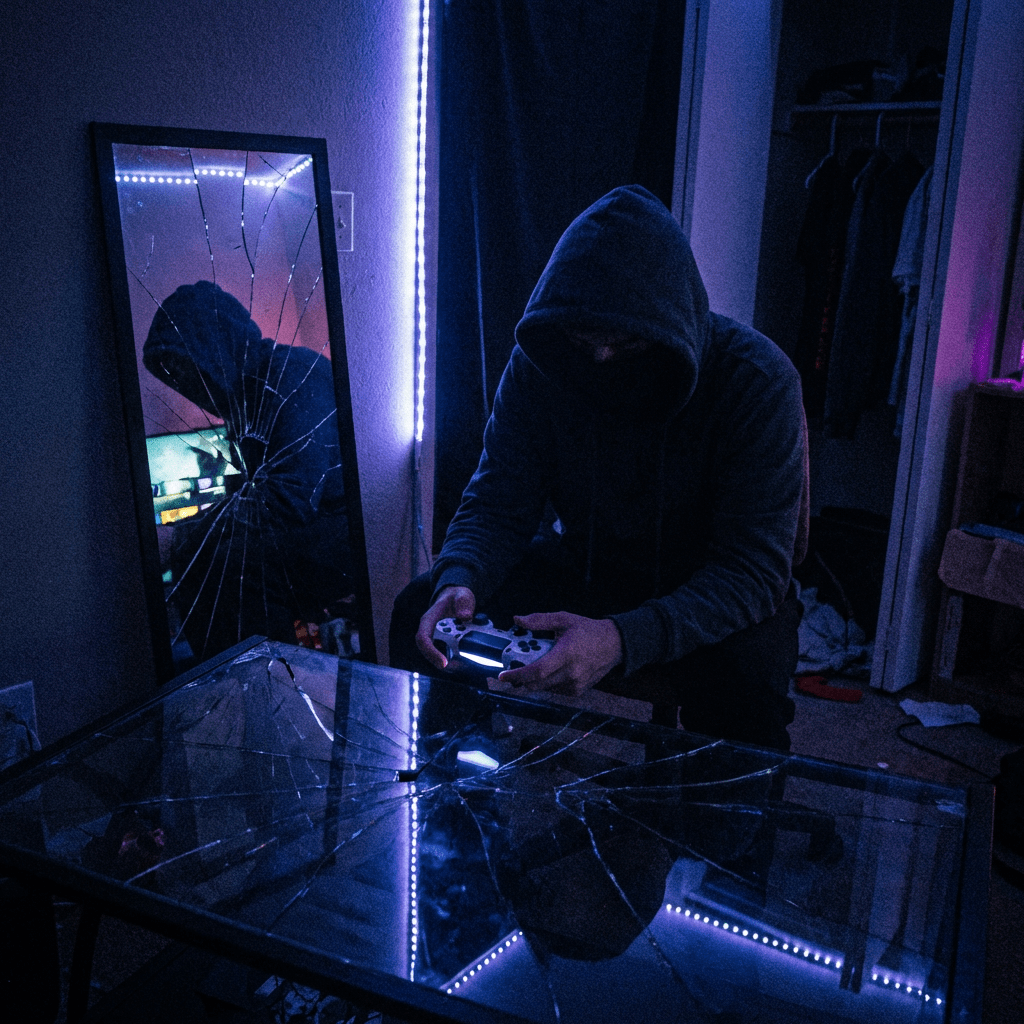
On a rainy Thursday night, Lena sat hunched over her laptop, the glow from the screen the only light in her tiny studio apartment. Her real-life bank app sat open in one browser tab, stubbornly displaying the same three digits that never seemed to grow. In another tab, an overdue notice for her electricity bill. In the game window in front of her, though, she was not Lena at all.
She was an immigration officer.
“Papers, please.”
On screen, a man in a faded coat slid his documents toward her. The clock in the corner ticked down. Every second she hesitated meant less pay. Less heat. Less food for her pixelated family.
She checked his work permit. Expired. She glanced at his passport. Wrong seal. She clicked through the rulebook, the way she had done a hundred times. Then she saw the note.
“My wife is behind me. She has all the correct papers. Please let us both through.”
Lena froze, hand hovering over the virtual stamp. She already had two citations for mistakes that day. A third fine meant she would not have enough to heat her in-game apartment, and the game would punish her with a sick child. She stared at the man. At the clock. At the line growing outside the booth.
Her real radiator clanged to life in the corner of her room. It was running on borrowed time. If she missed the bill again, the heat would go. She knew what that felt like. The winter a few years back, when she had spent three nights sleeping in a coat and two sweaters, doing pushups at 3 a.m. to stop the shivering.
She hit “deny.”
The man walked away. His wife appeared, papers immaculate. Lena let her in. The game moved on. A red slip popped up, informing her that she had separated a family. No fine. Just guilt.
She stared at the screen, waiting for something larger to happen. A riot. A confrontation. Some recognition that the choice felt terrible. Instead, the next person stepped up to the booth. New documents. New puzzle.
It took her a few more shifts at that virtual border for the tension in her chest to fade. Over time, the pattern took over. Check name. Check date. Check seal. Click. Stamp. Click. Stamp. She began to see the shifts as a rhythm she could master. On her second playthrough, she barely read the stories attached to each character. Their pleas became background noise. The only thing that truly mattered was efficiency.
Her own life did not work this way.
There was no score for how many shifts she picked up at the convenience store. No clear rulebook for why her rent had gone up again when the hallway still smelled like mold. No red slip popped up when the welfare office made a mistake on her paperwork. Just hours of waiting on a cracked plastic chair, then being told to come back with “one more document” that nobody had mentioned before.
After a long evening juggling virtual passports, Lena finally closed the game and flipped back to her bank app. Same numbers. Same dread. Only now, the contrast stung.
For a few hours, she had been applauded for surviving in a system designed to crush her character. The game had rewarded her for decoding it. Memorizing its logic. Beating it.
Her actual poverty did not feel like something she could beat.
As she scrolled through glowing reviews calling “Papers, Please” an empathy machine, a thought lodged itself in her mind that she could not shake.
Empathy for who?
The people writing those reviews talked about how the game helped them “understand” the pressure of living paycheck to paycheck, the impossible choices between morality and survival. They described the nausea of turning someone away to save their own digital family. They talked about feeling changed.
Then they switched off their computers. They went to bed in homes where the heat stayed on without a second thought.
Lena did not hate the game. Parts of it were brilliant. Sometimes, during quiet moments, she found herself thinking about the characters she had let through, wondering what happened to them. But every time she saw someone online call the experience “what poverty feels like,” she felt something in her tighten.
No. This was not what poverty felt like.
Poverty was swallowing your pride as you walked into a food bank and pretended you were “just helping a friend.” It was hiding overdue notices in a drawer when people visited, in case they opened the mail by mistake. It was calculating whether you could afford laundry this week or if you had enough underwear to stretch it one more.
You did not get a “restart day” if you chose wrong.
Weeks later, a friend sent her a link to another indie success story. A gentle little game about moving house called “Unpacking.” It had glowing write-ups about how it captured the awkwardness of living in cramped shared spaces, how the limited shelves and tiny kitchens told a quiet story about class.
Lena tried it out.
She placed mugs in cupboards and stacked books by the bed. She shifted a single electric kettle from apartment to apartment, a recurring object the game clearly wanted her to notice. The cramped spaces were familiar: the shared bathroom, the crooked blinds, the way you could hear a neighbor breathing through the wall.
But here, everything eventually clicked into place. Every item found its “correct” spot. The game let her drag the furniture, straighten the frame, tuck away the clutter. It rewarded order. Every level ended with a screenshot of a tidy room, bathed in warm light.
Her own moves had not ended with anything that looked like that. They were rushed, sweaty, chaotic. The last time her landlord raised the rent, she had dragged garbage bags full of possessions into a taxi because she could not afford movers. She slept that first night among open boxes, her alarm set for a 6 a.m. shift at work.
No cheerful chime announced that she had arranged her things in an acceptable layout. She just collapsed fully dressed on the mattress and hoped the neighbors would not fight too loudly.
As she clicked objects into their intended places in the game, she recognized familiar items: cheaper cookware, mismatched plates, a chipped mug. They were meant to signal “ordinary life.” Relatable struggle. But the structure around them told a different story. No matter how awkward each new space felt at first, it could always be solved. There was always enough room, if you made the right choices.
Lena realized then why these games nagged at her.
They treated survival as a puzzle.
Learn the pattern. Find the right sequence. Accept a few difficult compromises. You win.
Her real life kept reminding her that survival, for her and for many people like her, was not a matter of mastering a system cleverly designed by a distant mind. It was about living under rules she had no say in and watching them change without warning. It was landlords deciding to cash in on a hot rental market. It was a government cutting benefits. It was a manager shaving hours off the schedule without explanation.
The more she thought about it, the stranger it seemed that people who had never skipped a meal to stretch their paycheck were the ones crafting these digital experiences of “being poor.”
At a local library talk a few months later, a popular indie developer spoke proudly about using games to “help players understand economic hardship.” He shared slides of heartfelt emails from fans who said his work had opened their eyes.
During the Q&A, Lena raised her hand.
“You said your game lets people feel what it is like to choose between feeding your family and paying bills,” she said. “How many people who have actually had to make that choice were involved in designing how those decisions work in your game?”
He paused.
“Well,” he began, “we did a lot of research. We read memoirs. We spoke to experts. We wanted to be respectful.”
“But did you bring anyone who has lived through it into the design team?” she pressed. “Not just as consultants. As people who could say, ‘this is not how it works, this is not how it feels,’ and actually change the mechanics?”
Silence settled over the room. The developer fumbled. He mentioned budget constraints. He mentioned timelines. He mentioned good intentions.
Lena listened, feeling that familiar split.
On one screen, a thoughtful creator, admired for tackling serious topics in his art. On another, her own landlord’s latest text about “market rates,” waiting unanswered on her phone.
Later that night, she walked home past an arcade with bright posters in the windows. Ads for bombastic shooters and adorable farming sims. In between them, a minimalist flyer caught her eye.
“Step into someone else’s shoes,” it said. “A game about surviving on the edge.”
She thought about those words. Step into. Not stay in. Not live with. Just step in, look around, and step back out again.
Her phone buzzed. A friend had sent her a screenshot of one of those glowing reviews of “Papers, Please,” praising how it “makes you feel the true cost of every decision.”
Lena typed back.
“I liked it,” she wrote, then paused.
She deleted the words.
“It is smart,” she sent instead. “But you cannot feel the true cost of every decision if you can always switch the game off.”
She tucked her phone back into her pocket and kept walking, the rain picking up around her. Somewhere, a studio full of well-meaning people were probably brainstorming their next “empathy” project, ready to turn someone else’s crisis into an elegant set of mechanics.
She wondered what it would look like if, one day, the people who actually lived on the edge were not just the inspiration, or the flavor text, or the faces on screen.
What if they were the ones holding the design document, deciding which choices matter, and which systems you cannot win, no matter how well you play?






 Sure Media Magazine
Leave a comment