
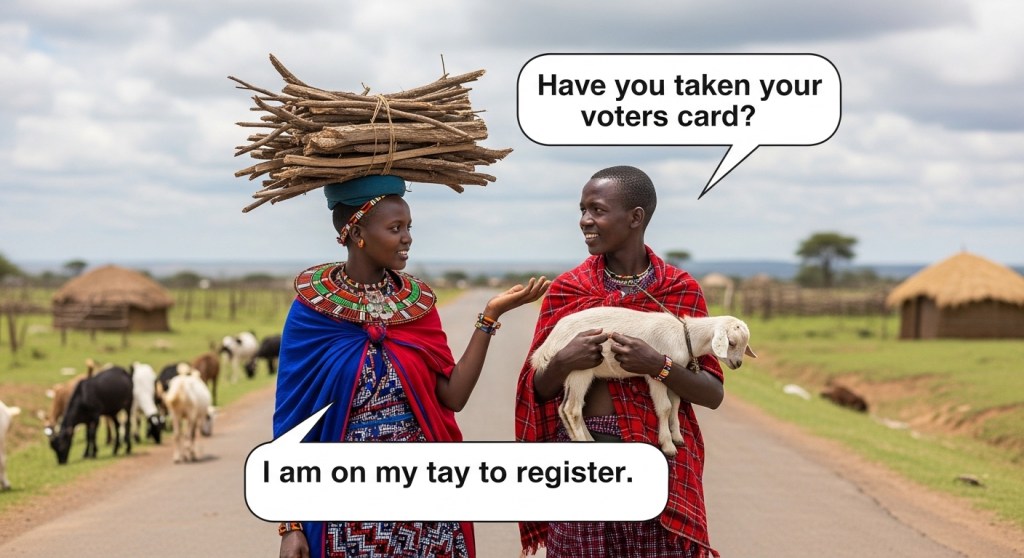
Kenya is young, but youth rarely decide elections. In Isiolo County, this is even more striking, a few hundred votes can determine a Member of County Assembly, a few thousand votes can decide a Governor or MP. The youth have the power to decide the next election but only if they register and vote.
In Isiolo County, elections are not decided by millions of people. Very small numbers of voters decide them properly. That group is the youth. The youth in Isiolo have the numbers, but numbers only matter when they are converted into registered voters and actual votes. In a democracy, votes are the voice of change, and the youth of Isiolo must begin to use that voice.
The Power of Numbers in Isiolo Elections
Isiolo County has a relatively small voter population compared to many other counties in Kenya. This makes elections very competitive and often decided by small margins. In such an environment, a small increase in voter turnout from one group can completely change election outcomes.
Young people form a large percentage of the population in Isiolo. If youth registered and voted in large numbers, they could influence who becomes MCA, MP, Governor, Women Representative, and Senator. The political reality is simple. Leadership is not chosen by the entire population. Leadership is chosen by those who register and vote.
Think of it like a football match: a team with 10,000 fans but only 1,000 showing up loses to a smaller team with 3,000 fans if 2,500 show up. The group that shows up wins.
This means the most powerful group is not the largest population group but the group that actually votes. If the youth in Isiolo understood this clearly, voter turnout among young people would increase significantly.
Voter Registration Is the Real Battlefield
Many people believe elections are decided on voting day. In reality, elections are largely decided during voter registration. If a young person is not registered as a voter, they are completely excluded from the election process. If you are not registered, you do not exist politically.
The electoral body, the Independent Electoral and Boundaries Commission, has repeatedly raised concerns about low youth voter registration across the country, especially in smaller counties and rural areas. Registration numbers in some areas have remained very low compared to the number of eligible young people.
In counties like Isiolo, low registration numbers mean a small group of voters ends up deciding leadership for the entire county.
This is why voter education should focus heavily on registration, transfer of polling stations, and understanding the electoral process. The real election begins when voter registration opens, not on voting day.
The Myth of Youth Apathy in Isiolo
It is often said that young people are not interested in politics. This is not entirely true. Many young people in Isiolo actively discuss politics in markets, on social media, in bodaboda stages, and in community meetings. They have strong opinions about leadership, development, jobs, and opportunities.
The problem is not lack of interest. The problem is lack of participation in formal processes like voter registration and voting. There is a gap between political discussion and political action. Many young people talk about leadership but do not register as voters or do not show up to vote.
Talking politics is like analyzing a football match; voting is playing it. Only action changes outcomes. Closing this gap should be the main focus of civic and voter education in Isiolo.
Issue-Based Voting and Leadership Accountability
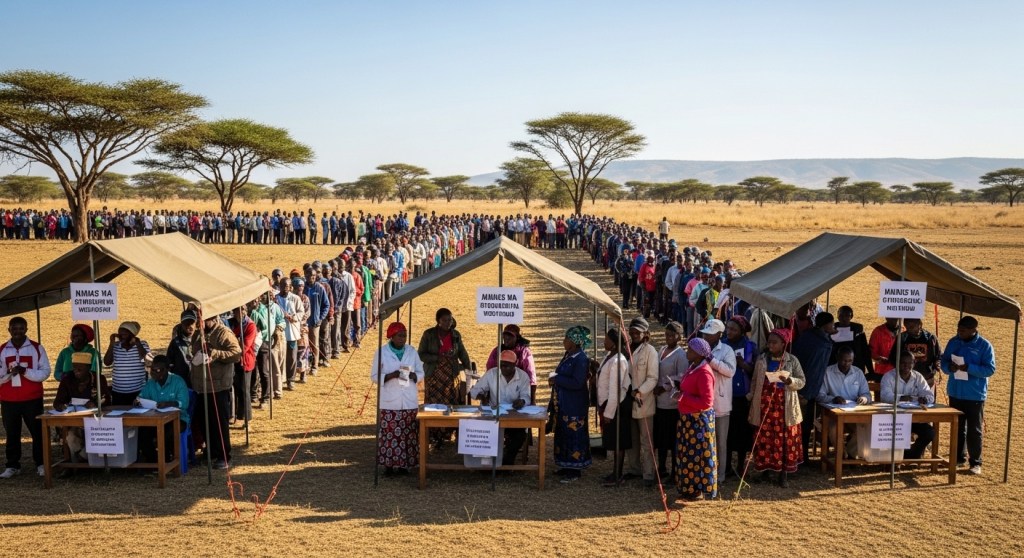
For the youth vote to truly bring change in Isiolo, voting must move away from clan politics, short-term incentives, and personality politics. Young voters must begin to ask leaders serious questions.
Young voters should ask:
- What is your plan for water in Isiolo?
- What is your plan for youth employment?
- What is your plan for business and markets?
- What is your plan for roads and infrastructure?
- What is your plan for education and skills training?
- What is your plan for technology and internet access?
When voting becomes issue-based, leaders become more accountable, and development becomes the focus of elections.
The Cost of Not Voting
Not voting is not a neutral decision. It has consequences. When young people do not vote, leaders focus on groups that consistently vote. Resources, development projects, and political attention are directed towards those groups.
Many young people complain about unemployment, lack of opportunities, poor infrastructure, and lack of support for business and innovation. However, many of these issues are influenced by leaders who are elected through voting. Choosing not to vote is therefore choosing not to influence these decisions.
Voting is not just a civic duty. It is a tool for power and influence. Votes are the voice of change, and those who vote decide leadership, development priorities, and the future of their county.
Small numbers, Big Impact
The youth of Isiolo are not powerless. In fact, they may be the most powerful political group in the county if they register and vote in large numbers. Elections in Isiolo are decided by small numbers, which means organized youth voters can determine election outcomes.
As the next election approaches, the most important conversation should not just be about candidates but about voter registration, civic education, and youth participation. The youth must register, vote, and vote based on issues that affect their future.
Votes are the voice of change. If the youth of Isiolo use that voice, they will not just participate in the next election. They will decide it.






 Sure Media Magazine
Leave a comment