
When Numbers Look Right, but Outcomes Fall Short
Development programs often highlight their success with impressive numbers.
Thousands of young individuals have been trained.
Hundreds of schools have received support.
Millions of individuals have been reached through health campaigns.
These numbers show effort, reassure funders, and suggest progress.
But these numbers miss an important question: what real changes happened for the people involved?
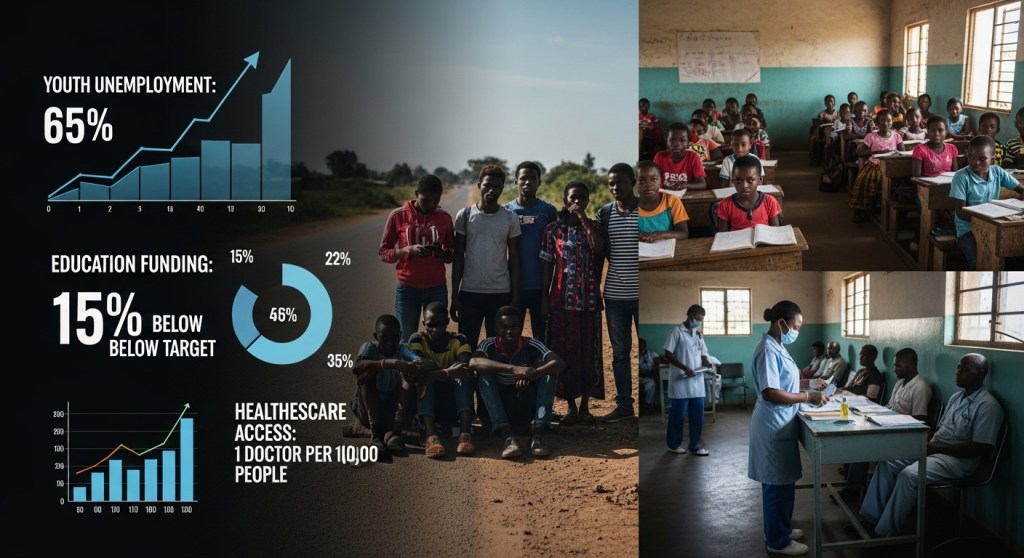
A youth training program might graduate hundreds, but many still struggle to find steady jobs months later. In many countries, more students enroll in school, yet learning outcomes vary, and some finish primary school without basic reading skills. In healthcare, clinics may see more visits, but preventable diseases continue to rise in those communities.
Program activities are easy to see, but the real changes they bring aren’t always clear.
The Importance of This Gap for Policy and Investment
This problem goes beyond reporting; it affects how decisions are made and resources are allocated.
The World Bank has consistently highlighted that numerous development programs monitor service delivery without assessing whether these services lead to improvements in income, learning, or health over time.
Similarly, the Organization for Economic Co-operation and Development observes that inadequate measurement systems hinder the differentiation between active and effective programs.
When this difference isn’t clear, funding often favors visible activities over real results.
“What gets measured gets funded, but what matters most is often left unmeasured.”
The Measurement Challenge: Activity vs. Real Change
Most monitoring systems focus primarily on outputs.
These systems focus on simple questions like:
- How many individuals attended?
- How many services were delivered?
- How many resources were distributed?
These indicators are helpful, but they only show delivery, not real impact.
Outcomes extend beyond outputs to address:
- Did income increase?
- Did learning improve?
- Did health outcomes improve and sustain over time?
To track these outcomes, you need follow-up, better data systems, and more time.
Because outputs are easier to measure, they often become the default indicators.
Over time, activity metrics often replace true impact measurement.
Why Measurement Systems Continue to Fall Short
Short Funding Cycles Prioritize Immediate Results
Most development programs work on fixed schedules, with donors wanting to see progress within months or a few years.
Outputs provide immediate evidence, whereas outcomes require longer periods to manifest.
This situation encourages a focus on quick results, even when the long-term impact is uncertain.
Social Outcomes Are Shaped by Multiple Factors
Development outcomes seldom depend on a single intervention.
For example, youth employment depends on many factors. Training alone doesn’t guarantee a job; factors such as labor market demand, access to capital, infrastructure, and the economy also play a role.

When multiple factors influence outcomes, measuring impact becomes more complex and less predictable.
Limited Data Systems Restrict Long-Term Tracking
Tracking real change necessitates continuity.
In numerous contexts, particularly in rural or under-resourced environments, organizations lack systems for longitudinal follow-up with beneficiaries.
In the absence of such continuity, measurement ceases at the point of service delivery.
Incentives Often Discourage Honest Evaluation
Organizations rely on funding that often depends on demonstrating success.
Sharing mixed or negative results is often seen as risky, even though it offers important insights.
As a result, reports usually focus on positive outcomes and overlook implementation challenges.
What Current Metrics Capture and What They Miss
Commonly Measured Indicators
- Number of beneficiaries reached
- Trainings conducted
- Services delivered
- Program coverage
Often Overlooked
- Long-term income stability
- Quality of learning outcomes
- Sustained behavior change
- Impact following the conclusion of funding
- Unintended consequences
Sources: World Bank, OECD, development evaluation research
Sector Examples Illustrating Prominent Gaps
Education: Access Without Corresponding Learning
Global education initiatives have substantially increased school enrollment rates.
However, many students complete primary education without acquiring foundational literacy and numeracy skills. While systems effectively track attendance, measuring learning outcomes remains more challenging.
Workforce Development: Participation Without Corresponding Employment
Youth training programs often report high participation rates.
However, when training is not aligned with labor market demand, employment outcomes remain limited.
Participation alone does not necessarily translate into employment opportunities.
Healthcare: Access Without Improved Outcomes
Healthcare programs frequently measure success by increased service utilization.
However, if care quality is inconsistent or preventive systems remain weak, health outcomes may not improve significantly.
Access alone is insufficient to ensure improved health outcomes.
Rethinking Measurement: Transitioning from Activity to Outcomes
Since metrics shape decisions, improving them should be a top priority.
Programs should define success by the outcomes from the start, focusing on real changes in people’s lives rather than just on services delivered.

Funding models must support extended evaluation timelines, as sustainable change requires time.
It’s also important to create room for learning. Programs get better when organizations adjust based on evidence, including lessons from failures.
Institutions such as the United Nations Development Programme increasingly promote results-based management frameworks that emphasize long-term impact.
Developing More Effective Measurement Systems
Improving measurement doesn’t have to be complicated, but it does need clear goals and a purpose.
- Define success in terms of tangible outcomes in income, health, and education.
- Invest in systems that facilitate long-term tracking.
- Incorporate community feedback into evaluation processes.
- Make sure incentives encourage learning and adapting, not just reporting.
These changes redirect focus from activity metrics to impact measurement.
Why Measurement Shapes the Future of Social Impact
Measurement isn’t just a technical tool. It guides the way forward.
The metrics organizations select influence their priorities.
Their priorities determine funding allocations.
Funding decisions influence which programs scale.
If systems keep measuring activity, they will keep rewarding activity.
Conversely, measuring real change can foster meaningful impact.
Conclusion: Transitioning from Assumed Impact to Demonstrated Results
The most important changes in people’s lives are often the hardest to measure, yet they have a real impact.
For policymakers, donors, and development leaders, prioritize outcome-based measurement.
Support long-term evaluation. Encourage transparency and learning.
We shouldn’t assume impact just because activities happened.
Impact must be shown through real, measurable change.
Implementation Imperative
To make social impact investments more effective, institutions need to take practical steps:
- Redirect funding toward programs that demonstrate measurable outcomes over time.
- Strengthen national and organizational data systems.
- Promote evidence-informed adaptive program design.
- Foster accountability mechanisms incorporating community feedback.
When these parts come together, measurement goes beyond reporting and becomes a tool to create real, lasting impact.





 Sure Media Magazine
Leave a comment