
In a crowded outpatient clinic in Nairobi, 24-year-old Brian* sits quietly, his eyes fixed on the floor as he waits for his name to be called. To anyone passing by, he looks like a healthy young man—energetic, full of life, and in the prime of youth. But beneath that appearance lies a reality he rarely shares: Brian has been living with hypertension for three years.
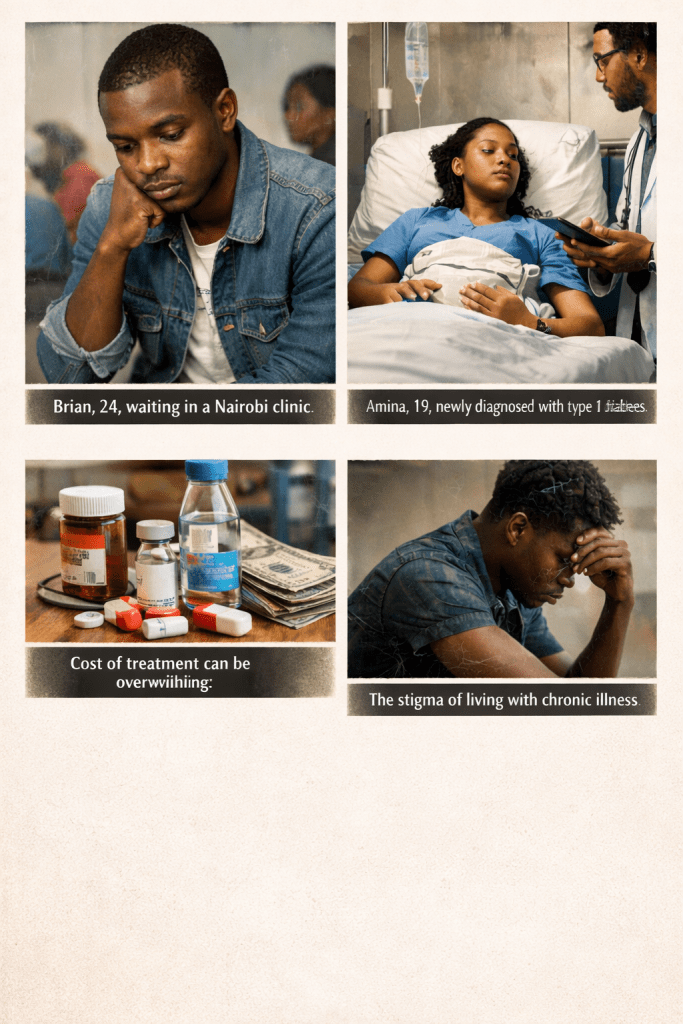
“I didn’t believe it at first,” he says. “High blood pressure is for old people, right?”
Brian’s story is not unique. Across Africa, a growing number of young people are silently battling chronic illnesses—conditions long associated with older populations. From diabetes and hypertension to sickle cell disease, these illnesses are reshaping the health landscape in ways that remain largely underreported.
A Silent Shift in Disease Patterns
Traditionally, Africa’s health narrative has focused on infectious diseases. But today, non-communicable diseases (NCDs) are rising rapidly, and young people are increasingly affected.
In hospital wards and outpatient clinics, it is no longer unusual to meet patients in their 20s and 30s managing lifelong conditions. Many are diagnosed late, often after complications have already begun.
Take Amina*, a 19-year-old university student diagnosed with type 1 diabetes after collapsing during lectures. For months, she had experienced fatigue, excessive thirst, and weight loss—symptoms she dismissed as stress.
“I thought I was just tired from school,” she recalls. “I didn’t know my body was shutting down.”
Her diagnosis came only after a medical emergency.
The Cost of Staying Alive
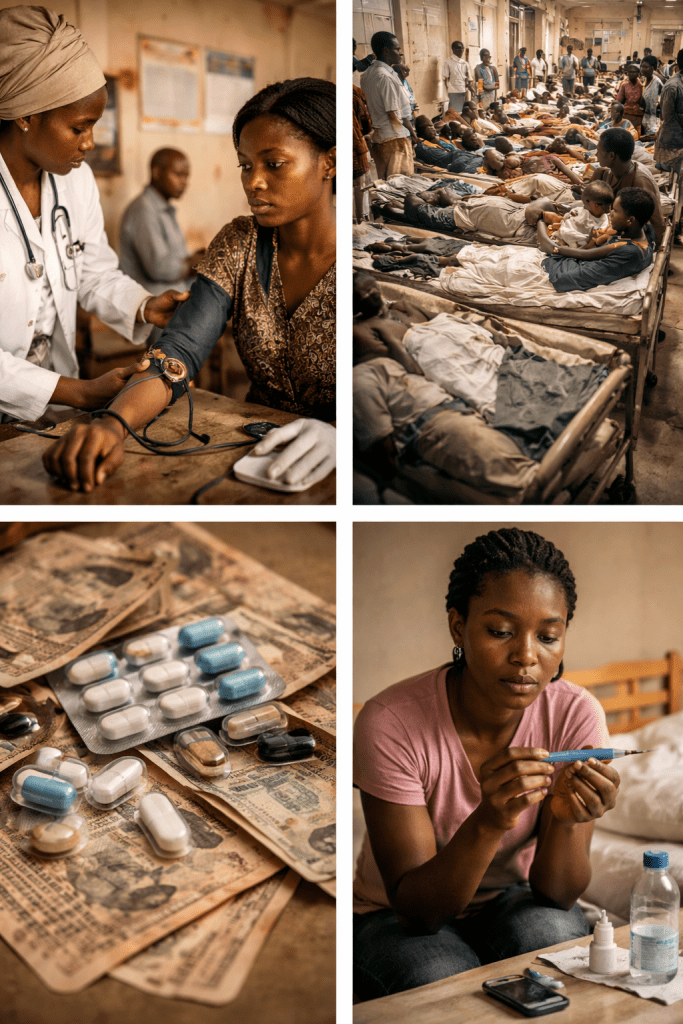
For many young patients, the diagnosis is only the beginning of a difficult journey. Managing chronic illness comes with a heavy financial burden—one that is often underestimated.
Insulin, antihypertensive drugs, regular lab tests, and clinic visits can quickly add up. In countries where many pay out-of-pocket for healthcare, this creates a constant struggle.
“I have to choose sometimes,” Brian admits. “Do I buy my medication, or do I pay rent?”
This financial strain leads many to skip medication, delay appointments, or abandon treatment altogether—decisions that can have life-threatening consequences.
Stigma and Silence
Beyond the physical and financial challenges lies another, less visible burden: stigma.
Many young people choose not to disclose their conditions to friends, colleagues, or even family members. Chronic illness, especially among the youth, is often misunderstood.
“There’s this fear,” Amina explains. “People think you’re weak, or that something is wrong with you.”
For patients with conditions like sickle cell disease, the stigma can be even more pronounced. Misconceptions about the disease often lead to social isolation, discrimination, and emotional distress.
As a result, many suffer in silence—navigating their conditions alone.
Late Diagnosis: A Dangerous Pattern
One of the most concerning trends is the late diagnosis of chronic diseases among young people.
Routine screening is not common practice for this age group. Many only seek medical attention when symptoms become severe.
As a medical student, I have witnessed this firsthand—young patients presenting with advanced complications that could have been prevented with early detection.
A 27-year-old patient once arrived at the emergency unit with a stroke—later found to be caused by uncontrolled hypertension he never knew he had.
“I felt fine,” he said. “I didn’t think I needed to check.”
Bridging the Gap: Awareness and Action
Addressing this silent crisis requires a shift in both perception and practice.
- Awareness campaigns must target young people, emphasizing that chronic diseases do not discriminate by age
- Routine screening should be encouraged, even in seemingly healthy individuals
- Affordable healthcare access is critical to ensure continuity of care
- Open conversations can help break the stigma surrounding chronic illness
Healthcare systems must adapt to this changing reality—one where youth are no longer exempt from chronic disease.
A Generation at Risk—and Resilient
Despite the challenges, many young patients show remarkable resilience.
They learn to adapt, to manage, and to live fully despite their diagnoses. But resilience should not be mistaken for ease. Behind every strong face is a story of struggle, adjustment, and quiet courage.
Brian now takes his medication daily. Amina monitors her blood sugar with discipline. Their lives have changed—but they continue to move forward.
“I just wish more people knew,” Brian says. “So they can check early… and not go through what I did.”
Conclusion
The rise of chronic illness among young Africans is a quiet crisis—one unfolding in clinics, homes, and communities across the continent.
It is a story of delayed diagnoses, financial hardship, and silent battles. But it is also a story of resilience and the urgent need for change.
Because behind every statistic is a young person—living, hoping, and fighting a condition the world still struggles to see.
Names have been changed to protect patient privacy.




 Sure Media Magazine
Leave a comment