
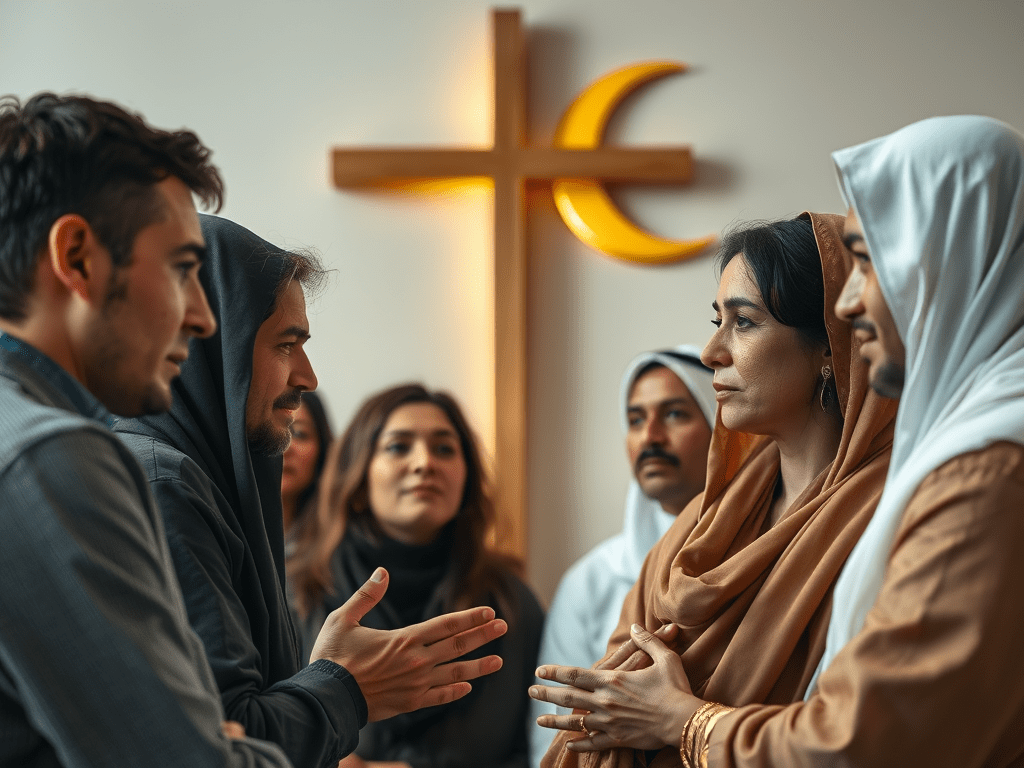
Religion today grapples with profound controversies that pit ancient scriptures against modern ethics, science, and human rights. Topics like LGBTQ+ rights and abortion dominate debates, dividing congregations, nations, and interfaith dialogues. These issues raise questions of sin, morality, and compassion. Christians turn to the Bible for guidance, while Muslims consult the Quran and Hadith. Central to Christian reflection is Romans 3:23: “For all have sinned and fall short of the glory of God.” This verse underscores human equality in frailty, shaping how believers treat those entangled in controversy—not with superiority, but with humble grace.
One flashpoint is LGBTQ+ rights and same-sex relationships. Traditional biblical interpretations denounce homosexual acts. Leviticus 18:22 states, “You shall not lie with a male as with a woman; it is an abomination,” echoed in Leviticus 20:13 with severe penalties under Old Testament law. In the New Testament, Romans 1:26-27 describes same-sex relations as “contrary to nature,” resulting from idolatry and excess. 1 Corinthians 6:9-10 lists “men who practice homosexuality” among those who will not inherit God’s kingdom. Conservative scholars argue Jesus affirmed male-female marriage in Matthew 19:4-6, citing Genesis 1:27 and 2:24 as creation’s design. Progressive Christians counter that these passages address exploitation, idolatry, or pederasty in ancient contexts, not consensual modern relationships. They emphasize overarching themes of love (John 13:34-35) and inclusion, noting Jesus never explicitly condemned homosexuality.
Islamic views traditionally condemn homosexual acts, drawing from the Quran’s account of Prophet Lut (Lot). Surah Al-A’raf 7:80-81 records Lut rebuking his people: “Do you commit such immorality as no one has preceded you with from among the worlds? Indeed, you approach men with desire, instead of women.” Similar verses in Surah 26:165-166, 27:54-55, and 29:28-29 portray the people’s lust toward men as transgression, punished by destruction. Traditional Sunni and Shia jurisprudence view the act as a major sin (kabira), forbidden outside heterosexual marriage. Some Muslim-majority countries enforce harsh penalties. However, progressive Muslim scholars, especially in the West, reinterpret the Lut story as condemning rape, inhospitality, or idolatry—not loving same-sex unions. A growing minority argues the Quran lacks explicit reference to modern consensual LGBTQ+ identities, advocating mercy and anti-discrimination stances. Transgender issues receive nuance; Iran, for instance, permits gender-affirming surgery under certain fatwas. Overall, mainstream Islamic teaching upholds binary gender and heterosexual norms as divine order.
Abortion sparks equally fierce debate. The Bible contains no direct command but affirms life’s sanctity from conception. Psalm 139:13-16 declares God “knit me together in my mother’s womb,” while Jeremiah 1:5 says, “Before I formed you in the womb I knew you.” Exodus 21:22-25 imposes penalties for harming a pregnant woman, with some reading the fetus’s loss as warranting justice akin to murder. Genesis 9:6 and the Sixth Commandment (“You shall not murder”) underpin pro-life views, seeing the unborn as bearing God’s image. Yet interpreters note Exodus 21 treats fetal loss as a fine rather than capital offense if the mother survives, suggesting the fetus holds lesser status than a born person in ancient Israelite law. Jesus’ silence and themes of mercy fuel progressive arguments for women’s autonomy in tragic cases.
Islam approaches abortion with graded stages of fetal development. The Quran (23:12-14) describes progression from sperm to clot to lump to bones and flesh, with the soul (ruh) breathed in around 120 days per a Hadith in Sahih al-Bukhari. Before ensoulment (first 40-120 days), many jurists across Sunni schools (Hanafi, Maliki, Shafi’i, Hanbali) and Shia permit therapeutic abortion for valid reasons like maternal health, rape, or severe fetal anomaly—though some require spousal consent or scholarly approval. After 120 days, abortion is forbidden except to save the mother’s life, as the fetus is a full human soul. Traditional rulings emphasize preserving life (Quran 5:32), viewing unwarranted abortion as unjust killing. Modern Muslim bioethicists stress compassion, allowing flexibility in hardship while rejecting elective procedures as contrary to God’s mercy. No single fatwa binds all; interpretations vary by madhhab and context.
These controversies ultimately converge on sin and human dignity. Romans 3:23 reminds Christians that every person—conservative or progressive, straight or gay, pro-life or pro-choice—falls short. No one earns moral superiority; all inherit Adam’s fallen nature (Romans 5:12) and commit personal sins. This levels the field: the Pharisee judging the tax collector stands condemned too (Luke 18:9-14). Jesus modeled treatment of sinners with radical love—eating with tax collectors (Matthew 9:10-13), forgiving the adulteress (“Neither do I condemn you; go and sin no more,” John 8:11), and commanding “Judge not” (Matthew 7:1). Galatians 6:1 urges restoring the fallen “gently,” while Ephesians 4:15 calls for “speaking the truth in love.” Christians must denounce sin (as Scripture defines it) yet extend grace, offering repentance and redemption through Christ’s atonement (Romans 6:23). Hypocrisy—condemning others while ignoring one’s planks (Matthew 7:3-5)—undermines witness. In practice, this means supporting struggling individuals with counseling, community, and prayer rather than ostracism or violence. Evangelism replaces condemnation: all need the same Savior.
Islam shares emphasis on sin but differs fundamentally. Humans are born in fitrah (pure state), not inheriting original sin from Adam. Sin (dhunub or ma’siya) arises from individual disobedience, weakness, or Satan’s whisper. Repentance (tawba) restores one directly to Allah through sincere regret, cessation, and resolve—without intermediary. Quran 39:53 promises, “Do not despair of the mercy of Allah. Indeed, Allah forgives all sins.” Treatment of sinners involves enjoining good and forbidding evil (amr bil ma’ruf) with wisdom and kindness (Quran 16:125), not public shaming unless for hudud crimes. Mercy predominates: “My mercy prevails over My wrath” (Hadith Qudsi). Both faiths thus call for compassion, though Christianity roots it in shared guilt and vicarious atonement, while Islam stresses personal accountability and divine forgiveness.
In conclusion, controversies like LGBTQ+ inclusion and abortion test faith’s relevance amid cultural shifts. Biblical texts provide clear traditional boundaries, tempered by interpretive debates; the Quran offers decisive moral frameworks with room for mercy. Yet Romans 3:23 invites humility: “we” are all “them.” Christians treat fellow sinners—whatever their stance or struggle—by mirroring Christ: truth without compromise, love without exception. This approach fosters dialogue over division, redemption over rejection. As societies polarize, religions’ shared call to mercy offers hope. True faithfulness balances conviction with the grace that saved us all, for indeed, all have sinned.





 Sure Media Magazine
Leave a comment