
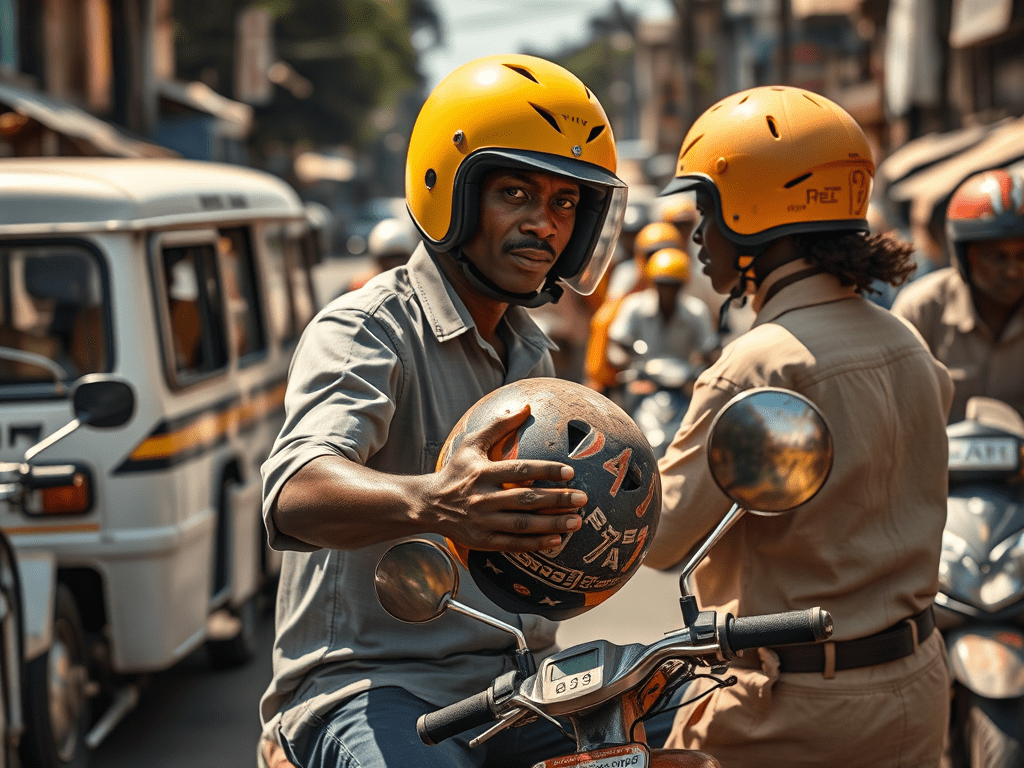
In the busy streets of Nairobi, where matatus honk, hawkers everywhere, there are boda bodas . Kenyas motorcycle taxis. They zip through gaps in traffic, ferrying office workers, students, market ladies, and anyone needing a quick, affordable transport. They’re a lifeline for many, but they’re also dangerous. Crashes are common, head injuries are brutal, and that’s why the NTSA regulations, require both riders and passangers to wear securely fastened helmets with fines that can hit KSh 10,000 if you don’t.
The Hidden Side of the Helmet Rule
But here’s the part no one talks about much: that helmet you’re handed at the stage? It’s probably been on dozens of other heads already today. Sweaty, oily, and dusty. In the humid heat, the foam inside never really dries out. A quick wipe with a rag at the end of the day,if that,and it’s back in action. No deep clean, no disinfecting. Passengers (especially women protecting styled hair or anyone worried about sweat) frequently refuse helmets for hygiene reasons
A Day in the Life of One Helmet
Picture a typical morning at a busy spot like Githurai. Rider John (I’ve changed his name) rolls up around 6 a.m. on his bike. He’s got two yellow helmets,and he straps his on. Passengers start queuing: a young woman in office clothes, a guy carrying a bag of potatoes, a student who wants a quick ride to school.. John insists: “No helmet, no ride.” Most put it on, some grumble.
The first passenger is off. The helmet goes straight to the next one—no wipe, no pause. Another short trip. Then another. By the end of the day, it’s touched 15, 20 heads, easy. Sweat builds up, the lining darkens, hair products and dandruff mix in. John shrugs when asked about cleaning. “I wipe it with a cloth at night. But washing the whole thing? It takes forever to dry, and I’m losing fares the next day.”
He’s not alone. Most riders operate on razor-thin margins—KSh 800 to 1,200 net after fuel, repairs, and whatever else. A decent KEBS-approved helmet costs KSh 1,500–5,000. Buying extras for every passenger? Not realistic when you’re hustling all day just to feed your family.
Why Passengers Say No
Passengers feel the same tension. Many women say it straight: “It messes up my hair, and who knows what I’m catching?” Others worry about lice, rashes, or worse.
Health experts back up the concern, even if hard data specific to Nairobi is thin. A 2012 Nigerian study (similar setup with shared commercial helmets) found bacteria like staph and strep, plus fungi that can cause boils, impetigo, or scalp infections. Head lice spread easily through close contact like this. Ringworm too. In our sticky climate, the risks feel real. Dermatologists at places like Kenyatta National Hospital see cases of irritation or infections from shared headgear, though boda helmets don’t get singled out in stats. Public health folks point out the bigger picture: boda bodas are mass transit for everyday Kenyans, yet hygiene rules lag way behind what’s expected on matatus or buses.
Possible Fixes and the Bigger Picture
Practical fixes aren’t impossible.
- Cheap disposable hair nets – Passengers can wear a thin hair net under the helmet.
- SACCOs could set up cleaning stations for helmets.
- Education campaigns could teach riders simple disinfection methods.
- Encourage minimum cleaning standards
Helmets protect dramatically in a crash—saving lives and easing the strain on hospitals—but the daily sharing quietly trades one risk for another. A rash, an itch, a fungal infection, a lice infestation: small costs that add up, especially for families already stretched thin.
The Quiet Compromise
It’s not that helmets don’t matter. They do, hugely. But in the everyday grind of getting around Nairobi, the shared helmet highlights a quiet compromise: safety on the road versus health in the moment.
Both deserve attention.





 Sure Media Magazine
Leave a comment