
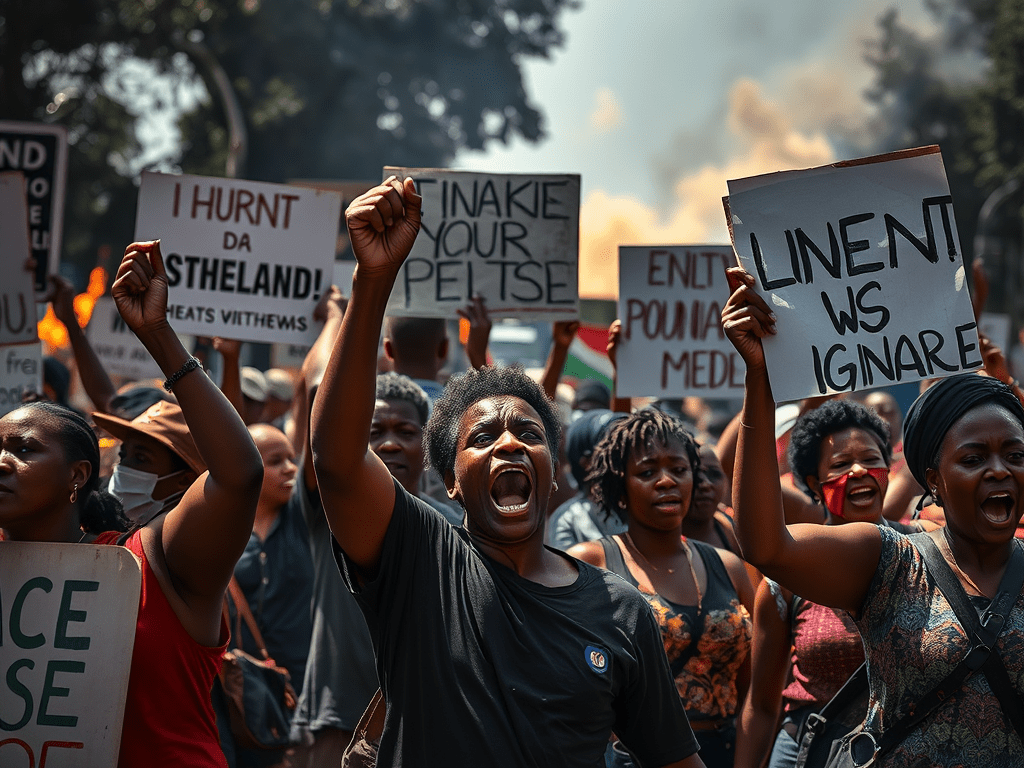
Take a walk through any Kenyan conversation, any chat, and you’ll find that same passion, that same fire, burning in every word from the dusty roads of Kibera to the crowded matatus weaving through Nairobi, and even in those heated discussions happening on WhatsApp, X, or any other platform. That same chant echoes through every conversation: “This government is failing us.” Inflation is up, jobs are disappearing, maize flour is increasing, police brutality is rampant, and promises from State House are distant memories of a bygone era.
But there is a harsh reality that is staring us straight in the face, one that is not pleasant, one that is not easy, one that is not convenient: those people, those individuals, those entities, those institutions, those powers, those forces, are more than we just know or can endure.
Maandamano Fury Misdirected? The MPs You Elected Are the Ones Crushing Kenya.
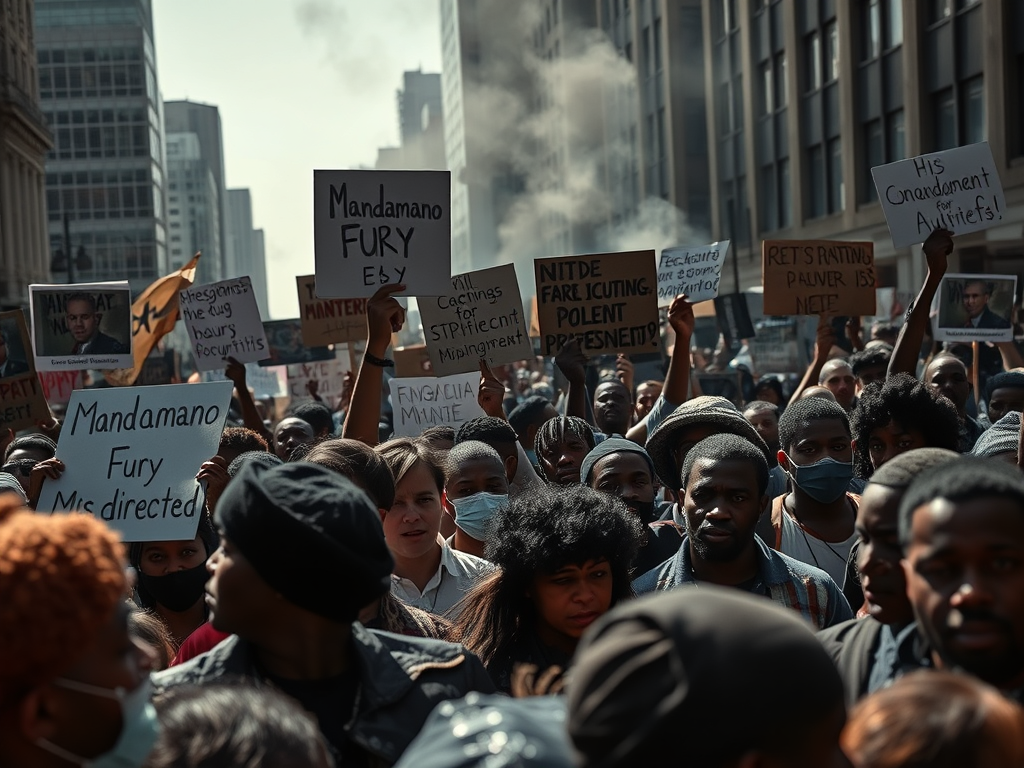
What if the problem is not just “bad leadership,” but a perilous misperception of where real power is hiding?
Think of the streets of Nairobi during the Gen Z protests: tear gas, burning tires, and impassioned rallying cries to hold leaders accountable. They protest against the Executive, but the real masterminds of Kenya’s agony remain invisible, untouchable, and more powerful than ever after each election cycle.
Kenyans direct their rage at the wrong people. Who are the real perpetrators? They are there, reaping their paychecks, crafting legislation to destroy hope, and defending their own interests as Kenya burns.
Allow me to introduce you to a group we love to choose, then promptly forget: Members of Parliament.
Keep reading, as their invisible control of power might just hold the key to understanding everything you have been missing so far.
This isn’t opinion, spin, or political bias it’s the Constitution of Kenya 2010 speaking loud and clear.
Parliament is not just a distant, aloof institution, a mere ornament. It is the very heart of sovereign power. This is clearly and unapologetically spelt out in Article 94: “The legislative authority of the Republic is vested in the people; at the national level, this legislative authority is vested in Parliament and is exercised through Parliament.” Parliament has to reflect diversity, to represent the will of the people, to exercise sovereignty, to protect the Constitution, and to make sure that “no other person or entity can enact laws that have the force of statute except through its authority.”
The National Assembly strengthens its role. Article 95 provides it with the real levers of power: determining how the revenues of the nation are shared out, spending the money, overseeing all the Kenyan shilling the national government and other state institutions spend, judging the actions of the President and other officials in the state, and even dismissing the President and other officials. The Senate, through Article 96, safeguards the counties and oversees the money allocated to the counties. This is not just a suggestion. It is the supreme law.
Take a walk around any constituency in Kenya today and what you will hear is a completely different story. To Kenyans, their MPs are just election machinery that revs up only when it’s election season, shows up at a funeral with a package, and acts like a village Santa Claus distributing bursaries and harambees. But as soon as the ballot boxes are packed away and sealed, so does the attention and the moment for accountability.
That quiet resignation is where Kenya’s biggest problems start to fester.
The Mechanism of Power: How MPs Actually Influence Your Life
To appreciate the real power at play, ignore the sensationalized headlines about the President and his cabinet. Real power doesn’t reside here unless Parliament approves.
Want to know about laws that affect your taxes, land ownership, schooling, health care, and freedoms? They become law only after they are approved by Parliament. Article 94 of the 2010 Constitution gives Parliament the sole and exclusive legislative authority for the Republic of Kenya. Nobody else gets to make laws that have any real effect.
And what about the budget? The trillions that fund the building of our roads, our health care system, our salaries, and our debts? Parliament approves it. According to Article 95 of our constitution, the National Assembly gets to decide how our national revenue is shared out, what every single shilling is for, and how it’s spent across the country in our various ministries and agencies. Oh, and they also get to scrutinize the President’s behavior and even take steps towards his impeachment.
Parliament isn’t just a spectator or a token gesture. Parliament is actively watching everything the President does with his policies, his deals, and his appointments through witnesses and public inquiries.
It’s not optional. Your National Assembly is the gatekeeper of power in the real world. Your MP is the gatekeeper. He/she gets to vote on the laws that affect you, approve or reject the budget that funds or starves our health care system, and they get to monitor the system to prevent or allow corruption to run amok.
Your representative isn’t just a face in Nairobi. Your representative is one of the most potent forces in the quality of your life – whether you realize it or not.
The Powers We Ignore (And Why That’s Dangerous).
- Law-Making Power
Members of Parliament debate, amend, and pass laws that shape your tax rates, land ownership, education standards, healthcare services, and freedoms. The article asserts that only Parliament has the legislative authority of the Republic, as stated in Article 94, with no other body having the power to pass laws.
- Budget Control
They have to approve the national budget: trillions of shillings set aside (or cut) for roads, clinics, schools, and debt repayment. Article 95 gives Parliament power to determine how revenue is shared, to appropriate every fund, and to audit how money is spent. If billions go missing or projects stall, Parliament can stop it all by constitutional authority. Did your MP ask the hard questions?
- Oversight of the Executive
The Parliament has the task of keeping the President, the Vice President, the ministries, and all other bodies on their toes. They do this by summoning people for questioning and demanding documents. Article 95 captures this. If they do this well, corruption will emerge; otherwise, impunity will triumph.
- Impeachment Powers
This is because Parliament has the power to start removing the President. This is done by a motion presented to the National Assembly with support from one-third of its members, according to Article 145. This then needs a two-thirds majority vote to take it to the Senate for trial. This is a lot of power to remove the President if there is serious violation, crime, or misconduct.
- Representation of the People
Your voice is strongest when MPs take it on board and turn it into law or policy, through petitions, public input, or pressure. The National Assembly, as the people’s direct representative, is the focus of Article 95. If the MPs fail to take on board the input from the people, the constitutional route is closed.
These are not optional extras. These are basic responsibilities. When Kenyans think of MPs as merely fund-raisers or funeral attendants, as opposed to custodians of power in our country, the threat is clear: unbridled power, squandered billions, and lost accountability. You need to understand what they can and should do. Your life depends on it.
Expert Insight: What Analysts Have Been Saying.
In fact, organizations like the Institute of Economic Affairs (IEA) Kenya and Transparency International Kenya have been raising the alarm. The issue here is not a lack of laws and frameworks. The issue is a lack of accountability and public participation. The IEA Kenya has highlighted how Parliament is undermining its own powers. In a scathing analysis in 2025, the organization highlights how there is a lack of vetting of officials, a willingness to trade the scrutiny of the budget for personal gain, a disregard for court orders, and a reluctance to reveal their own wealth. These issues all stem from Articles 94-96 of the Constitution. They lead to a lack of trust in the government, a bad situation for the public in the form of a worse economy, and the potential for the legislative branch of the government to become an accomplice to the executive branch’s overreach instead of a counterbalance to it. Transparency International Kenya is highlighting similar issues in their reviews of the parliamentary oversight and the perception of corruption. They point out how there are laws in place to prevent and deal with corruption. However, a lack of effective prosecutions, a lack of progress in investigations, and a general disregard for public participation in the process all lead to a situation in which impunity is the rule of the day. Even the very organizations and people that are supposed to be holding the people in power accountable, like the Parliament of Kenya, are undermined so that the rich and powerful can avoid being held accountable for their actions and the notion that politics is more important than the rule of law. The fact of the matter is that the system is good on paper. The fact of the matter is that the gap between the Constitution and the reality of the situation is continuing to widen. The fact of the matter is that the public is not being engaged, the Members of Parliament are not being scrutinized, and the accountability is continuing to erode.
Conclusion: This Is Not Just Their Failure It’s Ours Too.
It’s easy to blame “the government.” We can yell at the President, complain about the Cabinet, and protest in the streets against the State House. But the unfortunate reality is this: most people simply do not have any real understanding of how power is distributed in our country.
If people really understood the Constitution they fought for in 2010, if they really knew the power that Parliament holds over legislation, over the budget, over oversight and even impeachment proceedings, our questions would be much sharper in an instant. We wouldn’t be wondering what’s going wrong anymore. We’d be saying things like this:
What exactly did my MP do about that missing budget allocation? What exactly did they do about that rogue official? What exactly were they saying about that contract?
Higher expectations are not optional. They are the bare minimum. When we treat our MPs as figureheads rather than constitutional leaders, we are giving them a free pass to coast through our elections, trading votes for silence and hiding behind the very institution that is supposed to hold them accountable.
It’s not just their job to deliver. It’s our job to hold them to a higher standard. And our job starts with holding them to account in the only place where power really resides in our system Parliament. Until then, the status quo continues, and those same streets fill with the sting of tear gas.
The thing is, we are not helpless in Kenya. We are just misinterpreting the power we possess. We are ignoring it, downplaying it, and sometimes we are passing it on and walking away from it. Until we change that, we will not change anything else. We must change ourselves, not anyone else.





 Sure Media Magazine
Leave a comment