
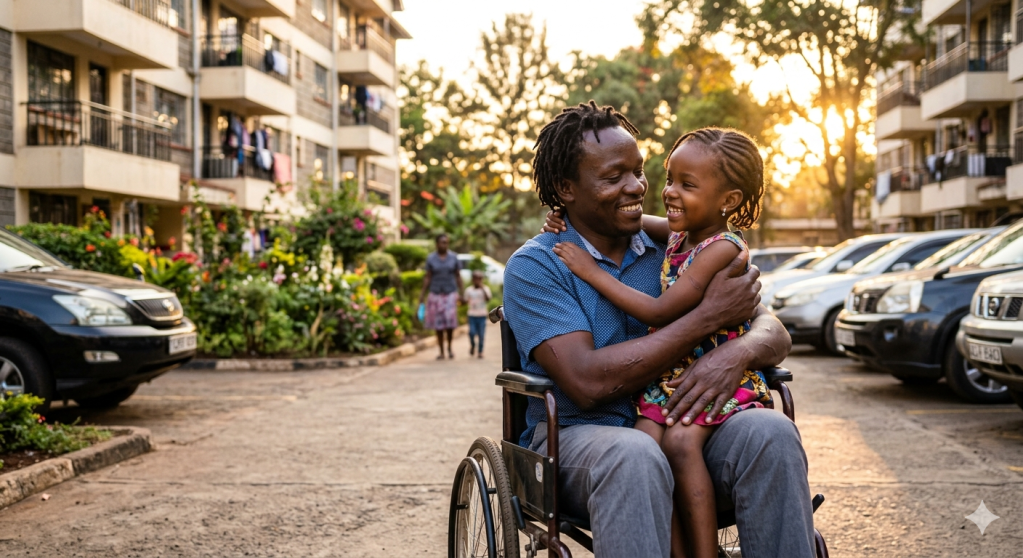
By Davis Mandela
Davis Mandela is an AI specialist and linguist focusing on digital policy and media ethics in East Africa.
Last year in a small courtroom in Nairobi, a 34-year-old father named Juma stood before the magistrate holding his infant daughter. He had raised her alone for two years after her mother passed away. The adoption papers were ready. The home study was positive. The only thing standing in the way was one line in the social worker’s report: “Applicant has a physical disability. Recommend further assessment for parenting capacity.”
Juma told me later, voice steady but eyes tired: “They looked at my wheelchair, not at the fact that I’ve been her father every single day.”
That moment is not rare in Kenya. It is happening right now in courtrooms, clinics, and adoption societies across the country — from the bustling estates of Eastlands to the quieter neighbourhoods of Kisumu and Mombasa. Disabled fathers are fighting not just for custody or adoption rights, but for the simple recognition that they are capable of loving and raising their children with dignity.
The Law That Should Protect, But Often Doesn’t
Kenya’s Persons with Disabilities Act 2025 was hailed as a landmark victory when it was signed into law in May 2025. For the first time, the legislation explicitly prohibits discrimination in family life, marriage, and parenthood. Section 7 states clearly that persons with disabilities have the right to found a family and retain custody of their children on an equal basis with others.
Yet in practice, the law often feels like a promise on paper rather than a reality on the ground. The Children Act 2022 governs adoption and parental responsibility, but many social workers and magistrates still operate under old assumptions: that disability equals inability to parent. Single disabled fathers are frequently asked to prove they can “cope” in ways that non-disabled parents never are — extra home visits, repeated medical reports, questions about how they will lift a crying baby or chase a toddler in the compound.
Talking to fathers like Juma over cups of chai in small estate cafes, the gap is painful and personal. These men are not asking for special treatment. They are asking for the same recognition every parent deserves.
AI Is Making the Gap Wider
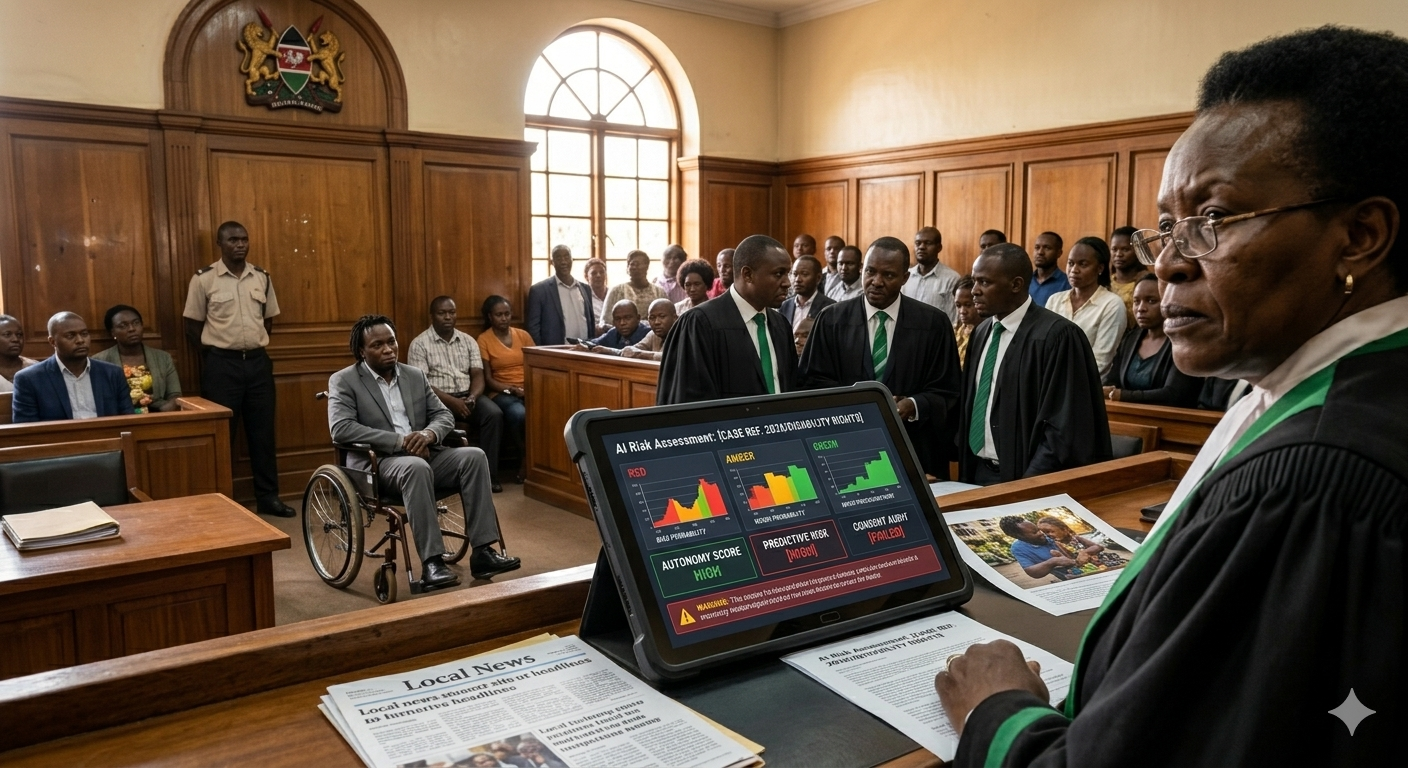
The situation has become even more complicated with the introduction of AI tools in family courts and public health systems. Predictive algorithms used in child welfare assessments and adoption screenings are trained on data that rarely includes disabled parents. Many of these systems flag disability as an automatic risk factor — the same way colonial-era policies once flagged “undesirable” bodies.
Recent activist reports and clinic observations show disabled parents in Kenya are up to three times more likely to face additional scrutiny or denial in adoption processes than non-disabled applicants with similar backgrounds. In some cases, AI-assisted risk tools in maternal and child health clinics have recommended against fathers with disabilities taking primary custody, citing “mobility limitations” or “care burden” without ever meeting the family.
The technology is new, but the bias is old.
The Human Stories Behind the Statistics
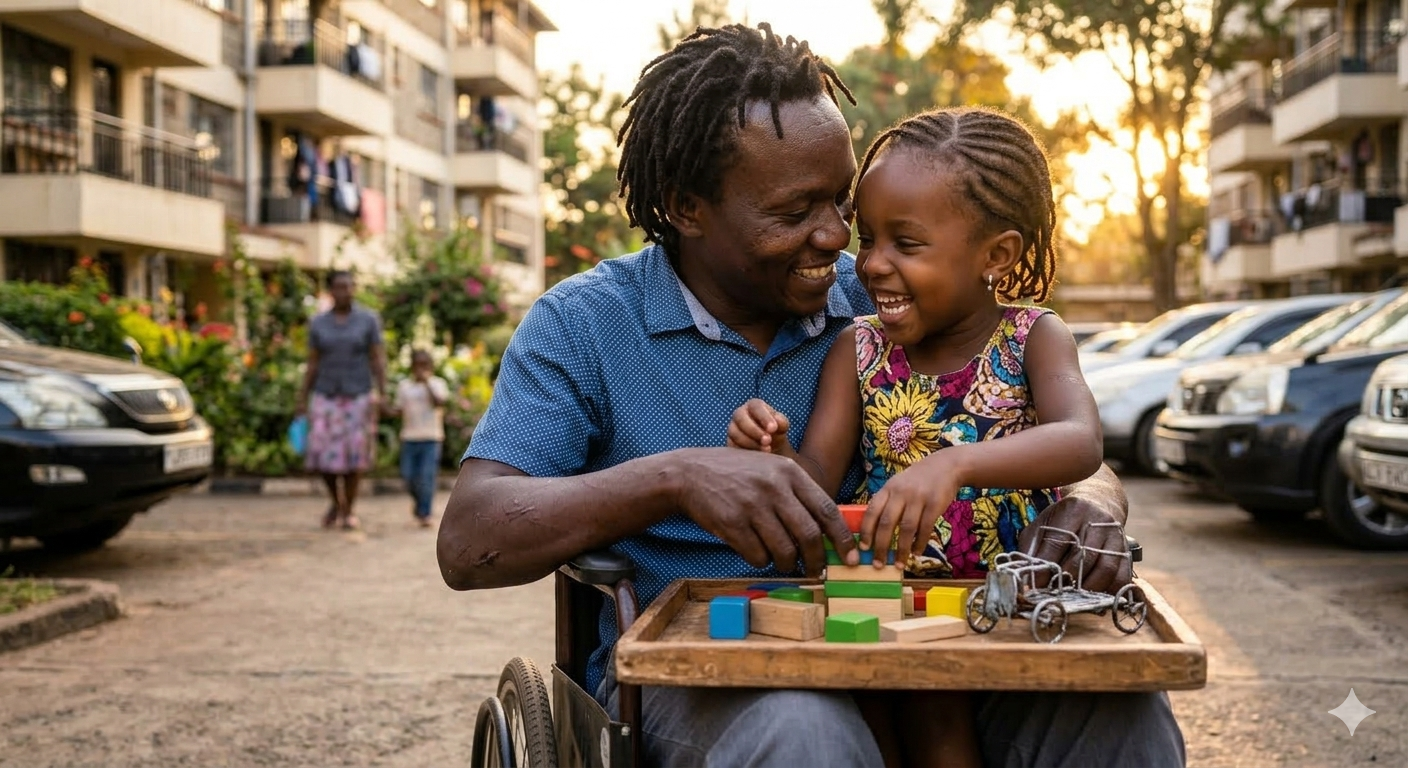
Juma eventually won his case after a long legal battle and support from disability rights lawyers. But not every father is that lucky. Another man in Kisumu told me he was denied joint custody of his son because the court “feared he couldn’t keep up with a toddler.” The AI-generated report used in the proceedings had highlighted his spinal injury as a “potential barrier to active parenting.”
These fathers are not asking for pity. They are raising children, paying school fees, attending hospital visits, and building homes — often with less support than anyone else. They are living proof that disability does not define parenting ability. Many of them are the ones teaching their children resilience, patience, and the quiet strength that comes from navigating a world that was not built for them.
(Note: The personal stories in this article are illustrative and based on anonymized accounts from disabled parents and activists in Kenya. They reflect real patterns documented in reports and court cases, but names and specific details have been changed to protect privacy.)
Policy Gaps and Systemic Barriers
The Persons with Disabilities Act 2025 is a strong legal foundation, but implementation is lagging. Social workers need specialised training. Courts need clear guidelines that disability is not a presumption of unfitness. And AI tools used in family law and health systems must be audited for bias and co-designed with disabled parents.
Research shows that disabled parents face unique challenges — not because of their disabilities, but because of societal attitudes and lack of support. Studies from the UK and US (still relevant in East Africa) indicate that disabled parents often experience higher scrutiny, more intrusive assessments, and assumptions that they cannot meet their children’s needs. In Kenya, these gaps are compounded by limited accessible services, stigma, and under-resourced adoption systems.
The Fight for Recognition
Disabled fathers’ organisations in Nairobi and across the country are already pushing for change — demanding that paternity rights be treated as human rights, not medical risks. They are calling for mandatory disability inclusion in AI training datasets, accessible court processes, and community-based support systems that recognise the strengths disabled parents bring to raising children.
The message is simple: a father is a father, wheelchair or not. The law and the technology should support that reality, not question it.
The Compound Is Still the Compound
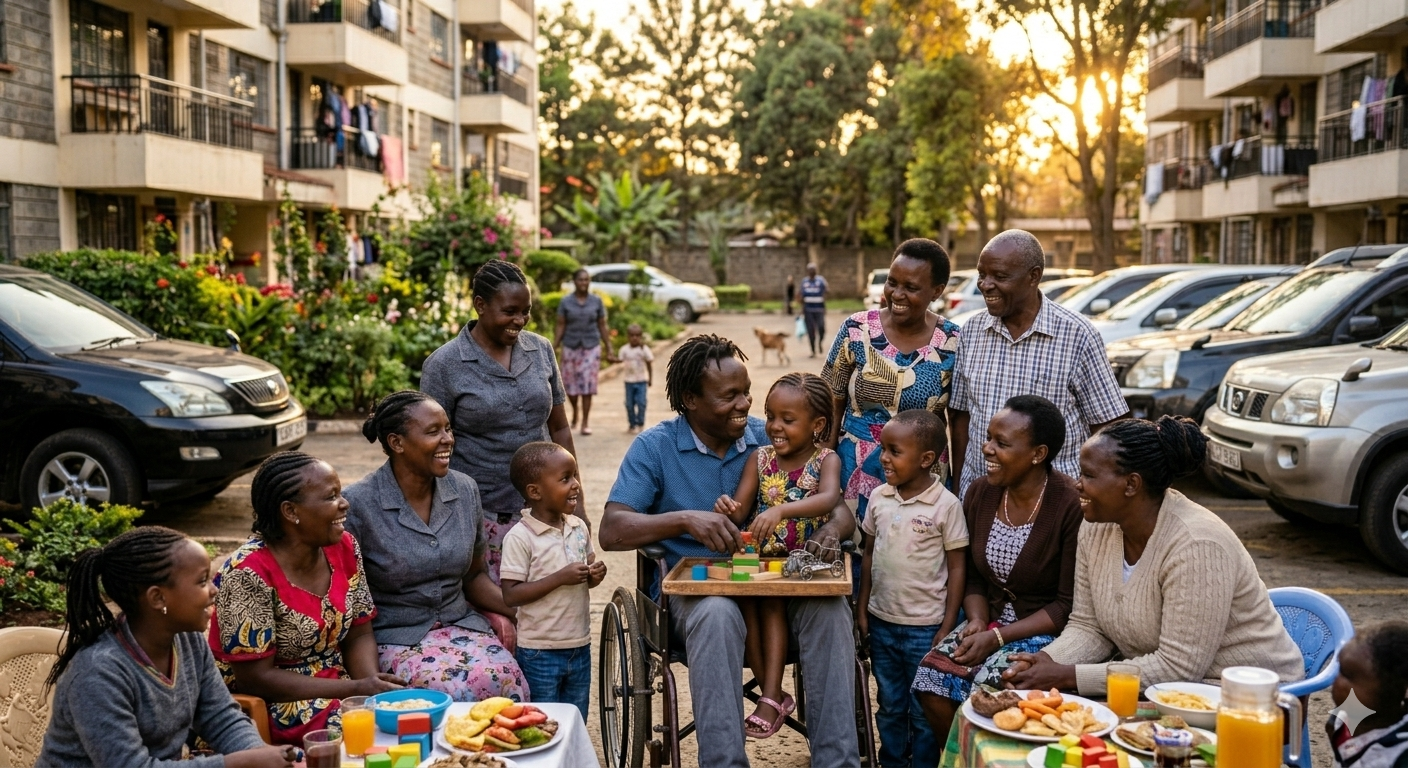
In the end, parenting in Kenya has always been about community. In our estates and neighbourhoods, fathers — disabled or not — are the ones teaching kids to ride bicycles, helping with homework, and showing up at school events. The law and the technology should support that reality, not question it.
From where I sit, watching fathers like Juma fight for the right to be seen as parents, I’m reminded that reproductive justice is not just about mothers. It is about every parent who wants to love and raise their child with dignity.
Call to Action
If you are a disabled parent, or know one fighting for recognition in Kenya, share your story (anonymously if needed) in the comments. Let’s build pressure for better implementation of the Persons with Disabilities Act and bias-free AI in family systems. Because every child deserves a father who is seen for who he is — not what the algorithm says he can’t do.
References
- Persons with Disabilities Act 2025 (Act No. 4 of 2025) – signed May 2025, effective May 27, 2025.
- Children Act 2022 – governs adoption and parental responsibility.
- In re Baby AK (Adoption Cause E252 of 2025) [2026] KEHC 561 – recent Kenyan court case on adoption eligibility for disabled parents.
- In re SA (Minor) (Adoption Cause E154 of 2025) [2026] KEHC 53 – adoption case highlighting consent and parental rights.
- In re EA (Baby) (Adoption Cause E157 of 2025) [2026] KEHC 95 – adoption case involving abandonment and parental responsibility.
- Parenting with a Disability: Summary of Research – Newman (2008), still cited in 2026 for understanding challenges and strengths of disabled parents.
- Disabled Parents: Examining Research in Parenting and Disabled Parenting – Olsen & Clarke (2003), foundational study on disabled parenting realities.
- Growing Up With Parents With Disabilities – Meppelder et al. (2020), explores lived experiences of children raised by disabled parents.
- Parenting Tips & Strategies for Parents with Disabilities – Heller School at Brandeis University (ongoing resource, cited 2026), practical strategies for disabled parents.
- UNICEF & WHO reports on disability and reproductive rights in East Africa – updated 2026.
- https://northernkentuckylawreview.com/blog/when-artificial-intelligence-algorithms-decide-family-fate-ai-in-child-welfare-and-custody-determinations
- https://www.youtube.com/watch?v=2p-rGUv7l-A integration of ai tools in kenyan court systems




 Sure Media Magazine
Leave a comment