
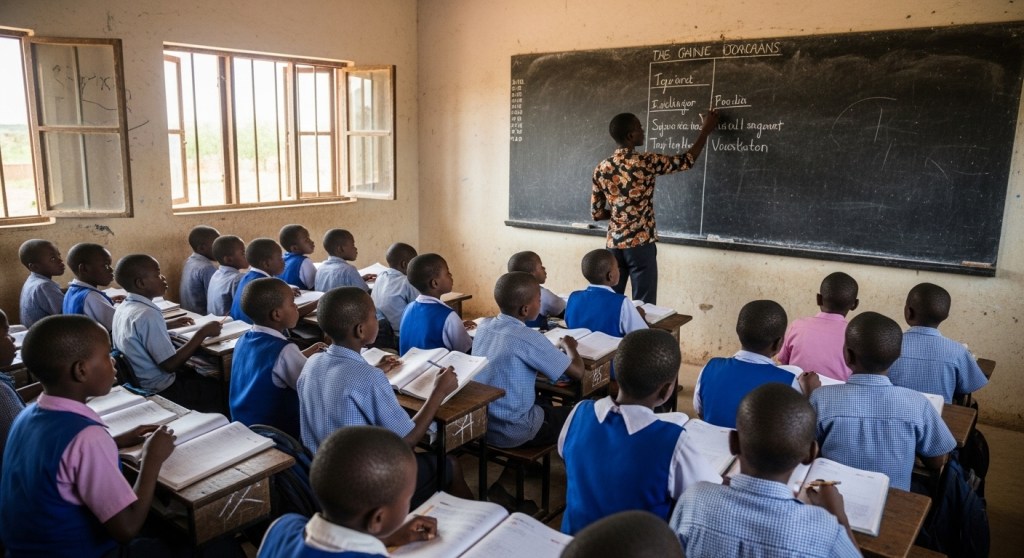
Expanding access to education has been a central priority in global development for several decades. Governments have built schools, recruited teachers, and introduced policies to guarantee that every child has a place in a classroom.
These efforts have produced measurable progress in many countries. Primary school enrollment rates have increased substantially, and millions of children who previously lacked access to education now attend school regularly.

But there is a major problem: attending school does not always mean students are truly learning.
In many low- and middle-income countries, students spend years in school but struggle to read simple passages or solve basic mathematical problems. They progress through grades without acquiring the fundamental skills essential for future learning.
This widening gap between school attendance and actual learning is widely recognized as the global learning poverty crisis.
The World Bank and UNESCO define learning poverty as a child’s inability to read and comprehend a simple text by the age of 10.
Before the COVID-19 pandemic, an estimated 57 percent of children in low- and middle-income countries experienced learning poverty. School closures and prolonged disruptions increased this figure, with recent estimates showing that nearly 70 percent of children now fall into this category.
“Access to school is essential, but access without learning leaves millions of children without the skills necessary for full societal participation.”
These numbers reveal a key problem in education systems: simply increasing school access does not ensure students gain the skills they need to succeed.
Education has traditionally been regarded as a route to opportunity. Robust school systems enable individuals to acquire knowledge, develop skills, and improve their prospects for stable employment. In many societies, education remains a principal mechanism for economic mobility.
However, when students leave school without fundamental skills such as literacy and numeracy, education systems fail to fulfill that promise.
In many countries, teachers report that students reach upper primary grades without fluent reading skills. Some children struggle to recognize basic words, while others cannot understand simple sentences. Similar problems occur in math, where students struggle with basic calculations. These learning gaps often start early, and children who fall behind in the first years of school usually find it hard to catch up later.
Evidence from UNICEF indicates that children who do not develop basic reading skills by age 10 are significantly less likely to complete secondary education.
The consequences extend outside classrooms. Poor learning outcomes restrict employment opportunities, reduce productivity, and hinder national economic growth.
The Scale of the Learning Poverty Challenge
Global education research shows the scale of this problem. Before the pandemic, more than half of children in low- and middle-income countries could not read a simple text by age ten. COVID-19 school closures made this worse by disrupting learning for long periods.
The impact has been particularly severe in communities where schools previously experienced financial constraints.
Children from low-income families experienced prolonged learning interruptions during the pandemic due to limited access to e-learning tools such as computers and the internet. These disruptions exacerbated existing educational inequalities.
Countries with strong early learning systems indicate that improved outcomes are achievable. Nations investing heavily in core literacy tend to achieve higher secondary education completion rates and stronger long-term economic growth.
Why Education Systems Find It Hard to Close Learning Gaps
Several structural challenges keep education systems from effectively tackling learning poverty.
Evidence from global education research shows several reforms that consistently improve foundational learning outcomes.
1. Give priority to Early Grade Literacy
Education systems that focus on reading instruction during the first three years of schooling significantly improve long-term learning outcomes. Children who read fluently by the age of ten are much more likely to complete secondary school.
2. Invest in Teacher Coaching and Support
Teachers benefit from structured lesson plans, regular classroom coaching, and practical training in literacy instruction. Studies across several countries demonstrate that ongoing teacher support improves student learning more effectively than one-time training workshops.
3. Use Learning Data to Target Support
Student assessments help teachers detect learning gaps early. Schools can then offer extra lessons or tutoring to students who are falling behind.
4. Provide Targeted Remedial Learning Programs
Short, focused remedial learning initiatives, particularly following school disruptions, help struggling students regain foundational literacy and numeracy skills.
These reforms demonstrate that learning poverty is not inevitable. With targeted investments and effective implementation, education systems can considerably improve student outcomes.
Classroom conditions are often a major challenge. In many places, schools have limited teaching materials and large class sizes. Teachers may have dozens of students with very different learning needs.
Teacher preparation is also crucial. Good teaching requires both subject knowledge and training on how children learn. Without ongoing professional development, teachers may struggle to support students who are falling behind.
Language differences add to the challenge. In many countries, children start school speaking a different language at home. This can slow their early reading skills and make teaching harder.
Life outside school also impacts learning. Students facing food insecurity, health issues, or unstable housing may struggle to focus in class or attend school regularly.
These facts show that improving learning requires addressing both classroom challenges and broader social issues.
What Successful Education Reforms Reveal
Despite the scale of the learning crisis, several countries and programs demonstrate that meaningful improvements are achievable.
Case Study: Kenya’s National Early Literacy Reforms
Kenya provides a clear example of how targeted reforms can improve foundational learning.
Recently, the Kenyan government launched national early literacy programs to boost reading in primary schools. Programs like Tusome, supported by development partners, provided teachers with structured lesson plans, reading materials, and regular coaching.
Independent reviews showed that students in the program made significant gains in reading fluency and comprehension compared with earlier groups.
The program also added ongoing assessment tools to help teachers monitor progress and support students who need extra help.
Kenya’s experience offers an important lesson for decision-makers: improving literacy requires providing teachers with practical classroom support, clear instructional materials, and regular monitoring of student progress.
Early literacy initiatives have proven particularly effective. Programs that teach reading skills in the early grades, using structured lesson plans, teacher coaching, and regular student assessments, have improved literacy outcomes across multiple regions.
In Kenya, national early literacy programs have introduced structured reading instruction in primary schools, helping teachers identify students who need additional support.
Technology is helping too. E-learning platforms allow students to practice reading and math with fun exercises that adapt to their skill levels. Communities can boost learning, too. Parent programs, reading clubs, and tutoring groups provide extra support for what kids learn in school.
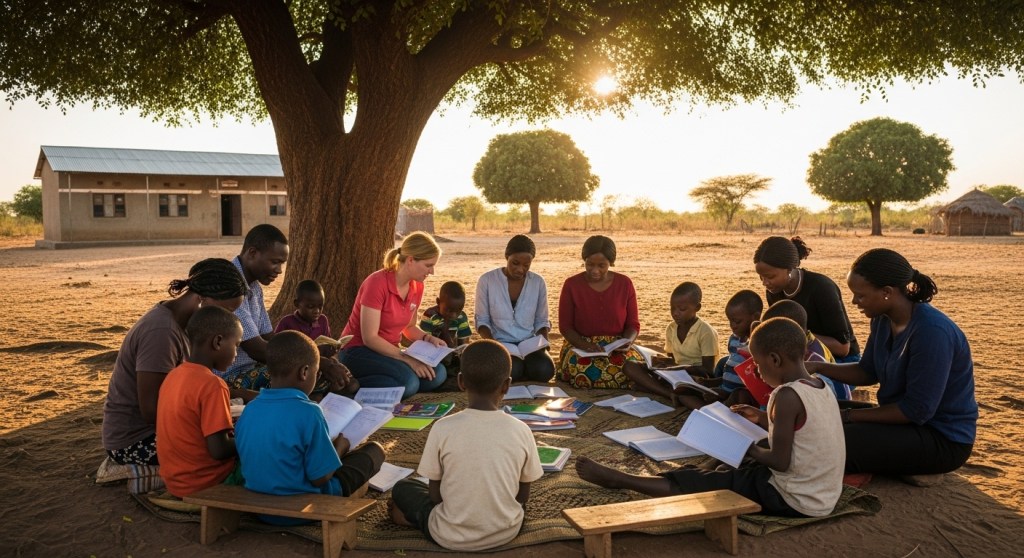
These examples show that progress is achievable when education systems focus on basic skills.
Policy Priorities for Reducing Learning Poverty
Addressing learning poverty needs consistent action from governments, educators, and development partners.
First, education systems should focus on foundational learning in the early grades. Teaching children to read fluently early on greatly improves their long-term academic success.
Second, governments need to invest in teacher training and ongoing support. Teachers need practical tools and regular coaching to help students with different learning needs.
Third, education systems should improve learning assessments that track student progress. Reliable data helps schools spot students who are struggling early and provide targeted support.
International efforts, such as those of the Global Partnership for Education, are increasingly focusing on these priorities.
Several approaches have proven effective in advancing learning outcomes at scale.
Structured pedagogy programs provide teachers with lesson guides, instructional materials, and coaching support.
Early-grade reading initiatives concentrate specifically on developing literacy skills during the early years of schooling.
Remedial education programs assist students who fall behind by providing focused tutoring and accelerated learning methods.
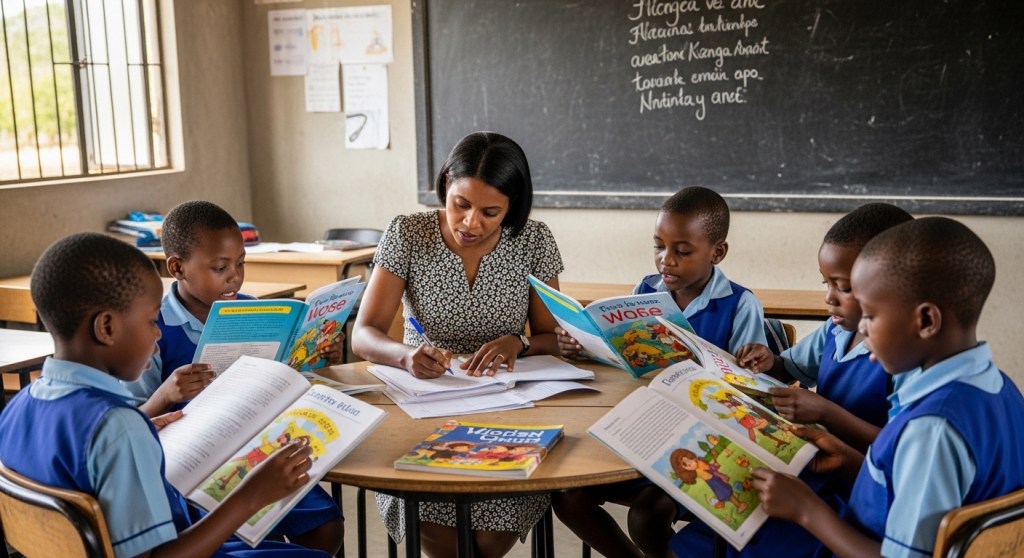
Technology-enabled learning tools can complement classroom teaching and offer additional practice opportunities for students.
When these strategies operate in combination, education systems advance toward a central goal: guaranteeing that children acquire the fundamental skills necessary for success.
Rethinking the Meaning of Educational Access
Over the past generation, the global education community has attained notable progress in expanding access to schooling. Millions of children who previously lacked educational opportunities now attend classrooms.
However, the learning poverty crisis demonstrates that access alone is insufficient.
Education systems must ensure that time spent in school results in valuable learning.
Without solid fundamental skills, years of schooling may not translate into opportunity.
A Call to Address Learning Poverty
For policymakers, education leaders, and philanthropic organizations, reducing learning poverty must be an urgent priority.
Investments in teacher training, foundational literacy programs, improved learning materials, and enhanced learning assessments can help ensure that classrooms deliver meaningful outcomes.





 Sure Media Magazine
Leave a comment