
There is a child waking up right now who will call for me before she calls for anyone else.
She knows my footsteps. She knows the specific way I open her curtains in the morning slowly, so the light doesn’t startle her. She knows I will have her clothes laid out before she asks, that I will remember she doesn’t like the seams on her socks, that I will sit with her through the hard emotions without rushing her back to okay.
She trusts me completely.
She is not my child.
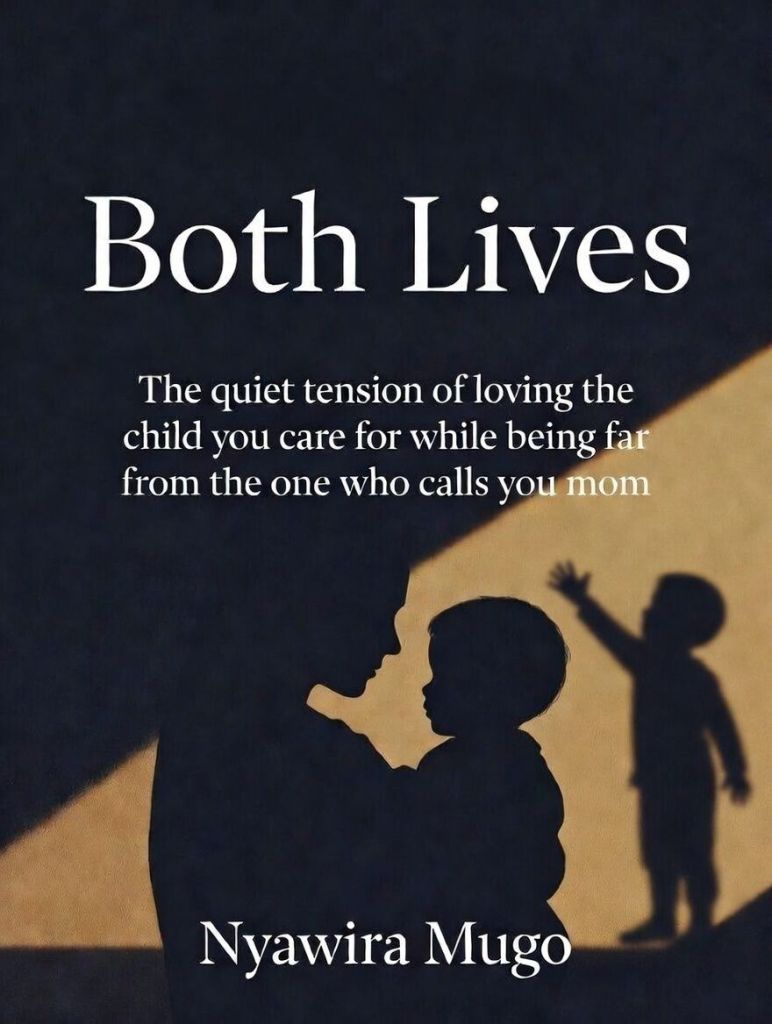
I have been a live-in nanny for years. I have lived inside other people’s homes, learned the rhythms of other people’s families, and given a quality of daily presence that most people reserve only for their own.
I am also a single mother.
My child is not here.
That sentence is the one I have been turning over in my hands for a long time now examining it from different angles, trying to find the one that doesn’t leave a mark. I haven’t found it yet. I’m not sure it exists.
This is not a piece about guilt, though guilt lives here. It is not a piece about sacrifice, though sacrifice is woven into every morning I spend in someone else’s kitchen. It is a piece about complexity the kind that doesn’t resolve, the kind you learn to carry rather than put down.
Live-in caregiving is built on a particular kind of irony that nobody in the industry names out loud.
The women most qualified to understand a child’s emotional world the ones who have studied attachment, who have held children through fear and grief and big feelings, who instinctively know the difference between a child who needs space and a child who needs to be pulled close are often the same women living furthest from their own children.
Provision requires proximity to the work. The work requires living in. Living in means living away.
The equation is clean on paper. In practice, it has weight.
I have taken phone calls from my child while sitting outside a family’s home because I needed the air. I have celebrated milestones through a screen. I have sent money home and wished, more times than I can count, that I could send myself instead.
And then I have gone back inside. Straightened my face. And been fully, professionally, lovingly present for someone else’s child.
That is not a complaint. It is just the truth of what this work costs when you are both the caregiver and the mother. When the skills you bring to the job are not abstract they are lived. When you are not performing warmth, you are giving it. And giving it, always, in two directions at once.
There is something nobody tells you about caring for children for a living
You cannot turn it off.
The attunement you develop the ability to read a room, to notice a shift in a child’s energy, to anticipate needs before they become crises does not stay in the house where you work. It comes home with you. It shapes how you parent from a distance. It makes you acutely, sometimes painfully, aware of everything your own child might be feeling in a day you are not there to witness.
I know what it means when a child goes quiet. I know what it costs a child to stop asking for something they wanted. I know the difference between a child who is fine and a child who has simply learned to say they are.
I know these things because I have spent years learning the interior lives of children.
And sometimes that knowledge sits heavy because knowing what children need and being present to give it are two entirely different things.
The world has a simple story about mothers who work away from their children. It is told in one of two tones: sacrificial heroism or quiet neglect. There is rarely room for the truth, which is more textured than either.
The truth is that I am a good mother. I am also an absent one. Both of those things live in the same body, in the same life, without cancelling each other out.
The truth is that my child is loved. She is provided for. She is also growing up in the particular silence that forms in the space where a parent should be and I am aware of that silence even when I cannot fill it.
The truth is that I chose this work not despite loving children, but because of it. And that somewhere in that choice is a knot I am still slowly, quietly unpicking.
I am writing this not because I have arrived at an answer.
I am writing this because I think there are other women living in the same complexity caregivers who are also mothers, professionals who are also providers, women who are doing an extraordinary job in someone else’s home while carrying an ordinary ache for their own.
And I think that story deserves to be told plainly. Without the heroism. Without the judgment. Without the tidy ending that makes everyone comfortable.
Just the truth:
Some of us are feeding other people’s children breakfast while our own wakes up somewhere else.
Some of us are doing the hardest, most skilled, most undervalued work in the world for two families, in two different ways.
Some of us are both.
And we are still learning what it means to hold that with one hand, and keep going with the other.




 Sure Media Magazine
Leave a comment