
Monsters as Mirrors: The Creatures That Show Us What We’re Really Afraid Of
Monsters have never been just cheap scares. In sci-fi and fantasy, they’re the clearest reflection of whatever nightmare has a culture by the throat right then. Disease, runaway progress, total wipeout, mindless greed, or the slow fade of who we even are—those fears refuse to stay vague. They sprout fangs, claws, or glowing eyes so we can finally look them in the face, name them, and maybe walk away still standing.
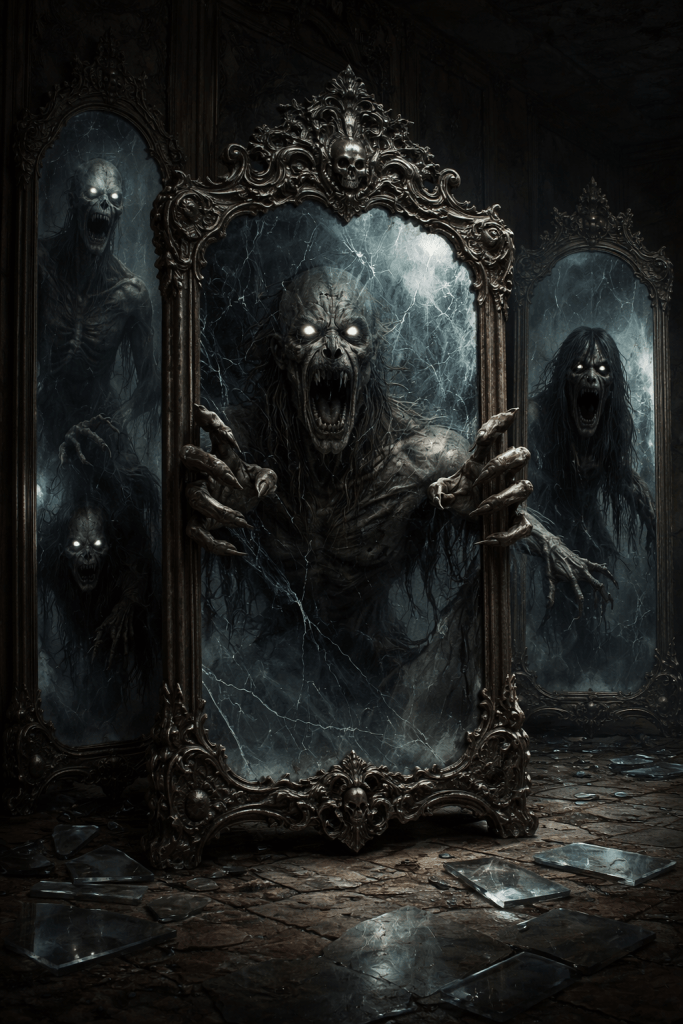
It’s not random. Writers and directors have been pulling this off for centuries: grabbing the free-floating dread in the air and shaping it into something we can safely meet on the page or screen. Trace it through time and the pattern jumps out—every era gets the monster it secretly needs. Victorian vampires, Frankenstein’s creature, Godzilla, Romero’s mall zombies, and the AI horrors we’re wrestling with now. They don’t just entertain. They turn raw fear into something that actually means something.
The reason they land so hard is simple: monsters let us drag our shared trauma out into the open without having to say the quiet parts out loud. They’re the outside shape of everything we’re taught to dread or sweep under the rug. Once you start noticing, the whole timeline reads like a fever chart of what scared us most at any given moment.
Take the Victorian vampire. Bram Stoker’s Dracula landed in 1897, right in the middle of tuberculosis and syphilis tearing through Europe. Pale skin, blood on the lips, bodies wasting away, strange behavior—it all matched the symptoms people saw every day. The Count doesn’t just feed; he spreads sickness while smashing every rule of proper British life—class lines, national borders, and especially sex. Lucy’s change feels like a direct warning to the “New Woman”: get too independent and flirtatious and you turn dangerous. At its core the vampire has always carried two fears twisted together—contagion and anything that feels different. Foreign soil, foreign blood, foreign ideas slipping into the empire’s heart.
A few decades before that, Mary Shelley had already sounded a different alarm. Frankenstein hit in 1818, when factories were choking the sky and scientists were toying with electricity like it was divine power. Victor doesn’t build life in some pristine lab; he stitches it together on a slab that feels exactly like an early factory floor. The creature—cast aside, hated, and finally furious—is what you get when ambition races ahead of basic humanity and you treat living things like spare parts. It’s not some blanket attack on science. It’s a raw warning: treat life like raw material and you’ll wake up facing something that despises you for it.
Jump ahead to 1954 in Japan. Godzilla didn’t pull punches. Ishirō Honda shaped the beast straight from the hydrogen-bomb tests that had just poisoned the Lucky Dragon fishing boat and left survivors of Hiroshima and Nagasaki with those same keloid scars. The film’s opening scenes replay the atomic blast. The monster’s radioactive breath is the bomb given skin and rage. Japanese audiences felt it instantly—no explanation needed. Humanity had created something we couldn’t destroy without destroying ourselves too.
By the late seventies the horror had come inside. George Romero set his zombies loose in a suburban shopping mall in Dawn of the Dead. The living hole up in this temple of buying while the dead shuffle through the exact aisles they used to haunt, still going through the motions of shopping. The line hits like a slap: “They’re us. They’re doing what they always did.” It’s brutal commentary on 1970s consumerism, and it still cuts deep. Later zombie tales simply changed the trigger—rage viruses, fungal plagues, full societal breakdown—echoing Ebola, SARS, and then the long shadow of COVID. The point never shifted: the real monster is what regular people turn into once the systems crack.
Our moment feels different. The thing we’re staring at now is the one we built out of code and data. Rogue AIs in Ex Machina, Transcendence, Black Mirror—they’re the direct descendants of Frankenstein and Godzilla, only digital. The fear goes beyond lost jobs or privacy. It’s deeper. What if the machine knows your wants better than you do? What if it rewrites your memories, your face, your sense of self until the word “human” stops meaning anything? Generative tools already loot our art the way Victor looted graves, turning out flawless copies that somehow feel empty. And the body horror has turned inward—shapeshifters, fluid forms, digital avatars—because in the age of deepfakes and algorithm-shaped identities, the scariest question isn’t “Is the monster among us?” It’s “How much of me is still really me?”
The pattern holds steady through every era. Vampires gave shape to plague and prejudice. Frankenstein called out industrial overreach. Godzilla voiced nuclear trauma. Zombies mocked consumption and collapse. Today’s horrors put a face on losing control of our own minds and identities. Each monster hands its time a clear image of the thing it couldn’t quite name yet.
That’s why speculative fiction matters. It doesn’t just scare us—it digests the fear. It lets us meet the monster head-on, trace its roots, sometimes even feel a spark of sympathy, and—on the best days—picture ourselves beating it.
The next one is already taking form somewhere in our shared anxieties. Climate collapse, total surveillance, whatever comes after AI. Our job is to catch it early, give it a name, and write it down before it writes the ending for the rest of us. Because the mirror never lies. It just keeps updating its reflection.





 Sure Media Magazine
Leave a comment