
I used to believe that creativity required comfort — time, resources, and the freedom to explore ideas without pressure. In my mind, innovation belonged to well-funded laboratories, wealthy entrepreneurs, or artists with quiet studios and endless inspiration. But the more I observed the world around me, the more I realized that some of the most powerful ideas are not born from abundance. They are born from necessity.
Hard times, though painful and unsettling, have a strange way of pushing people to think differently. When options are limited and the usual solutions no longer work, the mind begins to search for alternatives. It is in those moments of scarcity that creativity often becomes a survival tool rather than a luxury.
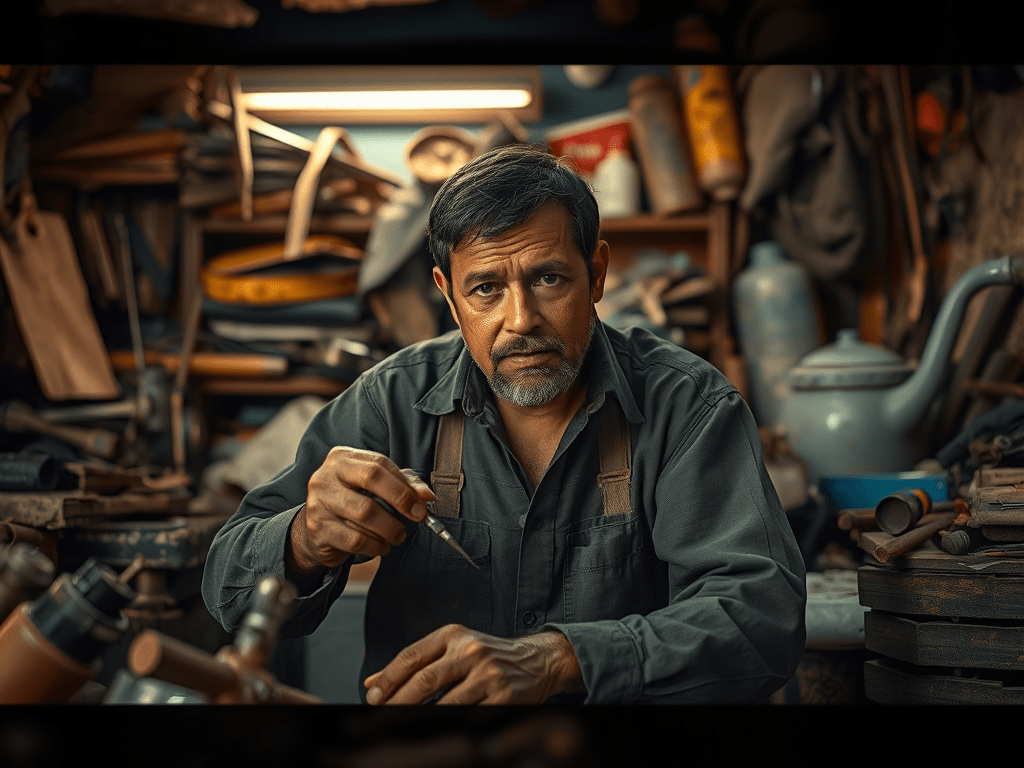
I remember a small but powerful example from everyday life. In a neighborhood where resources were limited, a local mechanic had built a reputation for fixing almost anything — motorcycles, bicycles, and sometimes even small generators. What made his work remarkable was not the tools he had, but the tools he didn’t have. Instead of expensive equipment, he improvised with simple materials. Broken metal pieces became replacement parts, discarded wires became useful connectors, and worn-out components found new life in unexpected ways.
Watching him work felt like watching a craftsman of ideas. Each repair required imagination. Each problem demanded a new approach. If he had access to unlimited resources, perhaps he would simply replace broken parts. But scarcity forced him to invent solutions that were both creative and practical.
That experience made me realize something important: creativity often emerges not when life is easy, but when life leaves us no other choice.
History confirms this pattern again and again. One of the most striking examples appeared during the COVID-19 pandemic. When the crisis began, the world seemed to pause. Businesses closed, schools shut down, and people were forced to remain in their homes. At first, the disruption created confusion and fear. But gradually, something remarkable began to happen. People started finding new ways to live, work, and connect.
Teachers who had never taught online learned to conduct entire classes through digital platforms. Small businesses that relied on physical customers quickly moved to online sales and delivery services. Doctors began using telemedicine to consult with patients remotely. Within a short time, technologies that once felt optional became essential tools of everyday life.
What fascinated me most was the speed of this transformation. Many of these ideas had existed for years, but they were adopted slowly because there was no urgency. The crisis changed everything. When traditional methods stopped working, innovation was no longer optional — it became necessary.
Another example of creativity born from scarcity can be found in many developing communities around the world. In places where access to expensive technology is limited, people often invent simple yet effective solutions to everyday problems.
I once read about a group of farmers who faced frequent crop failures because rainfall had become unpredictable. Purchasing expensive irrigation systems was impossible for them. Instead, they worked together to design a low-cost irrigation method using recycled plastic bottles and gravity-fed water flow. The system was simple, but it allowed them to conserve water and keep their crops alive during dry seasons.
Their invention did not come from a research laboratory. It came from observation, collaboration, and necessity. Faced with a serious challenge, they transformed limited resources into a practical solution.
Even the business world offers many examples of innovation sparked by hardship. Economic recessions often force entrepreneurs to rethink how things are done. When customers have less money to spend, businesses must find ways to provide value in new ways.
Some of the world’s most successful companies began during difficult economic times. Entrepreneurs saw problems that needed solving and created products or services that addressed those needs. Instead of waiting for perfect conditions, they adapted to the reality around them.
On a personal level, I have also noticed how difficult moments can sharpen creativity. When life is comfortable, it is easy to follow routines without questioning them. But when circumstances change — when plans fail or opportunities disappear — the mind is forced to explore new paths.
Struggle has a way of stripping life down to its essentials. It pushes people to ask important questions: What can I do with what I have? What possibilities have I overlooked? How can I adapt?
In many cases, those questions lead to unexpected discoveries.
Artists and writers often speak about this connection between hardship and creativity. Some of the most powerful works of art have emerged from periods of personal struggle or social upheaval. Difficult experiences deepen emotional understanding and give people something meaningful to express.
Creative work produced during challenging times often resonates deeply with others because it reflects real human experience — the struggle to endure, adapt, and find hope.
There is also another reason crises encourage innovation: they break the comfort of routine. In ordinary circumstances, individuals and institutions tend to resist change. Established systems feel safe and predictable. New ideas can seem risky or unnecessary.
But a crisis disrupts that stability. Suddenly, the old systems stop working. What once seemed impossible becomes worth trying because the alternative is failure. In that environment, creativity flourishes.
However, hardship alone does not guarantee innovation. What truly matters is how people respond to the challenge. Some may become discouraged and give up, while others become determined to find solutions. The difference lies in resilience , the willingness to experiment, adapt, and keep searching for answers.
The stories I have encountered, from mechanics improvising repairs to communities inventing new farming methods, remind me that creativity is not reserved for a special group of people. It exists in ordinary individuals who refuse to be defeated by difficult circumstances.
Scarcity, in many ways, forces the human mind to become inventive. When resources are limited, imagination becomes the most valuable resource of all.
Looking at the world today, it is clear that humanity will continue to face challenges — economic uncertainty, environmental pressures, and technological change. These challenges can feel overwhelming. But history suggests that within those moments of difficulty lies the potential for new ideas.
Hard times have always tested human resilience, but they have also revealed human ingenuity. Again and again, when circumstances push people to their limits, creativity emerges as a powerful response.
Perhaps the greatest lesson I have learned is that innovation does not always begin with abundance. Sometimes it begins with a simple question asked in the middle of hardship:
“What can we create with what we have?”
And surprisingly often, the answer leads to ideas that change the world.



 Sure Media Magazine
Leave a comment