
Data Colonialism in Africa
Your digital footprint is the new gold. But who is getting rich?
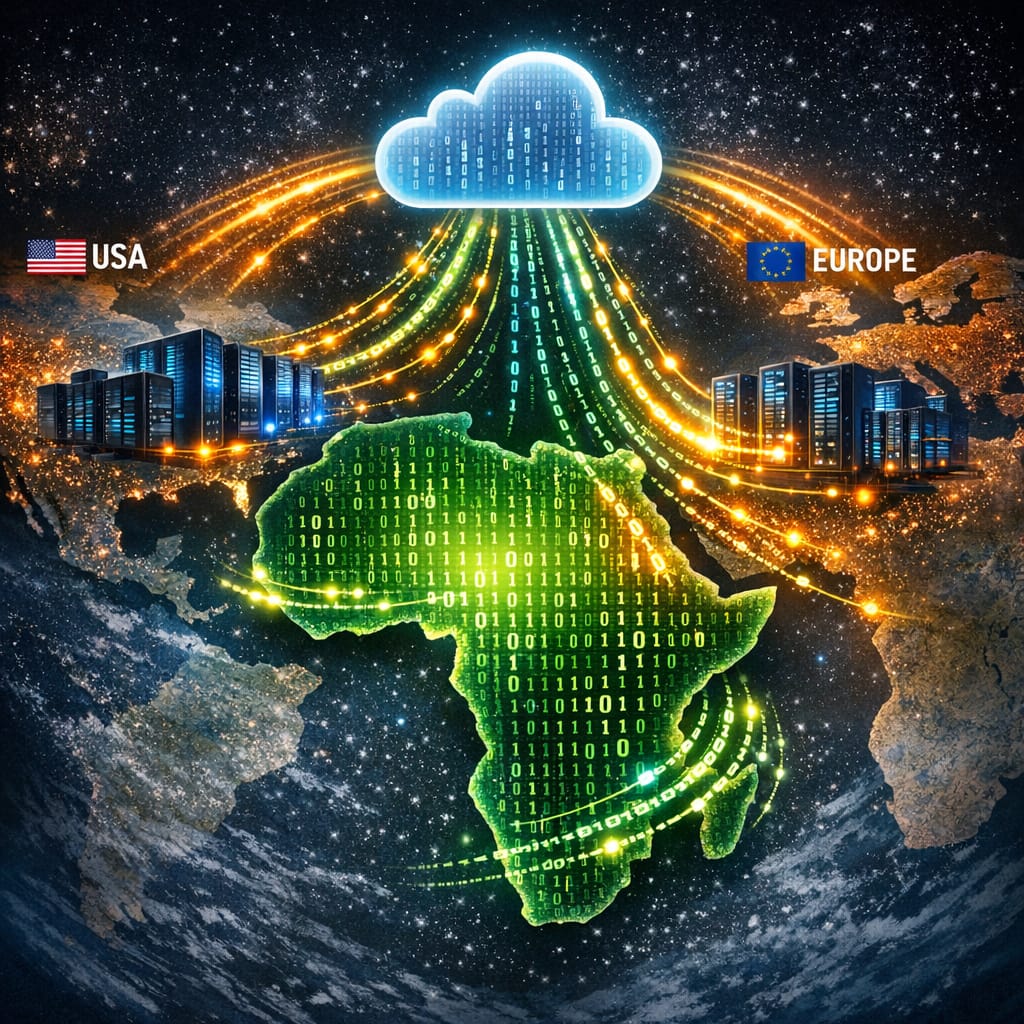
Every time you send a voice note in Sheng, snap a photo at a matatu stage, or pay for unga using M-Pesa, you generate value. That data does not stay on your phone. It moves. It crosses borders. It lands on servers in Europe or the United States. There, it gets processed, analysed, and fed into algorithms that power advertising systems, AI products, hiring tools, and even surveillance technologies.
What do you get in return? Mostly free or cheap apps. What do others get? Long term profit, power, and control.
This is not a distant or speculative threat. It is data colonialism, and it is already shaping Africa’s digital future.
From resource extraction to data extraction
The logic is familiar. Africa supplies the raw material. Someone else refines it. Someone else owns the final product.
In the past, it was rubber, ivory, gold, and labour. Today, it is behavioural data, biometric data, language data, and location data. Your daily digital life becomes a resource stream.
Data is collected locally. Processing happens elsewhere. Value accumulates elsewhere. Africans remain users and consumers, not owners or decision makers.
This is why the term data colonialism fits. The structure has changed. The imbalance has not.
How African data is harvested
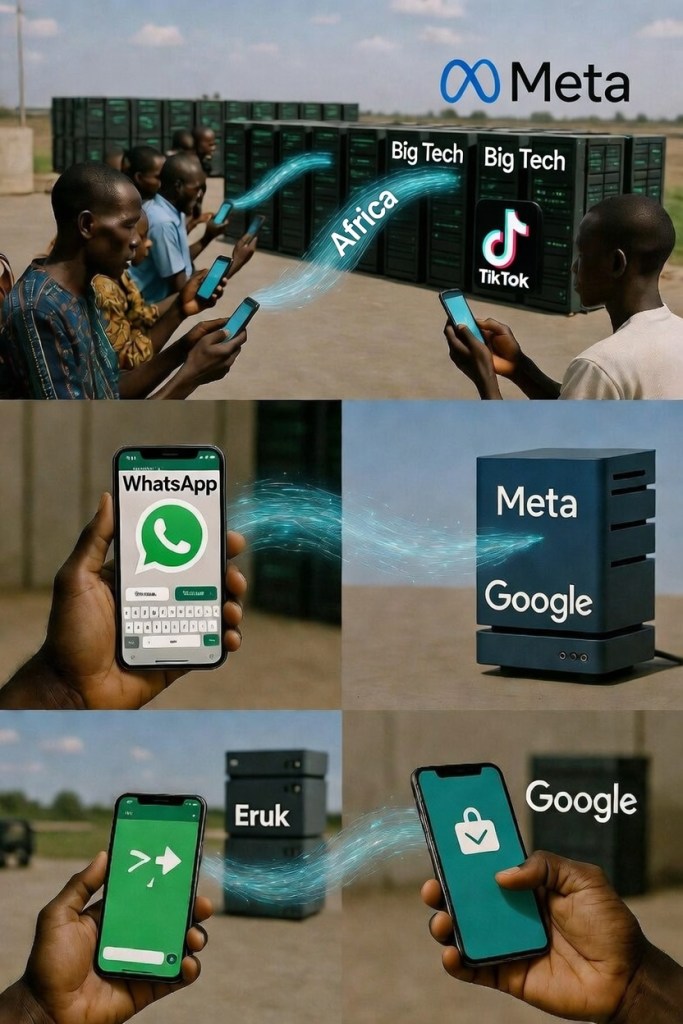
Data extraction does not require force. It runs quietly through everyday tools.
•WhatsApp messages and voice notes
•TikTok and Instagram engagement
•Mobile money transactions
•Health and fitness apps Ride hailing platform
•Biometric ID systems
Consent exists, but mostly in theory. It hides inside long terms and conditions written in legal language, often in English only. Most people never read them. Fewer understand what they sign away.
African data is especially valuable. It adds diversity to AI systems. It introduces new accents, faces, languages, and behavioural patterns. This helps global companies build “world ready” models. But when those same systems return to African users, they often perform poorly.
Why Africa is so exposed
Several factors make African countries vulnerable to data extraction.
•Weak data protection enforcement
•Low public awareness of digital rights Heavy dependence on foreign platforms
•Limited local data infrastructure
•Underfunded research institutions
Even where laws exist, regulators struggle to keep up. Technology moves fast. Policy moves slowly. Platforms exploit the gap.
The result is a one way flow. Data leaves. Value rarely returns.
Who really benefits
The winners are not hard to identify.
•Big Tech companies such as Meta, Google, Amazon, and Microsoft
•Startups in the Global North that train AI cheaply and at scale
•Investors and shareholders who profit from data driven growth
•Governments that gain access to strategic data insights
The losses are less visible but more widespread.
•Local developers cannot access rich datasets generated in their own countries
•Communities lose control over how they are represented in algorithms
•Cultural patterns are extracted without context or ownership
•Economic value leaks out instead of circulating locally
Africa becomes a testing ground, not a partner.
Language and cultural erasure in AI
Language is one of the clearest examples.
African languages struggle to survive in digital systems.
•Voice assistants misinterpret accents
•Translation tools miss cultural meaning
•Minority languages barely appear in datasets
These are not small technical flaws. They shape who gets heard, who gets served, and who gets excluded. When AI systems fail to recognise African realities, inequality becomes automated.
Culture turns into training material, stripped of context and meaning.
The myth of “free” platforms
Platform often justify extraction by pointing to the access.
This argument does not hold. Free does not mean fair. Convinience does not equal ownership. Access without control is not empowerment.
Data has economic value. When it fuels commercial products, advertising systems, or AI services, that value should not flow in only one direction.
What fair data use could look like
A different model is possible. One that does not reject technology, but reshapes power.
Key principles include:
•Clear explanations of data use, in local languages
•Local data storage and processing where feasible
•Revenue sharing when data powers commercial products
•Community level consent, not just individual checkboxes
•Strong investment in African AI research and infrastructure
•Data should circulate value. Not drain it.
The role of governments and institutions
African governments cannot afford to stay passive.
They need to:
•Enforce existing data protection laws
•Negotiate stronger international data agreements
•Invest in public data infrastructure
•Support local researchers, startups, and data scientists
•Digital sovereignty is not abstract. It starts with who controls data.
Why this matters now
The AI systems built today will shape decisions for decades.
•Hiring and recruitment
•Credit scoring and lending
•Healthcare diagnostics Policing and surveillance
•Education and assessment
If Africa remains only a data source,inequality will be coded into the future.
Final thought
This is not about rejecting phones, apps, or digital tools. It is about refusing to remain a supplier in someone else’s system.
Africa does not lack data. It lacks ownership, leverage, and voice.
Awareness is the first step. Policy must follow. Local innovation has to close the loop.
If data is the new gold, Africans deserve more than access to the mine. We deserve a stake in the wealth it creates.




 Sure Media Magazine
Leave a comment