
“We Survived. You Want to Heal.
The Quiet Continuation of a Conflict
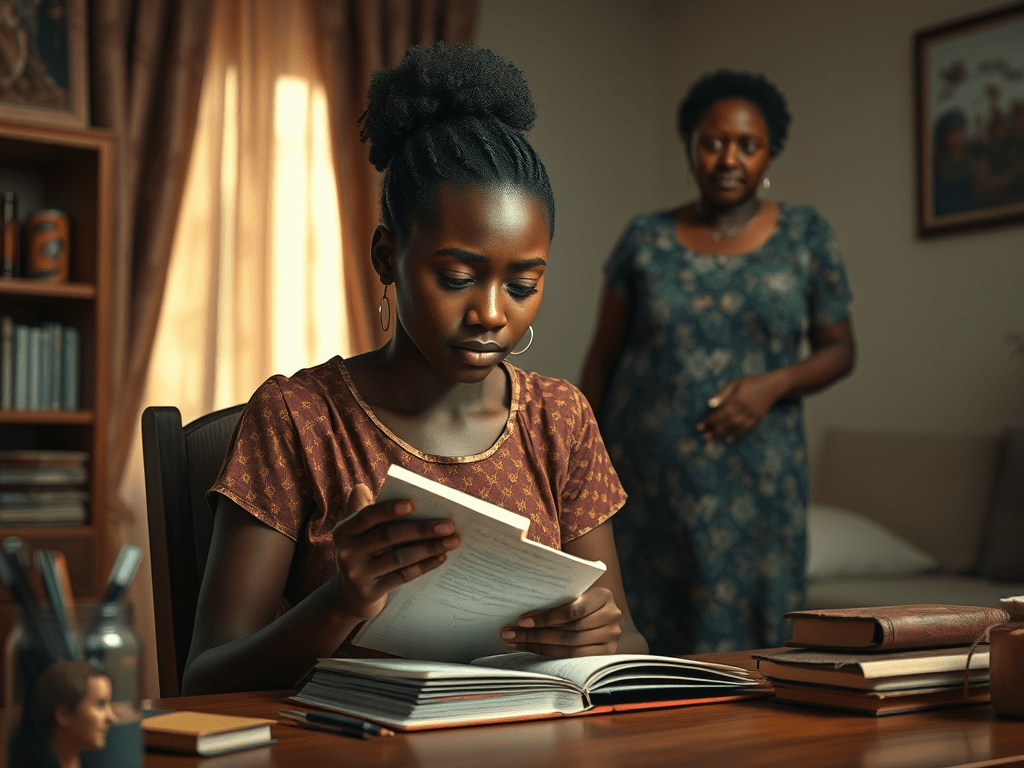
In the first part of this series, we met Imani, a young woman who found her mother reading her private journal. What began as an argument about privacy quickly revealed something deeper, a clash between two emotional worlds.
Imani felt violated. Her mother felt disrespected. Both believed they were right. But beneath the argument, there is a larger question facing many African families today: Are younger generations dishonoring their parents or simply asking for emotional space their parents never had?
When Survival Becomes Identity
For many African parents, survival was not just a phase.
It became an identity.
They survived poverty.
They survived unstable homes.
They survived marriages that demanded endurance rather than happiness.
They survived, raising many children with limited resources.
To them, survival itself was success. So when a younger generation begins talking about boundaries, emotional safety, trauma, or healing, it can sound strange, even offensive. To a parent who endured everything quietly, the idea of revisiting pain may seem unnecessary. In their eyes, the logic is simple:“We survived it. Why can’t you?” But survival and healing are not the same thing.
The Language Gap Between Generations
One of the most interesting tensions in modern African households is not just disagreement; it is a difference in language.
Younger generations often speak using what is now called therapy language:
- Boundaries
- Emotional safety
- Childhood trauma
- Gaslighting
- Healing
- Inner child
Meanwhile, many parents operate in a completely different emotional vocabulary:
- Respect
- Obedience
- Gratitude
- Sacrifice
- Endurance
Neither language is inherently wrong. But when two generations use different emotional dictionaries, even simple conversations can become conflicts.
When Imani told her mother that reading her diary violated her boundaries, her mother did not hear a request for respect. She heard defiance.
Why Healing Can Sound Like Rebellion
In many African homes, questioning family dynamics has traditionally been discouraged. Parents were rarely questioned. Cultural expectations were rarely debated. Private pain was rarely discussed openly.
So when younger generations begin to examine these patterns, it can feel like they are rejecting their upbringing. But often, they are not rejecting their parents. They are trying to understand themselves.
Imani’s journal was not an attack on her mother.
It was a reflection of her fears, shaped by watching her mother endure a marriage filled with silence, sacrifice, and pain. She did not want the same life. But saying that out loud felt dangerous.
When Pain Is Interpreted as Ingratitude
Many parents interpret emotional confrontation as ungratefulness.
From their perspective, they sacrificed everything:
They fed their children.
They educated them.
They protected them.
So when their children begin questioning the emotional environment they grew up in, it can feel like those sacrifices are being dismissed. But the younger generation is not denying the sacrifices. They are asking a different question: Can survival also include emotional well-being?
Bridging the Gap Instead of Winning the Argument
The challenge facing modern African families is not choosing between survival and healing; it is learning how to hold space for both. Parents deserve recognition for the battles they fought.
But children also deserve the freedom to process the emotional consequences of those battles. Healing does not erase survival. It builds upon it. And perhaps this is where the real work begins , not in choosing sides, but in learning how two generations can finally understand each other’s language.
The Beginning of a New Conversation
The emotional evolution of the African family is still unfolding. It will involve uncomfortable conversations, misunderstandings, and moments where both generations feel unheard. It may also create something powerful: Families where survival is honored, and healing is allowed.
Why does healing sometimes sound like rebellion in African households?
Is it a misunderstanding between generations or a deeper fear of confronting pain that was never given space before?





 Sure Media Magazine
Leave a comment