
Survival of the Fittest: Beyond Nature, Into Our Lives
When Charles Darwin first introduced the concept of natural selection in On the Origin of Species, he didn’t coin the phrase “survival of the fittest”—that credit goes to Herbert Spencer, a philosopher who interpreted Darwin’s theory in broader social terms. Yet the essence of the idea is universal: life, whether in the wild or in human society, favors those who adapt, evolve, and persevere. “Fitness” is not merely about strength—it’s about resilience, intelligence, strategy, and sometimes, sheer creativity. In today’s world, the principle resonates far beyond evolutionary biology, shaping business, culture, and even personal growth.
The Natural World’s Lessons
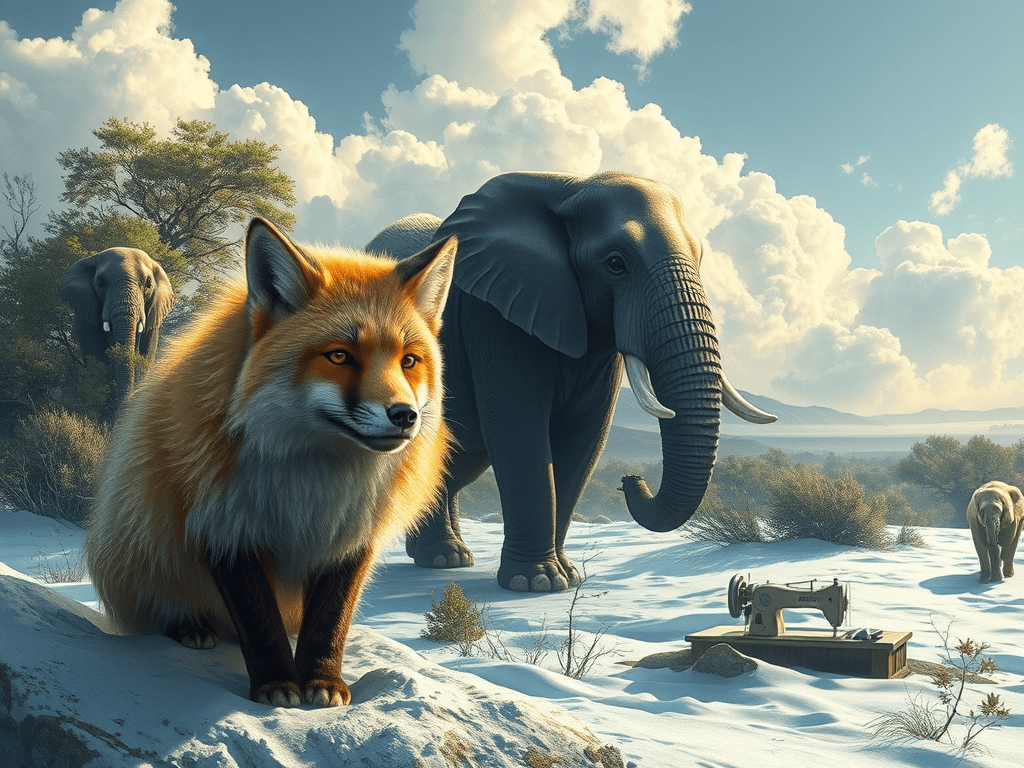
In the animal kingdom, “fitness” is literal and often brutal. Take the Arctic fox, a small predator in the unforgiving tundra. These foxes survive freezing temperatures by developing thick fur that changes color with the seasons—white in winter, brown in summer—camouflaging them from predators and helping them hunt prey efficiently. When food is scarce, only the cleverest hunters find enough to eat, illustrating survival’s relentless demand for adaptation.
Another example is the African elephant. Despite their size and apparent invincibility, elephants face poaching and habitat loss. Populations that adapt to changing landscapes—by migrating longer distances or modifying feeding habits—demonstrate fitness not through dominance, but through flexibility. Here, survival of the fittest does not always reward brute strength; it rewards awareness and adaptation to the environment.
Even plants display remarkable evolutionary ingenuity. The Venus flytrap, a plant that captures insects for sustenance, evolved from ancestors reliant solely on soil nutrients. Its “fitness” lies in innovation: when ordinary survival strategies fail, it developed a mechanism to supplement its diet. Nature’s lesson is clear—rigidity is dangerous, innovation is survival.
Human Societies and Adaptation
Humans, too, navigate their own arenas of competition, though the rules are subtler. Social, economic, and technological pressures demand adaptability. Consider the rapid transformation of industries due to the digital revolution. Businesses that failed to pivot to online platforms—think Blockbuster—vanished, while those like Netflix, which embraced streaming, thrived. The “fittest” are those capable of foreseeing change, embracing risk, and innovating with speed.
On an individual level, survival of the fittest often manifests as resilience in the face of personal and professional adversity. I remember the story of my neighbor, Amina, who lost her small tailoring business when a new shopping mall opened nearby. Rather than giving up, she started posting sewing tutorials online, gradually building a social media following. Today, she sells custom designs worldwide, all from her tiny home workshop. Her survival was not just financial—it was creative and emotional. Fitness, in human terms, can mean finding opportunity when circumstances seem to block every door.
Fitness in Unexpected Places
Sometimes survival of the fittest manifests in the smallest, least expected ways. Urban wildlife, for instance, provides a striking example. Raccoons in cities have learned to open trash cans, navigate traffic, and avoid humans—a far cry from their woodland ancestors who relied on forests for shelter and food. These city-dwelling raccoons embody Darwinian principles in miniature, proving that adaptation isn’t limited to the extraordinary—it’s woven into everyday life.
On a societal level, communities recovering from disasters illustrate collective fitness. After the 2010 Haiti earthquake, local and international organizations worked alongside communities to rebuild infrastructure, provide education, and restore livelihoods. Fitness, in this sense, is collective resilience: the ability of groups to recover, innovate, and thrive in the aftermath of catastrophe.
The Psychological Dimension
Survival of the fittest is not purely physical or societal; it has profound psychological implications. Emotional intelligence, stress management, and mental resilience are increasingly recognized as determinants of “fitness” in modern life. During the COVID-19 pandemic, individuals who adapted to remote work, maintained social connections virtually, and innovated new routines demonstrated superior fitness in navigating unprecedented stressors. Mental flexibility and resilience, often undervalued, have become as critical as physical strength or financial resources in determining who thrives.
Athletes provide another lens. Serena Williams, despite injuries and setbacks, remained at the top of women’s tennis for decades. Her fitness encompasses physical prowess, but also mental toughness, adaptability in strategy, and relentless dedication. Survival of the fittest in human terms increasingly emphasizes holistic performance: body, mind, and emotional acuity working in harmony.
Ethical Considerations and Misinterpretations
It is important to note that “survival of the fittest” has been historically misapplied, sometimes to justify inequality, exploitation, or social Darwinism. Fitness is not synonymous with superiority, nor does adaptation guarantee moral authority. The principle is descriptive, not prescriptive—it explains how systems evolve, not how humans ought to behave. In modern contexts, it is better understood as a guide for strategic adaptation rather than a justification for ruthless competition.
For example, climate change presents an existential challenge where the “fittest” are not simply the strongest nations or corporations, but those that innovate sustainably, invest in renewable energy, and prepare for environmental shocks. Fitness, in this ethical framework, becomes foresight, responsibility, and the ability to thrive without causing catastrophic harm.
Lessons for Daily Life
Survival of the fittest is less about physical confrontation and more about adaptation, learning, and resilience. Whether navigating career shifts, personal setbacks, or societal changes, adopting a mindset of flexibility and proactive growth increases one’s chances of thriving.
Consider , workers learning new skills to stay relevant in a tech-driven economy, or parents adapting to homeschooling challenges during the pandemic. Those who resist learning may struggle, while those who adapt quickly gain new opportunities. Similarly, cultivating emotional resilience—learning to recover from failures, maintain optimism, and manage stress—can define personal fitness in an increasingly volatile world.
Even in relationships, the principle applies. Empathy, communication, and adaptability determine which bonds survive trials and thrive over time. Fitness here is emotional, relational, and social: qualities that ensure mutual support and long-term stability in human networks.
Conclusion
Fitness is multidimensional—mental, emotional, social, and physical—and it rewards those willing to learn, adapt, and persevere. For readers navigating personal and professional landscapes, the lesson is clear: survival is not for the strongest, the wealthiest, or the most aggressive—it is for those who can evolve, endure, and thrive in the face of change.
The story of life is not a simple contest of power. It is a dynamic, intricate dance of adaptation. The fittest, then, are those who embrace change, learn from setbacks, innovate in adversity, and persist with courage. Survival is not merely about living; it is about thriving—and the rules of fitness, it seems, apply to everyone willing to play the game.






 Sure Media Magazine
Leave a comment