
Every technological revolution arrives wrapped in the language of democratization.
The printing press promised literacy for all.
The internet promised that borders did not matter.
Social media promised that influence could be flattened, shared, universal.
Now AI enters the creative economy with the same promise: access for everyone.
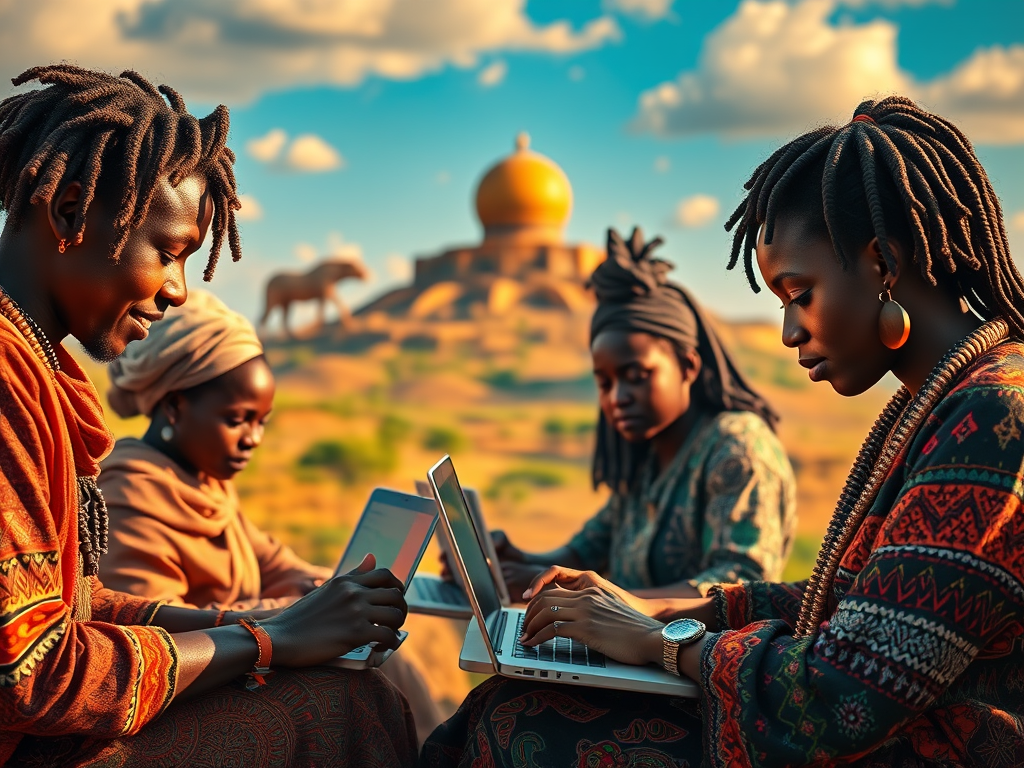
For African writers and creators — long navigating publishing networks that felt locked behind glass doors, funding pipelines that barely trickled, and global audiences who didn’t notice them — AI looks like freedom. A laptop, decent internet, and the right software suddenly feel like leverage. Suddenly, the barriers that once demanded capital and connections can be skirted.
But history whispers a warning: not all that glitters is democratized.
The Barriers Were Never About Talent
Let’s be clear: African creatives have always had skill. Always. Poetry, storytelling, illustration, multimedia it is beyond question that the talent has been there, fierce and abundant.
What was missing?
Infrastructure, reliable networks, editorial mentors nearby — and that’s just scratching the surface of the challenges African creatives face every day.Literary gatekeepers were often continents away. Even in a digital age, the algorithms favor the already dominant, rewarding what’s familiar.
Freelancers juggle:
- Payment friction and volatile currencies
- Costly software subscriptions
- Limited access to professional editing or design support
- Minimal venture funding
Talent alone could not bridge these gaps. The field was uneven not because of incompetence, but because the structure was skewed.
AI as an Infrastructure Equalizer
This is where AI begins to matter.
A writer in Nairobi can:
- Draft at speed that rivals traditional publishing houses
- Optimize tone and clarity for international readership
- Track engagement, tweak, iterate
- Produce multimedia extensions
All without formal affiliation, sponsorship, or a big budget.
This is more than incremental change. It’s infrastructural compression — a way to do more with less, faster than ever before. Friction, the silent tax on African creativity, just got smaller.
But Access Does Not Equal Power
Here’s the catch. Democratization looks shiny on the surface, but ownership still matters. Most AI platforms are developed, hosted, and controlled outside Africa. The tools may be in our hands, but the power behind them is not.
Dependency creeps in quietly. Data slips out the back door, monetization piles up somewhere else, far from the creators who made it possible. And then there’s culture ,the irreplaceable stuff that makes stories feel alive. AI trained mostly on Western datasets doesn’t just summarize; it smooths, flattens, irons out idioms, softens local color until specificity dissolves into a kind of global neutrality
It’s not that AI will replace African writers. It’s that it could standardize them.
The New Competitive Divide
Irony strikes here: equal access can sharpen inequality.
Before, advantage was about resources.
Now, it’s about judgment.
Who thinks critically? Who treats AI as a collaborator instead of a crutch? Who uses it to amplify insight rather than outsource thinking entirely?
Those who approach AI as a substitute may produce faster content.
Those who approach it as augmentation produce something deeper, sharper, and enduring.
The divide is strategic — and strategy is irreducibly human.
Beyond Leveling: Rewriting the Narrative
Is the playing field level? Not automatically.
But it is closer than ever. AI reduces structural barriers. It compresses time, lowers production costs and amplifies reach. For creatives outside traditional power centers, this is seismic.
The moment calls not for passive adoption, but for intentional, strategic integration. Those who will thrive are not the ones who use AI blindly, but those who shape it to reflect context, culture, and long-term autonomy.
Technology alone doesn’t redistribute power.
But used wisely, it can reposition those who were once structurally excluded.





 Sure Media Magazine
Leave a comment