
The Night We Lost
At 3:17 a.m., the city is not fully asleep.
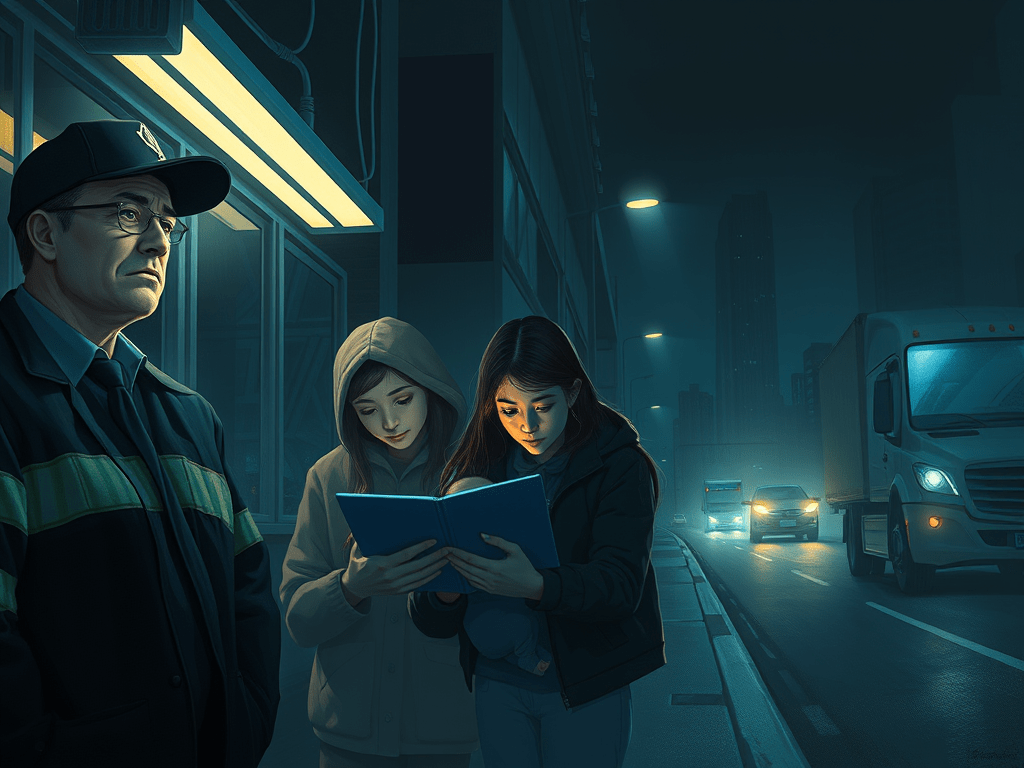
A security guard fights heavy eyelids under fluorescent lights. A university student scrolls through lecture notes, whispering, “Just one more page.” A new mother rocks her baby in the dark. A truck driver grips the steering wheel on a long highway stretch. In apartment blocks across Nairobi, Mumbai, London, and New York, blue light flickers from bedroom walls.
The world may look quiet. But biologically, something is breaking down.
Sleep is not just rest. It is repair. And the modern world is quietly stealing it from us.
When Exhaustion Becomes Normal
Ask people how they are doing and many will say, “Tired.” Not sick. Not unwell. Just tired. We have normalized exhaustion as the cost of ambition.
Yet research from institutions like the National Institutes of Health (NIH) and the Centers for Disease Control and Prevention (CDC) shows adults need at least seven hours of sleep per night. Millions consistently get less. In fast-growing cities, long commutes, side hustles, 24-hour economies, and digital distraction have stretched waking hours deep into the night.
In places like Eldoret or Nairobi, matatus start early. Markets open before sunrise. Students revise under pressure to excel. Nurses and doctors rotate through night shifts. Sleep is squeezed between responsibilities.
But biology does not negotiate.
What Happens Inside Your Brain at Night
When you fall asleep, your brain does not shut down. It begins housekeeping.
During deep sleep, the brain activates a waste-clearing system known as the glymphatic system. Think of it as a night-cleaning crew washing away toxic proteins that accumulate during the day. Some researchers have linked poor sleep over time to increased risk of neurodegenerative conditions such as Alzheimer’s disease.
Meanwhile, during REM sleep, your brain processes emotions and stores memories. It decides what to keep and what to discard. That embarrassing moment. That difficult conversation. That new skill you practiced. Sleep files them properly.
Without enough sleep, the emotional center of the brain—the amygdala—becomes more reactive, while the rational prefrontal cortex weakens. The result? You are more irritable. More anxious. More impulsive.
Ever snapped at someone and later wondered why you overreacted?
It might not just be stress. It might be sleep loss.
The Nurse Who Couldn’t Focus
Consider a hypothetical but common scenario: A 32-year-old nurse working rotating shifts in a public hospital. She works two nights in a row, sleeps four to five hours during the day in a noisy estate, then switches back to day duty. By the end of the week, she feels foggy. She forgets small details. Her mood dips.
According to research published in journals like Sleep and supported by the American Academy of Sleep Medicine, shift workers face higher risks of cardiovascular disease, metabolic disorders, and depression. Their circadian rhythms—internal biological clocks—are constantly disrupted.
This is not just about tiredness. It is about long-term health.
And millions live this reality.
The Phone on Your Pillow
Then there is the glow.
You tell yourself you will sleep at 10:30 p.m. But at 10:28, you check one message. Then another. Then a short video. Then headlines. Suddenly it is midnight.
Smartphones emit blue light, which suppresses melatonin—the hormone that signals to your body that it is time to sleep. Studies in Sleep Health and other peer-reviewed journals show that screen exposure before bed delays sleep onset and reduces sleep quality.
But the problem is not only light. It is stimulation. Social media activates dopamine pathways, keeping the brain alert. You may feel physically tired but mentally wired.
Teenagers are especially affected. The American Academy of Pediatrics has reported rising sleep deprivation among adolescents, linked partly to nighttime device use. Poor sleep in teens correlates with increased anxiety, depression, and academic difficulties.
The phone has become the last thing we see before sleep—and the first thing we see when we wake.
Sleep and the Body’s Defense System
Sleep is also immunity.
During sleep, your body produces cytokines—proteins that help fight infection. Studies supported by the National Sleep Foundation show that people who sleep less than six hours are significantly more likely to catch viral infections when exposed.
After the COVID-19 pandemic, we learned the language of immunity. We talked about vaccines, masks, vitamins.
But rarely did we talk about sleep.
Yet without sufficient rest, the immune system weakens. Inflammation rises. Blood pressure increases. The risk of heart disease and type 2 diabetes grows.
Sleep is not passive. It is protective.
The Economic Cost of Being Awake Too Long
Sleep deprivation also drains economies.
The RAND Corporation estimated that insufficient sleep costs the global economy hundreds of billions of dollars annually due to lost productivity, workplace accidents, and absenteeism.
Fatigue-related road accidents are a major contributor to traffic fatalities worldwide. Imagine a truck driver fighting microsleep—a brief, involuntary lapse into sleep lasting a few seconds. At highway speed, that is enough.
The price of sleeplessness is paid in hospital bills, insurance claims, and sometimes lives.
Why We Feel Guilty for Resting
Culturally, sleep has a branding problem.
We admire people who say, “I only sleep four hours.” Hustle culture celebrates sacrifice. Students compete over who stayed up latest. Entrepreneurs boast about working through the night.
But chronic sleep deprivation reduces creativity, decision-making accuracy, and emotional intelligence—the very traits success requires.
If sleep were a supplement sold in bottles—boosts memory, strengthens immunity, improves mood, protects the heart—it would sell out instantly.
Instead, it is free.
And we undervalue it.
Reclaiming Sleep in a 24/7 World
Improving sleep does not require perfection. It requires intention.
Research-backed sleep hygiene practices include:
- Going to bed and waking at consistent times
- Reducing screen exposure at least one hour before bed
- Keeping your room dark and cool
- Avoiding caffeine late in the day
- Getting sunlight exposure in the morning
For chronic insomnia, Cognitive Behavioral Therapy for Insomnia (CBT-I) is recommended by the American College of Physicians as a first-line treatment.
Small changes matter. A consistent bedtime. A dimmer bulb. A phone left on the desk instead of the pillow.
The Quiet Revolution
Imagine if schools started later for teenagers, aligning with their biological rhythms. Imagine if workplaces protected shift workers with smarter scheduling. Imagine if urban planning considered noise reduction at night as seriously as traffic flow during the day.
Sleep is personal—but it is also political, economic, and cultural.
At 3:17 a.m., when you stare at the ceiling replaying tomorrow’s worries, remember this: your body is not weak for needing rest. It is human.
The night is not empty time. It is where your brain heals. Where your immune system strengthens. Where your memories settle. Where your emotions soften.
In a world that never seems to power down, choosing sleep may feel unproductive.
But it may be the most productive decision you make.
Because the real crisis is not laziness.
It is a planet running on exhaustion—one alarm clock at a time.




 Sure Media Magazine
Leave a comment