

In the vibrant streets of Nairobi, where high-rise buildings touch the sky and slums seem to stretch on forever, the idea of home is being turned upside down. Kenya has a critical housing shortage, with more than two million housing units required to house the country’s ever-growing population. Saving up for years to own a home, through homeownership savings programs, is no longer an option for most Kenyans, especially low- and middle-income earners. Enter the subscription model for housing: a pay-as-you-go concept where housing is delivered like a Netflix subscription or a gym membership. The subscription model is catching on in Kenya, where the government’s affordable housing initiatives are being combined with private co-living projects to make housing modern, flexible, and accessible.
The reasons for this evolution are rooted in the rapid urbanization that Kenya is experiencing. With over 50% of the Kenyan population projected to reside in urban areas by 2030, the demand for housing is staggering. Slums such as Kibera, in the capital city of Nairobi, contain millions of people living in squalid conditions, making the need for an evolution imperative.

Kibera Slum: When Kindness Kills Development |
Traditional rental agreements come with many unseen costs, uncertain landlords, and short-term contracts that provide little security. The new model, on the other hand, provides predictability in the form of a monthly fee for a comprehensive living experience, much like the way Netflix has changed the face of entertainment. In Kenya, this is not a trend but a necessity due to economic conditions that are characterized by unpredictable income and high inflation rates.
Government-Led Subscription Pathways to Ownership
Leading the charge in this transformation is Kenya’s Affordable Housing Programme (AHP), initiated as part of the Big Four Agenda and currently championed by the State Department for Housing and Urban Development. Kenyans are able to sign up, save their monthly contributions, and finally purchase a home through initiatives such as Boma Yangu. It is basically a homeownership subscription service, where members contribute at least Ksh 500 per month to a savings account, accumulating enough equity to purchase affordable housing units ranging from Ksh 1 million to Ksh 3 million. After that, they pay rent-to-own terms of 10-25 years, with monthly contributions as low as Ksh 3,000 for a bedsitter, targeting those earning below Ksh 149,000 per month who would otherwise never own a home. Affordable housing
Boma Yangu has been widely adopted, with over 500,000 subscribers since its launch. Initiatives such as Park Road in Ngara and Mukuru in Nairobi are examples of this. They offer modern apartments with facilities such as piped water, electricity, and parks, all of which are partly financed by a 1.5% housing levy on salaries. For the diaspora community, the service provides specialized accounts, enabling distant subscription through mobile money or bank transfers. While some people view it as a form of taxation, others view it as a social safety net. As one X user stated, “Whether we like it or not, Kenya is going head-first into a subscription-based lifestyle for everything.” Boma Yangu
Innovative financing solutions also support this. Collaborations with microfinance institutions such as Vision Fund Kenya combine loans with flood and health insurance, making climate-resilient subscriptions. The Kenya Mortgage Refinance Company (KMRC) provides flexible products such as the Nyumba Smart Loan, which is released in phases for stepwise construction, ideal for the informal sector. In rural settings, programs such as Boresha Boma offers loans ranging from Ksh 5,000 to Ksh 600,000 for renovation, with repayment terms of up to 60 months, transforming shelter into sustainable homes. These are not pure rentals but rather a subscription model towards ownership, which will meet the 250,000 units a year deficit. Habitat
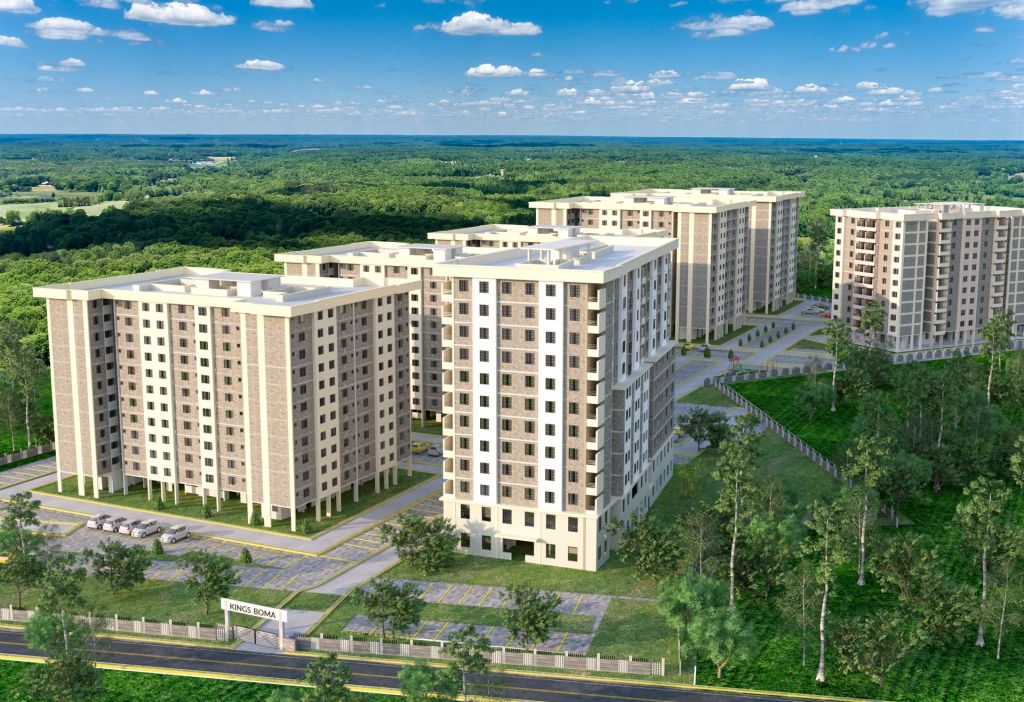
Affordable Housing Program – Boma Yangu
However, challenges still exist. The AHP has only met a small percentage of the promised units, estimated at 13,529 by 2022, against a target of 500,000, owing to bureaucracy and lack of funding. The failed UN partnership for 100,000 homes indicates corruption risks. However, with the World Bank reducing its funding to $910 million, the government is moving ahead with transparency through digital platforms. UN project
Private Co-Living: The Urban Subscription Boom
Whereas the government is concentrating on ownership, the role of private actors is to pioneer the concept of pure subscription services through co-living spaces. These one-stop solutions target young professionals, digital nomads, and students, who pay a monthly subscription fee that includes access to rent, Wi-Fi, utilities, cleaning services, and social events. In Nairobi, for instance, there is Macadamia Boutique Living in Spring Valley, which provides high-end shared lounges and gardens for a fee of Ksh 50,000-80,000 per month.

Our Story – Macadamia Boutique Living
Further south in Diani, Skippers Coliving appeals to nomads with air-conditioned rooms, workspaces, and meal plans from $500 monthly.
Hawa Coliving makes African adventures easy with an annual membership fee that provides access to flexible stays across Kenya. In Watamu, WiFi Tribe’s “Chapters” provide month-long co-living experiences from $1,390-$2,790, combining work and play. These business models reflect global sites such as Coliving.com, which lists more than 29 African properties from $190 monthly.
Startups such as Acorn Holdings are growing this through REITs, which provide funding for build-to-rent properties for young urbanites. Cross Boundary’s Mosaic in Nairobi, a co-living space for students, is a reflection of private sector innovation with lively social spaces. PIDG
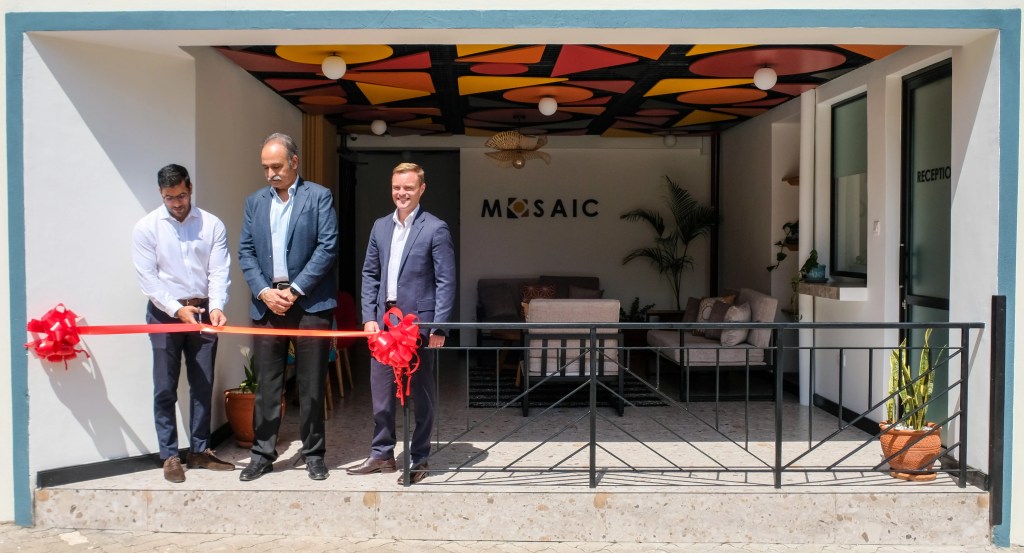
CrossBoundary Real Estate launches Nairobi co-living residential complex
Even tech-savvy developments such as 14Trees’ 3D-printed Mvule Gardens in Kilifi offer affordable subscription rates thanks to quick and sustainable building.
Maintenance woes are a thing of the past for some. A studio in Kilimani, for example, could rent for Ksh 40,000 a month, including smart amenities.
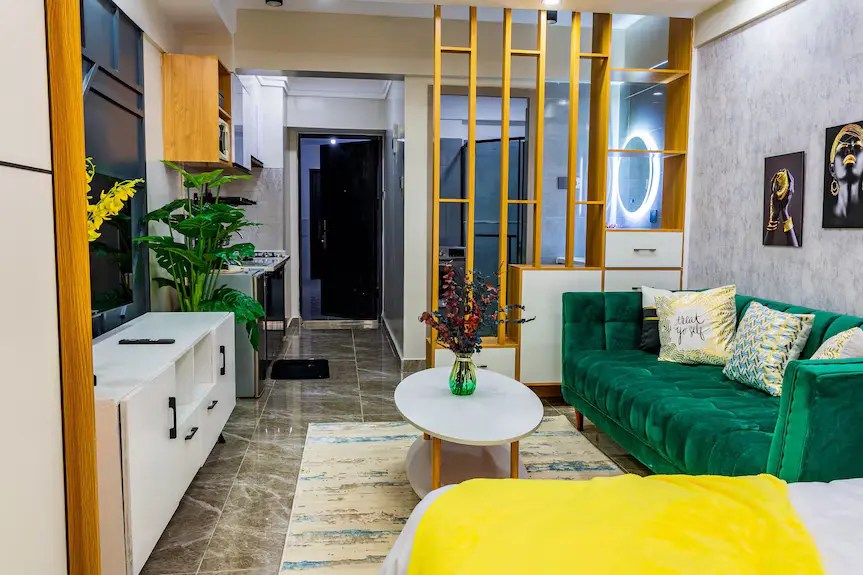
Luxury cozy studio apartment, Kilimani – Nairobi |
While an entrepreneur in Diani created a space for nomads, it is “catering to this growing demographic.” But affordability is a problem, with high-end spaces designed for high-income earners, and low-income earners depending on government-provided alternatives. nation.africa
Benefits, Challenges, and the Road Ahead
The subscription shelter offers some undeniable benefits: adaptability for mobile living, lower capital outlays, and social structures that fight loneliness in urban settings. In Kenya, it satisfies the Vision 2030 sustainable development strategy, which could eliminate slums and increase economic inclusion. On the sustainability front, the 3D printing approach reduces waste in construction, and insurance linkages improve climate resilience. housingfinanceafrica.org
However, challenges are many. There is little faith in the government’s management of taxes, with concerns about misallocation echoing X concerns such as “It’s now a crime to be a salaried person in Kenya” due to various deductions. The commercial subscription model may be exploitative if left unregulated, with informal sector employees still left out.
Looking ahead, the hybrid models may be the ones that thrive. Picture this: apps where people pay for “shelter credits” that can be used in co-living or AHP schemes. With Nigeria’s growing interest in Shelter Afrique indicating regional momentum, Kenya may be the one to lead the charge in Africa’s subscription housing revolution. Collaborations such as AMFI-K and Habitat for Humanity are working to innovate even further, giving power to low-income earners. amfikenya.com
Conclusion
Shelter as a subscription service in Kenya is more than just roofs it’s about rethinking dignity, progress, and community. As Kenya closes the gap in its housing deficit, this concept brings hope, making the dream of having a stable home a reality every month. Whether its Boma Yangu’s ownership or Diani’s nomadic shelters, Kenyans are subscribing to a brighter future one payment at a time.




 Sure Media Magazine
Leave a comment