
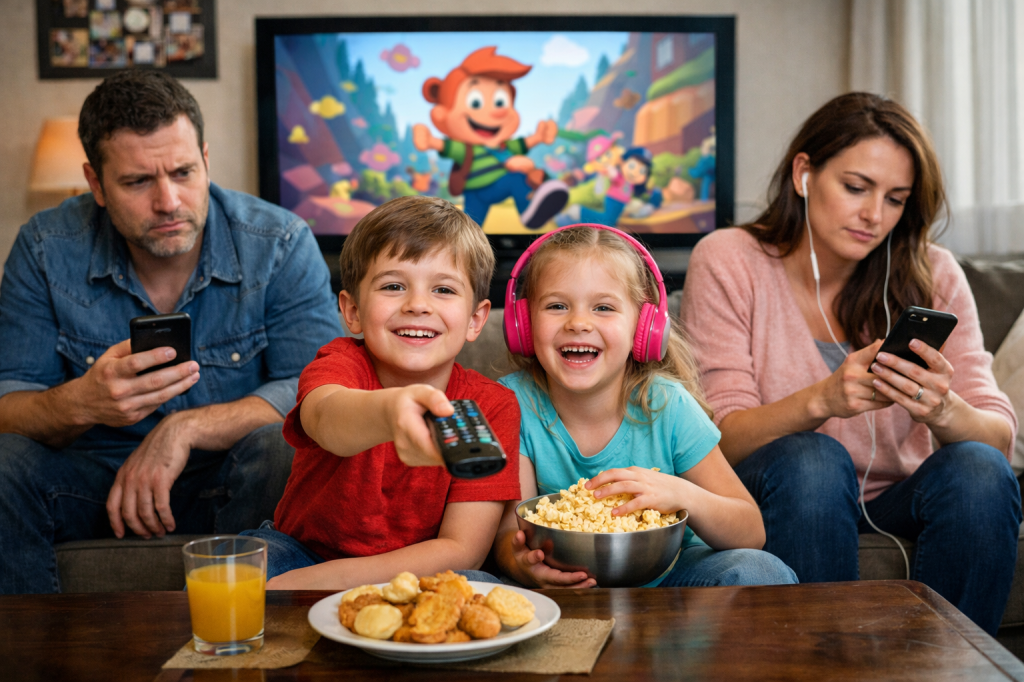
Not too long ago, the television remote was a symbol of authority in the household. Parents decided what the family would watch, when and for how long. Cartoons aired at fixed times, evening shows were family-approved and a simple stern look from a parent was enough to maintain order. Children followed instructions without much fuss; discipline was straightforward and the household rhythm was predictable.
Today, everything has changed. The remote no longer represents parental control it now belongs to the kids. They decide what fills the screen, from animated adventures to viral shows. Meal times, once a simple routine, have now become a negotiation. Many children will not eat unless they are watching their favorite cartoon; parents have to persuade, distract or bribe with the TV or the phone just to get a bite into their mouths. Tantrums, whining and endless demands have replaced the simple compliance that previous generations experienced. A sharp look or a firm instruction used to be enough but today, it’s all about the screen.
Meanwhile, parents are often glued to their phones, catching up on movies, music or social media. Everyone has their screens, but the balance of control has shifted. The challenge now is finding a way to maintain boundaries while still embracing the benefits of modern entertainment.
The story of the remote is more than just about TV it reflects how family dynamics, parenting styles and technology have evolved. Reclaiming control might not mean taking the remote back by force, but finding ways to share viewing choices and encourage family-centered habits that work for everyone.




 Sure Media Magazine
Leave a comment