
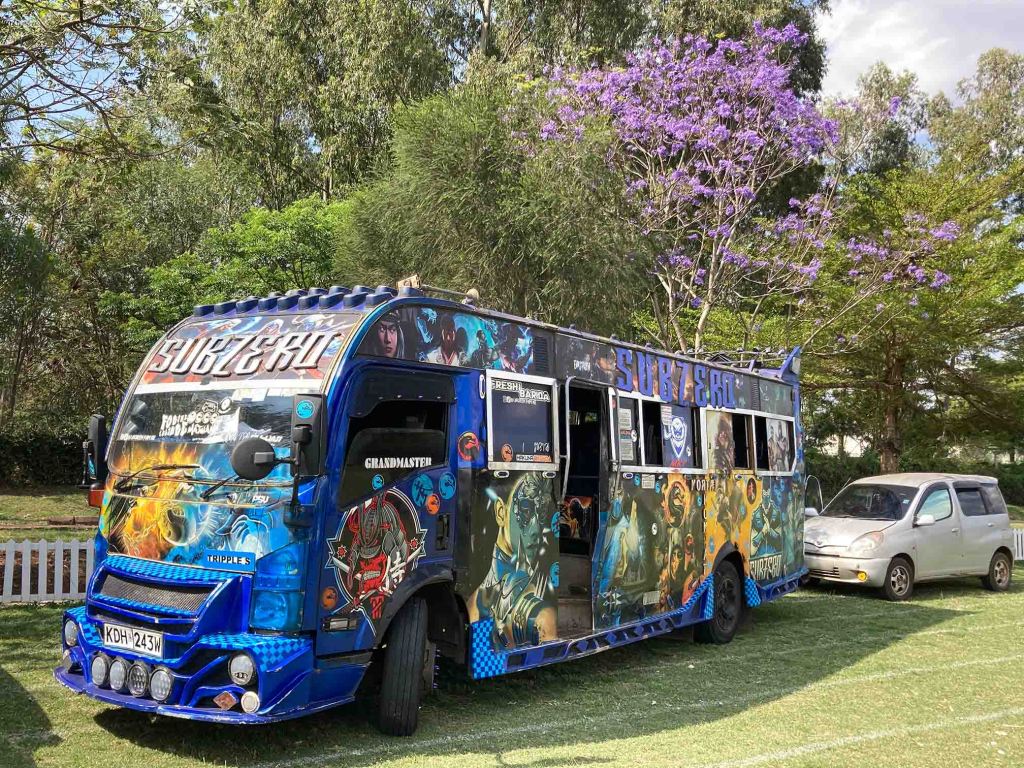
Why Nairobi’s Matatus Are the City’s Real Museums
The matatu hurtles down Ngong Road like a rogue comet, its speakers rattling the frame with gengetone bass that shakes loose every bolt. Neon LEDs flash beneath a sprawling mural of Tupac Shakur mid-verse, intertwined with a faded Psalm: “The Lord is my shepherd.” The conductor dangles out the door, one hand gripping the frame, the other waving fares like a flag in exhaust-thick air. Inside, commuters scroll TikToks under graffiti that probably cost more than their monthly rent—slogans like “Hustle or Die” scrawled in electric blue. This isn’t just a ride; it’s a rolling exhibition, a democratic museum where entry is sixty shillings and the exhibits pulse with Nairobi’s untamed heartbeat.
As a Nairobi native, I’ve ridden matatus since I was a kid clutching my mum’s skirt in the crush of Eastlands traffic. They weren’t just buses; they were my first portals to the city’s soul—vibrant, chaotic, unapologetic. Today, as a writer weaving through this metropolis, I see them as the truest archives of our culture: moving galleries of music, politics, faith, and youth identity. Over days hopping routes from the gritty vibes of Kawangware to the glossy sheen of Westlands, I’ve documented how each vehicle spins a unique yarn through paintwork, booming sound systems, and that intangible swagger. In a city of over five million, where formal museums echo with dust and distance, matatus democratize art—making culture accessible, mobile, and alive.
The story of matatus begins in the 1960s, post-independence Kenya, when entrepreneurial locals filled the void left by colonial-era buses. The name “matatu” derives from the Kikuyu word for “three,” referencing the original fare of three 10-cent coins—affordable wheels for migrants flooding Nairobi’s burgeoning sprawl. These early rides were makeshift: repurposed pickup trucks or battered Ford Transits, dodging regulations as “pirate taxis.” By 1973, President Jomo Kenyatta legalized them in a surprise decree, unleashing a boom. The 1980s and 1990s brought global hip-hop’s influence, transforming them from functional vans into canvases of rebellion. Blasting Bob Marley or Burning Spear, they became soundtracks to resistance against economic woes and authoritarian rule under Daniel arap Moi.
Fast-forward to today: matatus have evolved into “manyangas,” high-tech beasts built on imported Japanese chassis like Isuzus or Toyotas, costing upwards of KES 6 million to customize. On a recent ride along Thika Road, I boarded one wrapped in glossy vinyl: airbrushed portraits of Kobe Bryant slamming dunks beside Kenyan icons like Nyashinski, LED underglow pulsing in sync with Ochungulo Family’s “kudade” anthems. The interior? Neon-lit like a nightclub, with Wi-Fi hotspots and subwoofers that make your chest vibrate. Conductors, those urban acrobats in snapbacks and chains, curate playlists that shift seamlessly—from gospel hymns in the morning hush of Eastlands to drill beats in Westlands’ evening rush. It’s not random; it’s neighborhood-specific, time-tuned curation.
But matatus are more than spectacle; they’re mirrors to Nairobi’s psyche. Hop on, and you’re immersed in aspiration: slogans like “No Guts, No Glory” or luxury car decals screaming dreams of escape in a city where over 60% survive on informal gigs. Masculinity roars through designs—fierce lions, superhero flexes, Muhammad Ali glowers—embodying the street-smart bravado of drivers and touts navigating potholes and police. Faith anchors it all: Quranic verses curl alongside crosses, “God is Good” stickers peeling but persistent, offering solace amid the hustle. This aesthetic arms race is big business—a billion-shilling industry employing mechanics in oily garages, artists wielding spray cans in back alleys, and DJs spinning tracks that debut here before hitting airwaves. Owners pour profits into customizations to lure passengers, turning commutes into performances where the flashiest ride wins.
Chatting with a driver on Route 125, a grizzled veteran named Juma, he leaned over the wheel amid the scent of diesel and roasted maize from roadside vendors. “Matatu ni story yetu,” he said, gesturing to his vinyl-wrapped beast featuring protest art from the 2024 Gen-Z demos. “It tells where we’ve been, what we fight for.” Graffiti artists I met in Buruburu echo this: they compete for gigs, blending global pop with local Sheng slang, turning vehicles into political billboards. One artist, a young woman named Aisha, painted a mural of Wangari Maathai mid-tree-plant, symbolizing eco-rebellion against urban sprawl. SACCO members—those cooperative owners—shared how investments in sound systems foster community: “It’s not just transport; it’s therapy on wheels.”
Yet, this vibrant chaos faces a tightening noose. Urban policies frame matatus as “disorder,” pushing for sanitization that could erase their essence. The 2003-2004 Michuki Rules mandated seatbelts, speed governors, and uniforms, curbing recklessness but sparking backlash. Recent crackdowns ban loud music in the CBD, enforce 10 PM stage clearances, and target “graffiti-heavy” vehicles as eyesores. A 2017 proposal to ban them from the city center ignited protests, commuters chanting that without matatus, Nairobi loses its rhythm. Regulators see menace—noise, recklessness—while tourism touts their vibrancy. It’s a class clash: who designs the city? The informal creatives or top-down planners homogenizing streets for “order”?
Riding through dusk in Eastlands, sun glinting off vinyl giants, I ponder mobility as storytelling. In a reinventing Nairobi—grappling with globalization, inequality, and youth unrest—matatus preserve what’s erased elsewhere: generational rebellion from reggae to gengetone, faith amid flux, aspirations painted bold. They’re contested public spaces, where politics meets pop, and movement fuels identity. If we discipline them into uniformity, we don’t just lose transport; we lose the city’s raw, democratic museums—the ones without walls, charging sixty shillings for a front-row seat to our soul.





 Sure Media Magazine
Leave a comment