
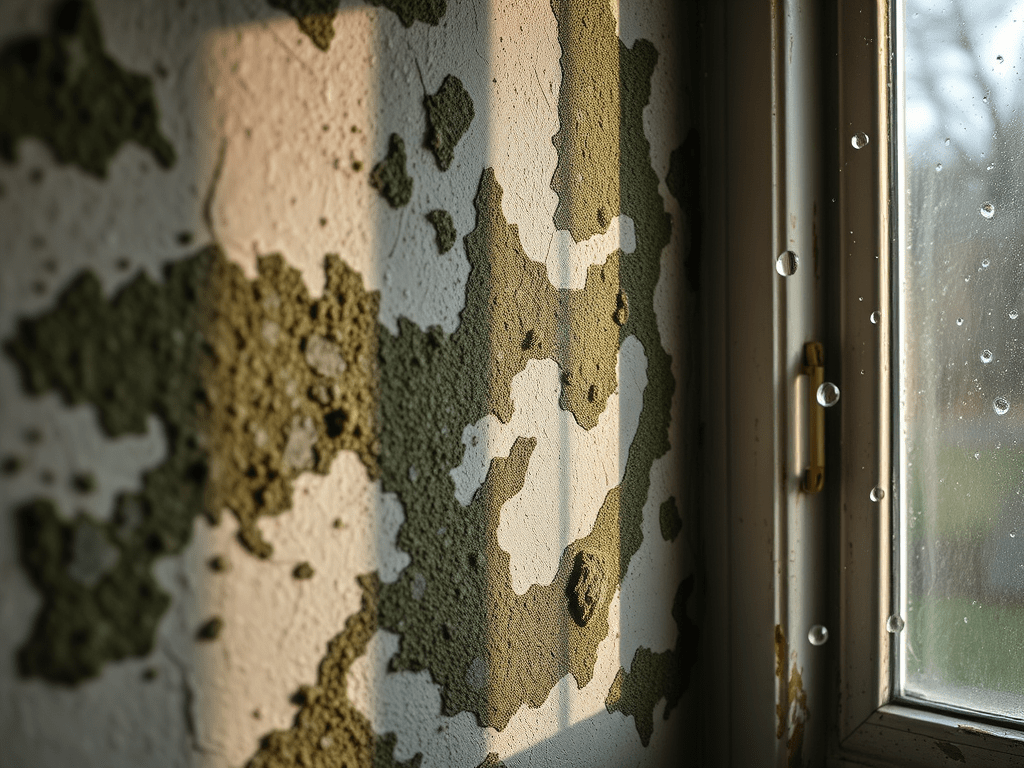
The rainy season has arrived and suddenly the air inside my home is different.There is an odor i can only be described as earthy, damp, and faintly sweet. As the days go by, the walls begin to swell,dark spots form at the corners and small droplets of water will form at the windows. When i touch the wardrobe pressed against the wall,I can feel the dampness seeping through.Most families see this as a normal inconvenience. For risk analysts and other professionals, it is an exposure risk.
Widespread, international research is beginning to piece together the risk of chronic respiratory disease that is associated with poor, damp, and mold infested homes. It is an epidemic that grows without any evidence of it until it becomes a serious health risk.
Dampness as a Risk Factor
Dr.Amina Bello, a researcher and epidemiologist, chooses her words carefully. ”Damped indoor housing is an aesthetic issue.” These words can be considered an understatement.The World Health Organization has associated risk for asthma with poor mold and damp housing. That risk has been determined to be 30-50%. There is clear, biological evidence for each statement made in the paper and it is relatively simple.
Mould is a type of multicellular fungus which reproduces by putting microscopic spores into the air. These spores are everywhere, both indoors and outdoors. Growth begins when spores land on damp surfaces and find some organic material: wood, drywall, carpet, and fabric.
Moisture is the crucial factor.”Without moisture, spores remain dormant,” Dr. Bello says. “With moisture, you create a micro-ecosystem.” Dampness does more than enable fungal growth. It fosters the proliferation of dust mites, bacteria, and the release of microbial volatile organic compounds. Together, these create a complicated exposure profile.It’s not just one organism. It’s an entire environment.
Pulmonologist, Dr. Thabo Mokoena is witness to the downstream consequences.“From the clinic, we manage asthma exacerbation on a weekly basis,” he states. “When the medication is not fully effective, I begin to inquire about their home.”He is all ears to the patterns that emerge,the peeling paint, the visible mould patches, the chronic condensation, the cleaning resistant musty odour.
“Occasionally the child does well at school, but when the holidays come, their performance deteriorates at home,” he observes. “That suggests the building is contributing to the illness.”
Repeated exposure to fungal spores and allergens associated with dampness causes inflammation of the airways. With time, the airways become less responsive. They narrow more easily as response to irritants.The dangers are even greater. Children’s lungs are still developing. They consume more air per kg than adults. Their immune system are still learning how to deal with the environment.
“Exposure in early life is important,” says Dr. Mokoena. “The inflammatory imprint can persist.”
The Burden is Divided Unequally.

Not everyone is affected the same by damp housing.
There is a body of research that shows the prevalence of mold is greater in:
- Overcrowded housing
- Under insulated housing
- Renters with socially trapped houses
- Housing in flood prone areas
- Housing in informal settlements with no drainage
“Housing quality is stratified along economic lines,” Dr. Bello states. “So does respiratory risk.”
In many low-income communities, the tenants do not have the ability to make demands for the repairs to be made. In areas that are rapidly becoming urban, the housing stock is built before there is any kind of regulation. In flood prone areas, repeated water intrusion is tolerated.
Mould is a marker for a lack of structures.”You cannot separate urban planning and epidemiology,” says Dr. Bello.
The Amplifier, Climate Change
Many climate models are predicting more extreme but short duration rain in many places. When it floods, buildings become saturated in water. If materials such as drywall, insulation, or wood framing become wet and are not dried in less than 48 hours, the materials will begin to grow mold.
Mold has also been a reason for the rising number of respiratory diseases that are observed after floods.“Water damage shows specific timelines of cluster asthma aggravators” explains Dr. Mokoena. “We followed the damage for timelines of clusters.”
Most of the public health responses to flooding disasters will mostly deal with the immediate consequences of flooding, such as the waterborne diseases and vector borne diseases. However, one of the long-term consequences, is the case of damp housing.Most disasters end when water recedes the water, as the disasters continue to exist behind the walls of the house.
The Stachybotrys chartarum story
The public focus has become fixated on the “toxic black mould” which is usually the more popularized Stachybotrys chartarum.Some particular strains of the black mould are capable of producing mycotoxins, but this is usually rare.
Dr. Bello explains, “There is more common and more serious chronic respiratory irritation exposure to mould, and this is more serious than the widespread, unsupported acute poisoning, which is the phenomenon of household mould exposure.”Most of the concerns are not even dramatic. Simply put, the danger is present and it is permanent.
Addressing the Health Risk of Mould.

There is a lot of mould public health issues that are difficult to measure.
Visible mould is but a small part of a bigger problem. Mould is more than just the part that is visible to you and it is likely more hidden than you think. It can exist behind walls, under flooring, and more.Dr. Mokoena states that, “If you can smell mould, you are inhaling spores.”
In epidemiological research, participant-reported exposure is often measured by self-reported evidence of dampness, visible mould, or water damage. This method of measuring exposure may be limited, but the association is unmoving along the continuum of geography.
Consistency of evidence across multiple countries strengthens the case for a causal relationship.Epidemiological research has brought the exposure of mould to asthma, but the negative health effects of exposure include:
- Chronic sinusitis
- A persistent cough
- Hypersensitivity pneumonia
- Increased respiratory infections
And for immuno-compromised individuals including patients undergoing chemotherapy or individuals with advanced HIV, exposure to certain moulds may be very problematic. For example, Aspergillus may trigger the development of an invasive disease in an immuno-compromised individual, so such infections may be rare, but they can be life threatening.
Dr. Bello notes that ill-defined exposure is context-dependent. Ill-defined exposure may be tolerated by healthy adults, but other individuals may not be able to tolerate such exposure.It is important to note that prevention needs to be fundamental.
Many households engage in superficial cleaning such as creating bleach solutions, painting, and using air fresheners. While these practices may temporarily remove visible mould, they do not resolve underlying moisture issues.
Moisture control is essential.
Focus on how to improve your home’s structure to optimise for moisture control. Changes in patterns of air movement within a building, improved insulation, and optimal drainage, may provide the necessary changes to improve the environment.It is important to note that exposure cannot be mitigated by the use of medication.”If the patient goes back to a damp house, inhalers are a temporary fix.”
Housing Policy as Health Policy
More and more public health strategies are applying housing as a potential health risk, although the details of how this will be implemented can be quite diverse.While there are some countries that have building guidelines to include moisture proofing and ventilation, with many other countries the uncontrolled spread of informal housing seems to have worn out.
Dr. Bello advocates for an interdisciplinary approach.
” Urban planners, housing authorities, environmental health officers, clinicians all need to develop a cohesive approach. ”
Some of the possible strategies include:
- subsidized housing repairs for poor families
- rapid post flood drying
- mandatory timelines for responsive public health landlord remediation
- public education campaigns on moisture
These strategies redistribute the responsibility for managing mould from a private to a public issue.
Listening to buildings,the damp smell of a room,Patterns of condensation,and the persistent wheeze of a child living in a house with mould is data.Public health often responds to crises that are dramatic — outbreaks, epidemics, acute disasters. Damp housing operates differently. It is chronic, distributed, and largely normalized.
When children develop asthma earlier and more frequently, when emergency visits spike after flooding, when respiratory irritation becomes routine , the built environment is implicated.
Stating that mould is a housekeeping issue is incorrect, says Dr. Bello. “This is an issue of structural exposure.” On a continuum of environmental pollutants, mould is the worst. While most forms of environmental pollution are irreversible, mould is almost always preventable. Dampness is reducible, as is poor ventilation and leaks. Infrastructural and economic barriers are the primary causes of persistent mould problem. Mould is indiscriminate. Where there is moisture, there is mould, and where there are social inequities, there is greater exposure. A stain is not just a stain, it is an indication of the intersections of substandard housing, climate and social inequities. It is a sign that the pharynx, and lungs, concisely coded, is the public health of the unwell. Symptoms are only secondary, public health is concerned with dry walls, good drainage, and clean breathable air. The smell after it rains is not an odour as much as it is a signal. In public health, signals are critical, and in this situation, the signal is an issue.






 Sure Media Magazine
Leave a comment