

The place was packed before the baby had its first cry. Aunties wrapped in hibiscus colors arrived. Uncles clumped under the mango tree. A goat was bleating behind the kitchen hut.
“It’s a Boy” the nurse announced. The acacia birds scattered from the sudden rise of ululation.Everyone knew the sound would be softer if the baby was a girl. No one said it.I grew up in a society where the arrival of a son was welcomed with certain ease. Daughters were equally cherished of course. We were fed, clothed and educated. However, the birth of a boy seemed to secure something important for the family’s future.I did not have the words to describe this feeling then. But as an adult, I certainly do.
In most African cultures, lineage is traced through the head of the family, the father. The Kikuyu have the father’s clan as the home of the children. The Luo and the Yoruba place their family name and lineage through the sons.
The daughter leaves and moves to her husband’s family.A son stays at least in principle. He builds his house not far from the homestead. He inherits land,he undertakes particular burial customs and maintains the visible continuity of the lineage.
In the case of the land being inseparable from the identity of the community, a male child signifies continuity of the community. In the absence of a son, the elders pin point a lineage “ending,” as if history itself could thin out and vanish.
In my youth, an elderly woman was once heard telling a mother of four girls, “You are blessed, but you must try again.” There was a consensus on what she meant.
In rural economies, sons have long been linked with physical work. Male-defined survival tasks like ploughing,herding, and land clearing are examples.
Many households expect a son to digress from serving his own family and support his parents instead. Daughters, too, are socialized to care, but customs put the burden on them.In rural settings, where life is precarious, the thinking goes the other way.
Bride price and Value
As part of East and Southern Africa’s marriage customs, there is a practice known as bride price whereby the groom’s family gives cattle or monetary compensation to the bride’s family. To outside observers, this practice may seem to elevate the status of daughters, but the whole practice is much more complex.
Bride price recognizes the economic value of a daughter’s labor and her ability to bear children, but after she is married, her labor and ties to the family shift. Her principal allegiance is to the husband’s family and she is a contributor to that household’s growth and continuity.Marriage to a daughter is not as economically advantageous as marriage to a son. A son adds to a family and is economically more beneficial.
The practice of bride price and its value to daughters shows the complex relationships that exist in family building as it combines relationships and economic values.
Status and Motherhood
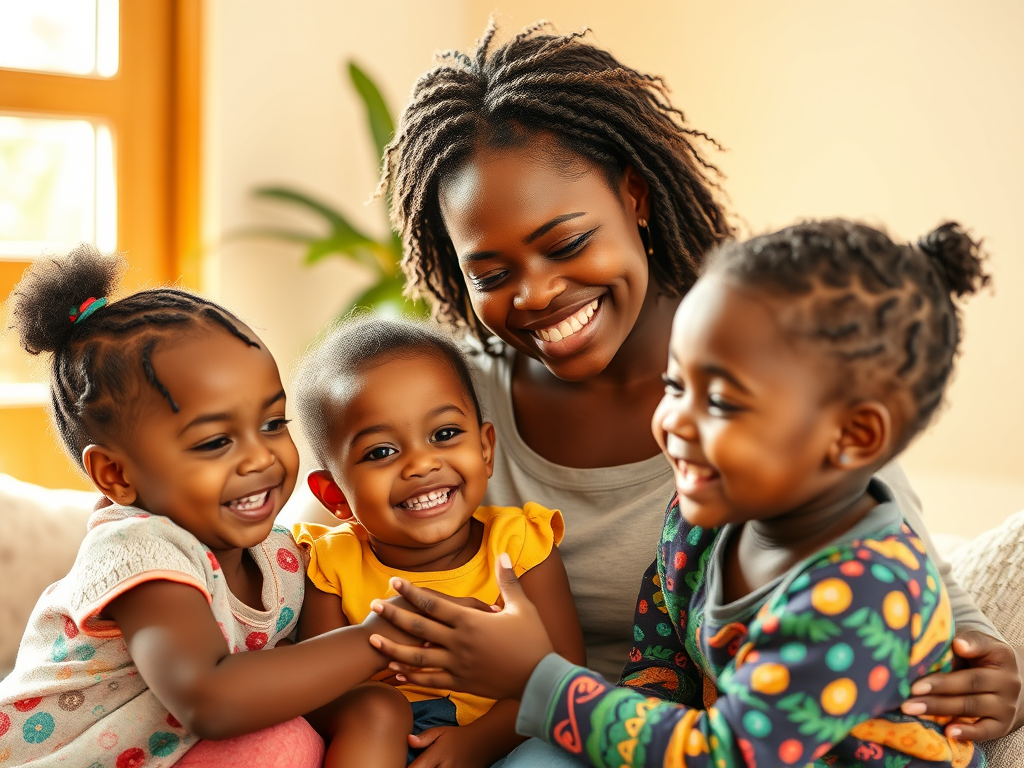
The status that a woman holds in a family increases with the number of children she bears and becomes greater with the number of sons she has. She is able to command greater respect from her in-laws when she has “given” the family an heir.
I have witnessed this change. The same woman who once sat quietly during family discussions and was ignored, became more assertive and confident after the birth of a son.The preference for sons may appear to be a practice that is paternalistic, and it may appear to be an imposition. However, it is an internalized practice that has the effect of protecting women from abuse and domination in a patriarchal system.This phenomenon does not show the simple bias or reliance. There is a complexity in the practice that goes beyond the single assumption.
The Quiet Love for Daughters
I have seen many fathers do a charmingly clumsy job of braiding their daughters’ hair, and grandmothers who coax their little girl with stories and even save a portion of the stew for her if she happens to be the one who reminds them of them. I have known families with daughters who exclusively celebrate the birth of each girl with loud and infectious pride.
Cultural structures do not magically make affection disappear.
However, the structures of a culture do create a framework within which expectations can be shaped.In a family where the exam results have just been announced, the boys are commended and celebrated for being future heads of the family. Even if the daughters are top of the class, they are just celebrated for being future wives.
The ceiling may be subtle, but it is still there.
Imminent Change
The process of urbanization is now changing the whole equation.
With the advent of urbanization, there is less land centered identity in the cities. Women have started to work in formal employment, and daughters have started to financially support their parents. Legal changes in some of African countries like Kenya and Nigeria have begun acknowledging the daughter’s right to inherit, hence making the formal urban employment of women less land centered in identity, daughters financially supporting their parents, and daughters being legally recognized in some African countries the starting point of a new trend.After education, the new trend is less bound to that single Y chromosome.The ululation was just as sharp.
What Preference Really Means
Community preference is articulated through economic vulnerability, ritual obligation, inheritance systems, and gender power systems, and not based on perceived value.Where property transactions occur through men, men are necessary for continuity.Where old age relies on support from a male, men signal stability.Where there is ritual authority, and male heirs, men are the embodiment of power.
A Different Kind of Continuity
I think of the mango tree, the one that hosts the family gatherings, that my grandmother planted. Not my grandfather. It was her hand that pressed the seed into the soil.Yet when people talk about the homestead, they talk about it through male lines.Perhaps continuity has always been, as our customs put it, a little more complicated.
In our family, when a child is born, we used to gather. We used to sing. These days, it has softened. The celebration has widened.The truth we are learning is that a lineage is sustained by whoever carries the story.A lineage is not sustained by a son alone,and stories, like inheritance, belong to daughters.





 Sure Media Magazine
Leave a comment