
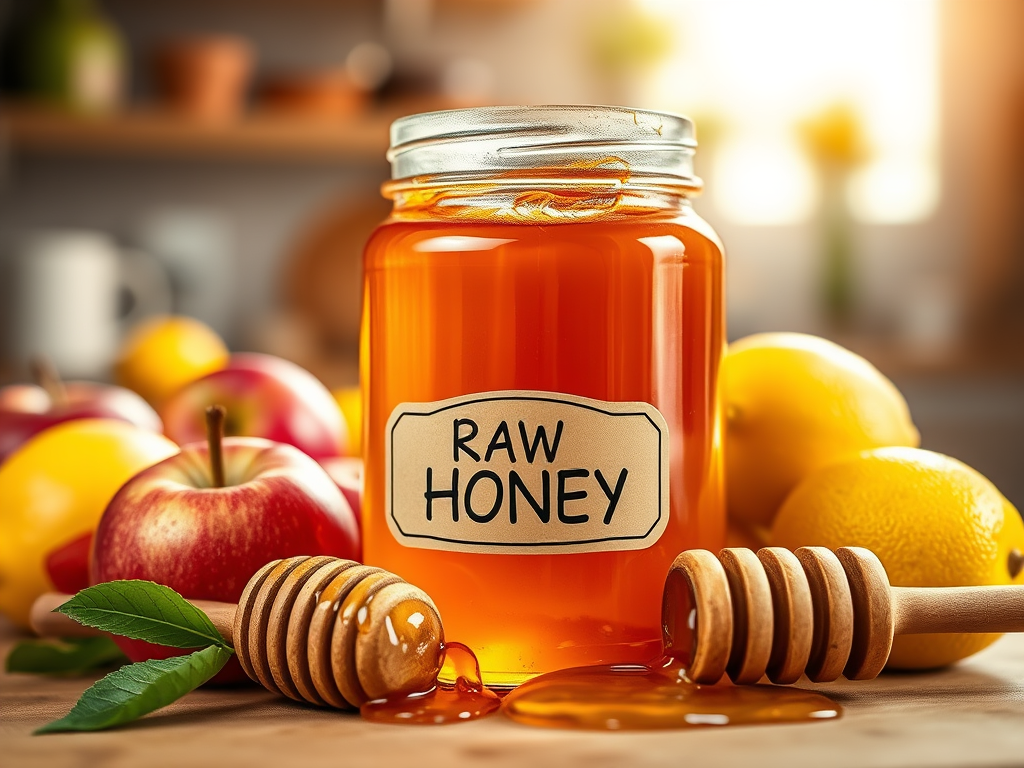
Honey, a naturally occurring substance made by bees, offers powerful health benefits for children aged 5–12. From boosting immunity to soothing coughs, here’s what science says about this golden superfood.
By James Njau
It is 2 a.m., and your eight-year-old is coughing so fiercely that she cannot sleep. You look at the medicine cabinet, and it is empty. Then you get the thought of the jar of raw honey on the kitchen shelf. A teaspoon after that, the coughing ceases, and she falls asleep again. And when that can be heard sounding like a folk remedy, consider it; it is precisely what science bears out. In the case of children aged 5 to 12 years, raw honey will not be a mere sweet bite. It is one of the most helpful natural health tools.
Raw honey has not been heated and filtered; thus, it still contains all its natural enzymes, antioxidants, and antibacterial agents. In children of school age, these compounds do make a difference because their bodies are still developing. These are five science-based advantages that every parent ought to be familiar with.
Benefit 1: It Cures Coughs and Makes Children Sleep.
According to WebMD, a study of 105 children found that honey was more effective at reducing nighttime coughing due to upper respiratory infections than the popular cough medications. Both the World Health Organization and the American Academy of Pediatrics have acknowledged honey as a safe and natural cough suppressant for children aged 12 months and older. Honey is viscous and thick, covering the throat and calming irritated membranes as it comes in contact. A teaspoon before bed when you have a cold can soothe your cough and help you and your child get a good night’s sleep. No drowsiness, no side effects.
Benefit 2: It Strengthens the Immune System
Raw honey contains antioxidants (i.e., flavonoids and phenolic acids) that prevent the damage of cells in the body by the destructive effects of free radicals. These substances reduce oxidative stress and enhance the body’s natural defenses against it over time. An up-to-date clinical review on NCBI of PubMed suggests that honey alters immune response and has shown antimicrobial effects on a large variety of bacteria and fungi. This daily assistance is priceless for children aged 5-12 who are constantly exposed to germs in classrooms and on playgrounds. Raw honey naturally delivers its benefits, unlike children’s supplements that are filled with fake colors and fillers. One tablespoonful in warm tea or drizzled over toast provides the immune system with a steady, reliable boost.
Benefit 3: It Supports Healthy Digestion
Occasionally, many school-aged children develop stomach problems—it could be stomach bugs, unbalanced diets, or the stress of a busy week. Raw honey can help. According to Mayo Clinic, honey can be used to treat diarrhea caused by bacteria and gut inflammation, in part due to the fact that it is a natural source of prebiotic compounds that nourish good bacteria in the digestive system. The articles cited by MomJunction also indicate that types of honey, such as buckwheat and manuka, alleviate constipation by attracting water to the stool, facilitating digestion, and making stools more consistent. Even when compared to sweetened probiotic beverages or chalk fiber supplements, children will willingly consume raw honey. There will be no negotiation, no argumentation, and no cleverly concealing it in their food.
Benefit 4: It Provides Clean, Sustained Energy
Children between the ages of 5 and 12 consume energy at an impressive rate and spend all day running, jumping, and thinking. The fructose and glucose in raw honey, the natural sugars, are readily converted into energy to provide the body with what it needs, without those additional additives. Honey contains trace amounts of vitamins, minerals, and enzymes, unlike refined white sugar or high-fructose corn syrup, which are in most packaged snacks, making it truly healthier. Healthline points out that honey is a mild form of energy, which does not cause the sudden burst of energy and the crash that comes with processed sweets. A teaspoon of it in morning oatmeal, in a smoothie, or as a pre-sport snack is a better, smarter fuel option for active, growing kids.
Benefit 5: It Has Antibacterial Properties That Aid Wound Healing.
Children fall. They scratch their knees, gather scrapes, and return home with all kinds of minor knife wounds. The amazing antibacterial action of raw honey is due to three factors: the naturally low pH of honey, which prevents bacterial growth; the formation of hydrogen peroxide when honey comes into contact with moisture; and the action of potent antimicrobial compounds, such as bee propolis. According to a Healthline review of 26 studies, the most effective treatment for partial-thickness and post-surgical burns is honey. In the case of frequent childhood injuries, relatively minor scrapes, cuts, or scraped mouth ulcers, a thin layer of raw honey will keep them infection-free and will remarkably accelerate the healing process. Every domestic house should have this plain, natural, scientifically supported first-aid kit in the cupboard.
The Bottom Line
Raw honey is an all-time treatment for coughs, strong immunity, digestion, business fueling, and wound healing in small bodies, all in one natural, affordable lunch. The results speak volumes, and the science is precise. When purchasing, always choose the raw or unfiltered label, as processed honey loses most of these benefits during heating and filtering. A single considerate point to make is that honey must never be administered to children under the age of one year since there is a severe risk of botulism. If you are allergic to pollen, always consult your doctor before introducing it regularly. To every child between the ages of 5 and above, that gold jar on your kitchen shelf may prove to be one of the most intelligent natural health purchases you ever make on behalf of your family.
Found this helpful? Give it to another parent—and put a teaspoon of raw honey in the morning for your child this week.
Sources
WebMD—Honey & Cough in Children
https://www.webmd.com/baby/when-can-a-baby-have-honey
Mayo Clinic—Honey: Uses, Side Effects and More
https://www.mayoclinic.org/drugs-supplements-honey/art-20363819
Healthline—7 Unique Health Benefits of Honey
https://www.healthline.com/nutrition/benefits-of-honey
PubMed / NCBI—Honey and Health: A Review of Recent Clinical Research
https://pmc.ncbi.nlm.nih.gov/articles/PMC5424551/
MomJunction—Honey For Children: Benefits, Uses and Precautions
https://www.momjunction.com/articles/benefits-of-honey-for-kids_00484064/





 Sure Media Magazine
Leave a comment