
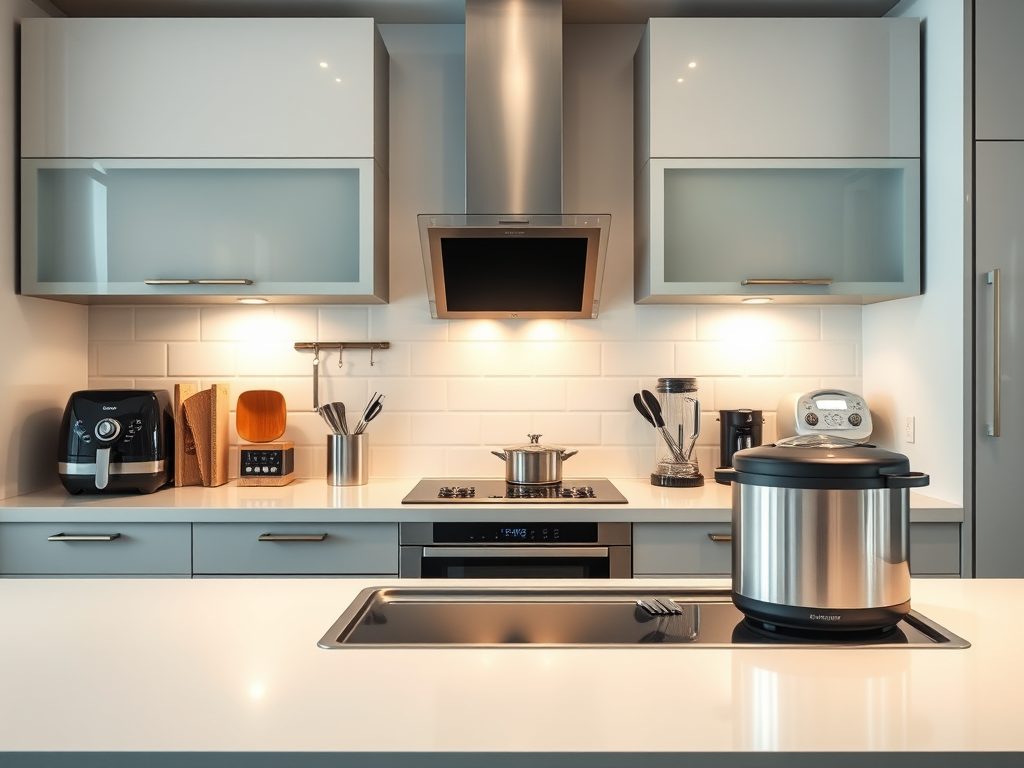
Several years ago my kitchen consisted of the basics: a pot, a pan, a stove, and a couple of hopeful ideas. Now, however, it’s a completely different story. I have a multi cooker and an air fryer, and I even have a high speed blender, which I said I would never buy. I, like most people who are trying to eat healthy and not spend a ton of time in the kitchen, have fallen into the trap of buying kitchen gadgets.
These tools don’t magically make food healthy. They have the potential to make healthy eating easier, but I have to be the one to take the steps to make sure the food is healthy.
My Air Fryer Reality Check
I told myself that buying an air fryer would be a healthy choice. I would be able to make crispy, oil free, healthy meals. However, that simply isn’t the case. Sure, I do use less oil, and therefore the calorie density is lower in some of the meals, but that does not make the meals healthy. In fact, it makes them unhealthy.
I learnt an important lesson. The air fryer does not change food from being processed to being whole. If I make frozen, breaded snacks every night I’m not eating an unhealthy meal because air frying it makes it less oily. I’m still eating ultra-processed food.
The air fryer became a healthier appliance because I began using actual vegetables like spiced cauliflower, slightly oiled sweet potato, tofu, and seasoned chicken thighs. The air fryer didn’t change my diet. It was my choice that did. The air fryer provided me with the most change with its convenience. It helped me cook faster and made the entire process feel less messy, leading to me making air fryer meals more consistently.
The Multi-cooker That Reduced My Excuses
I didn’t own a multi-cooker, but I didn’t make dried beans. It was time consuming. Stews needed supervision, and brown rice took forever. Now, I can just put lentils, spices, and vegetables in the multi-cooker, push a button, and walk away.
For me, the biggest advantage is not the nutrient preservation or the science behind cooking, but the shift in my behavior. When I have convenient access to whole foods, I am significantly less inclined to choose packaged meals instead.
I’ve seen how cooking like this impacts my stress and anxiety about preparing dinner. I no longer have to rush around as dinner time nears. I set the timer, start the appliance, and let it do its work. That alone improved my entire evening routine. Eating healthy goes from an obligation to a habit.
Blending and the increase in my plant consumption
Out of all the things I could have chosen to buy as an appliance for my kitchen, the most surprising in my opinion is a blender. I thought that buying a blender for a long time was a waste of money. I thought that smoothies were a trendy food of the time and quite unnecessary. Now, I realize that they are a great way for me to increase the amount of vegetables in my diet.
I blend spinach into my fruit smoothies. I create thick soups using my roasted vegetable blends. I blend my own hummus as well as sauces using nuts instead of buying them. Because I blend whole nuts and don’t buy the pre-blended ones, I keep the fiber. Increasing fiber is something I have become more intentional about as I have gotten older and more aware of my digestion, blood sugar levels, and overall gut health.
Although, I have also learned that blending food makes incorporating calorie dense foods easier to over consume. Sweetened plant based milks, oils, nut butters, and protein powders are very calorie dense. I also find that when I am not paying attention, my smoothies that I thought were healthy become very calorie dense.
The appliance actually amplifies the bad habits that I have instead of correcting them.
Reassessing my cookware and the ‘non-toxic’ claims
Eventually, I also got and followed the cookware marketing trend. Stainless steel sets, ceramic coated pans, and enameled cast iron all claimed to provide safer and healthier cooking.
I’ve swapped my old nonstick pots and pans for cast-iron and stainless steel. I didn’t do this because I thought my cookware was toxic, but for my new pans to have durability and heat stability. For cast iron, when seasoned, it becomes nonstick and actually requires less oil than I thought. Steel also required me to learn my temperature control.
What changed most was not my nutrients, it was my attention.
Engagement and cooking is about how much I respect the process. When I was cooking with steel, I had to pay attention to the heat and the vegetables.
From The Illusion of Health by Gadget
There was a moment in time where each new addition to my kitchen I thought would mean a better diet,but when i discovered the new tech, it was a disappointment.I could actually do processed food with an air fryer,use the pressure cooker for white rice and blend sugary smoothies.
The latest kitchen tech does not take over the fundamentals of nutrition. For me, they are very basic and clear with most meals being minimally processed.
The kitchen appliances can help, but only if I make the right choices.
Why These Tools Still Matter
The biggest impact of most kitchen appliances is reducing friction.
When I finally get home from work, I really don’t want to do a whole song and dance to get a meal prepped and ready to cook. The more I can minimize the effort and time that goes into the cooking process, the more I will actually do it. The air fryer is great because it heats up really quickly. With the multi-cooker, I don’t have to worry about timing. I can just set and forget about it. The blender is great for prepping and reducing the time the meal takes to prepare. The most hectic part is usually cleaning up after, and with manageable cleaning, it makes it easier to decide to cook.
I realize that investing in a bunch of kitchen appliances isn’t economically reasonable for everyone, and I have come to believe that it really isn’t necessary. There is a good knife, solid pan, and fresh ingredients that can do most of the work for you. If you are starting and need to buy kitchen appliances, you are better off buying a multi-cooker than a bunch of trendy appliances. The multi-cooker is a lot more versatile than any of the others and it takes a lot less effort. It also has a great range of uses for cooking, so you can make grains,beans, prepare soups, and more.
It’s more important to me how many positive meals my kitchen has generated and produced, and not how modern my kitchen looks.
What Healthy Home Cooking Means To Me Now
At one time, it felt like healthy home cooking was more of a requirement. The home cooking would need to have fancy recipes, and would need to be made of organic ingredients and have a perfect macro balance. The idea now, however, is much more simplistic.It means more home cooking and less ordering food,more veggies on my plate,and understanding on where food is coming from.
The air fryer didn’t give me discipline. The multi-cooker didn’t create balance. The blender didn’t invent fiber. But these appliances made a positive gap between my intentions to eat healthy and my actions.
The shift has come from closing this gap, from the appliances, and not the amount I cook.
The healthiest kitchen isn’t the one that has the most fancy and modern appliances. The healthiest kitchen is the one that has consistent positive meal prep energy use and meals that promote positive energy, stability, and long term positive health.





 Sure Media Magazine
Leave a comment