Have you ever noticed that when we speak of religion, the air always thickens? The room shifts; hearts tighten. For some reason, the mere mention of faith evokes emotion before reason.
This is because every religion, in its simplest form, rests upon one unshakable pillar: the belief in a greater being, or as some prefer, a higher power. From this belief springs a moral obligation to defend religion, and perhaps it also gives us a sense of belonging, a tribe for the soul. And so, when religion enters any conversation, emotions flare, not because we are fragile, but because belief is personal; it defines us.
Take Christianity, for instance, the faith I myself profess, though I admit my reflection may carry an unconscious bias, bear with this train of thought. It is perhaps one of the most fascinating religions ever conceived. Why? You might ask.
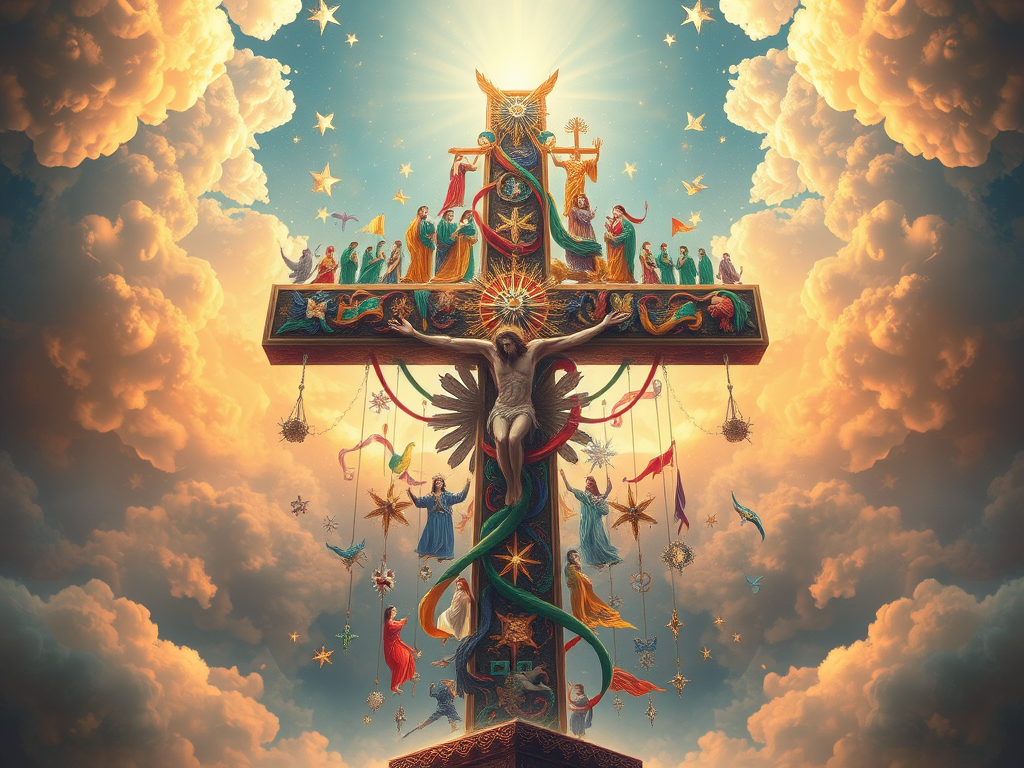
At its core, Christianity is Christ-centered; yet, somehow, from that one single foundation, over 45,000 denominations have emerged worldwide. Why so many, you might ask again? Now this is where religion, as distinct from faith, begins to take shape.
You see, while the essence of Christianity remains rooted in Christ, its expression is governed by the traditions, customs, and cultures of men. These traditions form the scaffolding of faith and morality; they guide the conscience of believers, and yet, they also fragment what was once whole.
If I were to simplify it, I would say the precepts of God remain unchanged, but the traditions of men have reshaped faith and belief in the name of religion to soothe the discomfort of conviction, to make faith palatable, and to dress compromise in robes of devotion. Thus, each denomination becomes a mirror, reflecting not only a god but also the flaws of its followers. And that is what makes Christianity both beautiful and bewildering.
So, am I a Christian or religious? That question is not as simple as it once was. In this age, absolute truth is often carved into convenient pieces; its integrity diluted, its essence traded for interpretation. We hold the shell of truth and call it sacred, while the core, objectivity, slips quietly away.
To call oneself Christian, then, depends on what truth you know. For truth itself has become elastic, bending to culture and time.
If you had asked this question in the first century, the answer would have been certain, even pure. Back then, Christianity was young; it was raw, real, and costly and definable, not diluted by ideologies or mutilated by customs and cultures. But sadly, as centuries unfold, the question grows heavier; the lines blur between belief and belonging, between Christ and the church, between Christianity and religion.
So, are you a Christian? Are you able to properly audit the introspections of your core beliefs? Are you able to clearly see between the blurred lines of the precepts of God and traditions of men? This might be, although biased, the blueprint to properly evaluate our faith

East African Living
Are you religious?; God’s precepts, choked by man’s traditions
Religion stirs emotions due to its personal nature, with Christianity exemplifying the tension between core beliefs and human traditions.
Looking for a job?

Latest
- BIG GIRL PANTS: THE TRUTH ABOUT BEING A SINGLE MOTHER BUILDING MULTIPLE CAREERS

- From Hell to Strength: My Journey Living with a Stepfather
- ONE INCOME IS TOO CLOSE TO NONE: WHAT BUILDING MULTIPLE INCOME STREAMS TAUGHT ME ABOUT MONEY — AND MYSELF

- The Discovery of “Dark Oxygen” Reshaping the Search for Alien Life.

- The Quiet Violence of Empathy Games

 Sure Media Magazine
Leave a comment