

Nairobi’s Central Business District is not where the city performs for visitors. It is where it works. The CBD moves at the pace of necessity, office workers cutting across traffic, vendors negotiating over inches of pavement, matatus forcing their way through streets never designed for volume. It can feel overwhelming, but that density is the point. Nairobi reveals itself most clearly when you walk through its center rather than around it.
A 48-hour visit here is not about covering ground. It is about learning how the city holds itself together.
Day 1 Morning: Reading the City’s Layers
Start on Kenyatta Avenue near the Kenyatta International Conference Centre (KICC) and walk toward Tom Mboya Street. This stretch captures Nairobi’s contradictions in real time: colonial-era facades pressed against glass towers, informal trading unfolding beside formal offices. The architecture does not resolve into a single story; yet it argues with itself.
Pause for coffee at one of the CBD’s reliable anchors. Artcaffé, near Sarova Stanley, offers a familiar Nairobi rhythm of meetings, solo diners, and brief stops before the next errand. Java House on Tom Mboya Street provides the same consistency. These cafés matter less for novelty than for what they signal: the CBD is not transient. People return here daily.
Continue toward City Hall, where government buildings and administrative offices remind you that Nairobi’s power is not abstract. It is bureaucratic, procedural, and very present.
Day 1 Afternoon: Markets and the Economy of Proximity
Muthurwa Market on Landhies Road compresses Nairobi’s daily economy into a few crowded lanes. Produce, clothing, hardware, and food compete for space. Movement here is negotiated constantly between buyers, sellers, handcarts, and traffic pressing in from all sides. The smells of fruit, smoke, and spice mix without hierarchy.
For lunch, choose somewhere practical rather than polished. Mama Oliech on Kenyatta Avenue serves familiar Kenyan staples with the confidence of repetition. Kenyan Cuisine Restaurant nearby offers the same food designed to sustain, not impress.
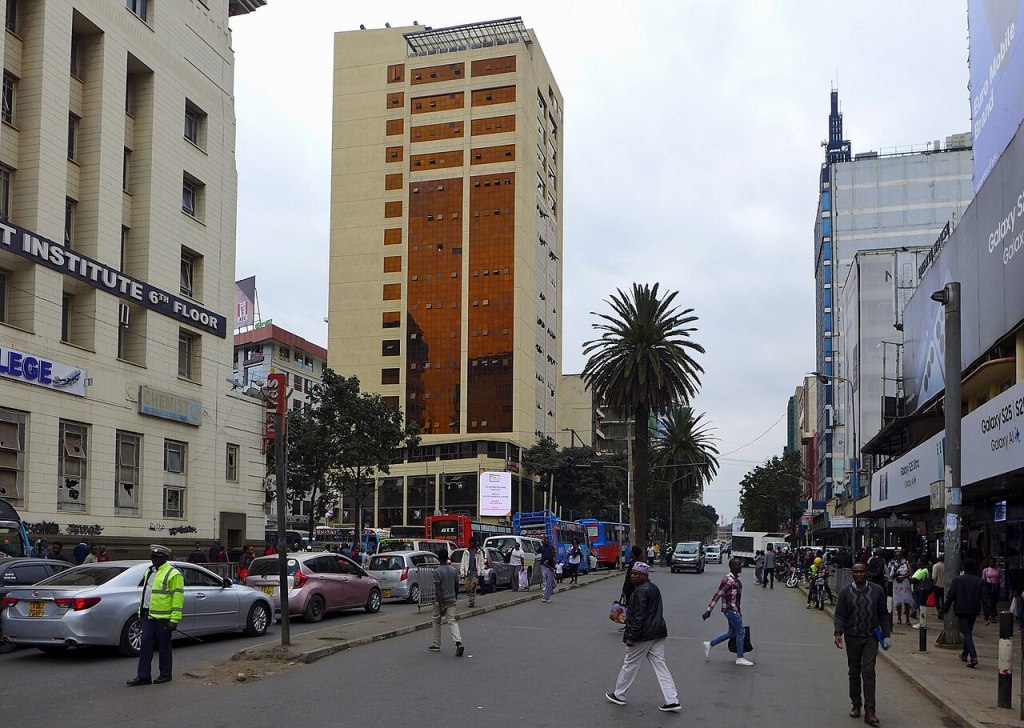
By Bahnfrend – Own work, CC BY-SA 4.0
Afterward, walk along Moi Avenue. The transition is abrupt: open markets give way to banks, offices, and controlled storefronts. This contrast is not accidental. It is how Nairobi functions, with informal and formal economies operating within walking distance of each other.
Day 1 Evening: Looking Back at the Grid
As offices close, the CBD does not empty. It reorganizes. A rooftop like The View offers a chance to see the city from above, with lights mapping out a grid that feels more orderly than it does at street level. If you want to extend the night, places like The Alchemist in Westlands offer a different energy, but leaving the CBD is instructive. It reminds you how central this area remains, even when entertainment migrates outward.
Day 2 Morning: Infrastructure as Origin Story
The Nairobi Railway Museum on Station Road grounds the city’s history in steel and movement. The Kenya-Uganda Railway was not just transport; it was the reason Nairobi exists at all. The locomotives and carriages here make the city’s beginnings feel tangible rather than symbolic. Back in the CBD, walk along Haile Selassie Avenue. The buildings here show how the city has been continuously repurposed rather than reinvented, offices layered over older frameworks, function replacing form without erasing it.
Day 2 Afternoon: Pauses in the Density
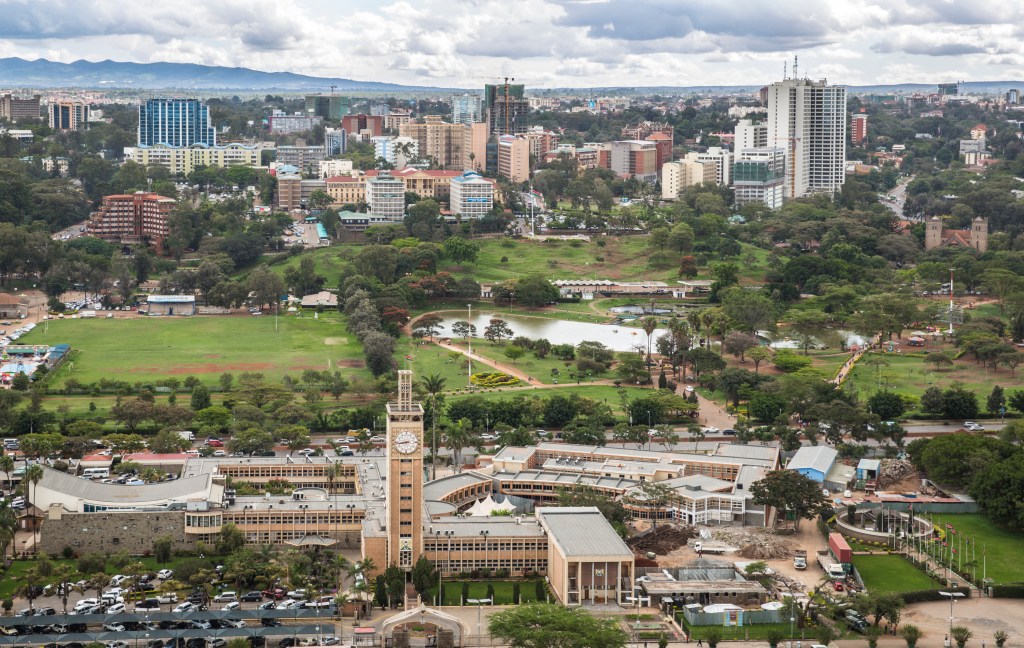
By Ninara
Uhuru Park has open lawns and shaded paths that soften the city’s edges, even briefly. It is where Nairobi exhales families resting, workers passing time, and protests occasionally assembling. The park’s importance lies in its availability, not its beauty.
Walking back toward the CBD, the afternoon rush resumes. Streets like Moi Avenue and Koinange Street thicken with sound and movement. Vendors call out. Traffic resists flow. This friction is not a flaw. It is the city’s operating condition. Walking back toward the CBD, the afternoon rush resumes. Streets like Moi Avenue and Koinange Street thicken with sound and movement. Vendors call out. Traffic resists flow. This friction is not a flaw. It is the city’s operating condition.
Day 2 Evening: Leaving Without Closure
End with one last walk through the CBD after dark. Lights reflect off glass buildings, but the streets remain active. Nairobi does not quiet down so much as it redistributes energy.
Spending two days in the CBD does not provide a complete picture of Nairobi. It provides something more useful: a sense of how the city sustains itself. The CBD is not an attraction. It is the structure underneath everything else.





 Sure Media Magazine
Leave a comment