
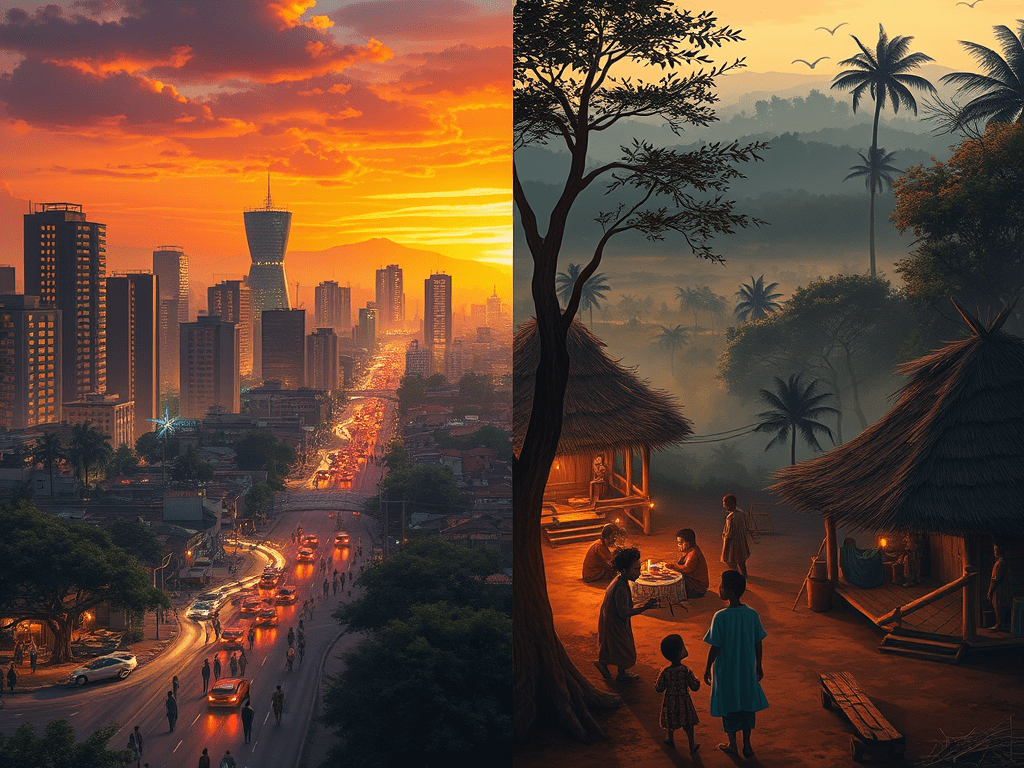
There was a time when visiting Nairobi City felt like entering another world.
As children, the sight of tall buildings, traffic lights, endless vehicles and glowing hotels took our breath away. A trip to the city whether for a school excursion, a family visit or a special event was unforgettable. We would return to the village wide-eyed, excited and certain of one thing: when we grew up, we would live in the city.
The city represented success, comfort and possibility. It was the dream.
The Magic of Scarcity
Those city visits came with experiences we could not find back home. We ate foods that felt luxurious sometimes more than our stomachs could handle because we knew once we returned to the village, those meals would disappear from our plates.
Back then, life had clear boundaries.
Some foods were reserved for weddings, church gatherings or Christmas. Certain dishes were so special they were placed in a lock-and-key cupboard, only opened on rare occasions. Certain clothes were untouched until a “special day.” Parents guarded these items carefully, not out of cruelty, but out of discipline and meaning. Scarcity made things valuable. Waiting made them special.
There were foods we believed were meant only for a select few, meals we never imagined we would one day afford. Yet, life felt full. Life felt simple.
We also all dreamed of office jobs, believing that work in the fields or physical labor was for those with fewer opportunities. Farming and manual work were seen as dirty, low-status jobs. But back then, life’s simplicity and meaningfulness made even small joys feel rich.
When the Dream Came True
Eventually, many of us did exactly what we promised as children we moved to towns and cities. We chased education, careers and opportunity. We embraced urban life and for a while, it delivered.
But something unexpected happened along the way.
The city that once felt magical became exhausting. The excitement faded, replaced by pressure, competition, noise, rising costs and endless comparison. Success became louder but less satisfying. Time became scarce. Rest became a luxury.
Ironically, the very things we once dreamed of began to feel heavy.
A World Turned Upside Down
Today, the foods we thought were out of reach are widely accessible. The clothes we saved for special occasions are worn casually. Convenience has replaced anticipation. Abundance has replaced meaning.
And while access is progress, real and important progress, it has also exposed a quiet loss.
We now find ourselves longing for what we once tried to escape:
- Quiet neighborhoods
- Slower mornings
- Deeper community
- Fewer expectations
- Simpler joys
Interestingly, society’s view of work has also shifted. Many people now embrace farming and jobs that require physical labor work once seen as “dirty” or low-status. People have recognized the value, dignity and satisfaction that comes from hands-on work.
We are slowly returning physically or emotionally to the values of the “old days.” Not because we failed, but because we learned.
What This Shift Tells Leaders
This change is not just personal; it is deeply social.
For leaders, policymakers and planners, this nostalgia carries a powerful message: development is not only about growth it is about balance.
People are not rejecting progress. They are rejecting pressure without purpose. They are questioning systems that prioritize speed over well-being, competition over community and consumption over contentment.
The growing desire for quieter living, decentralization and rural development is an opportunity not a weakness. It suggests the need for:
- Better planning of towns and cities
- Investment in rural infrastructure
- Policies that support work-life balance
- Development that respects human dignity, not just economic output
Progress should improve life not complicate it.
Once upon a time, Nairobi City represented the future. Today, the future may look a little more like the past.
We have learned that happiness is not always found in tall buildings or busy streets, but in meaning, connection and simplicity. The village taught us that. The city reminded us why it mattered.
Things have truly changed not because we went backwards, but because we grew wiser.
And perhaps the greatest sign of progress is not how far we moved forward, but how clearly we now understand what truly matters.





 Sure Media Magazine
Leave a comment