
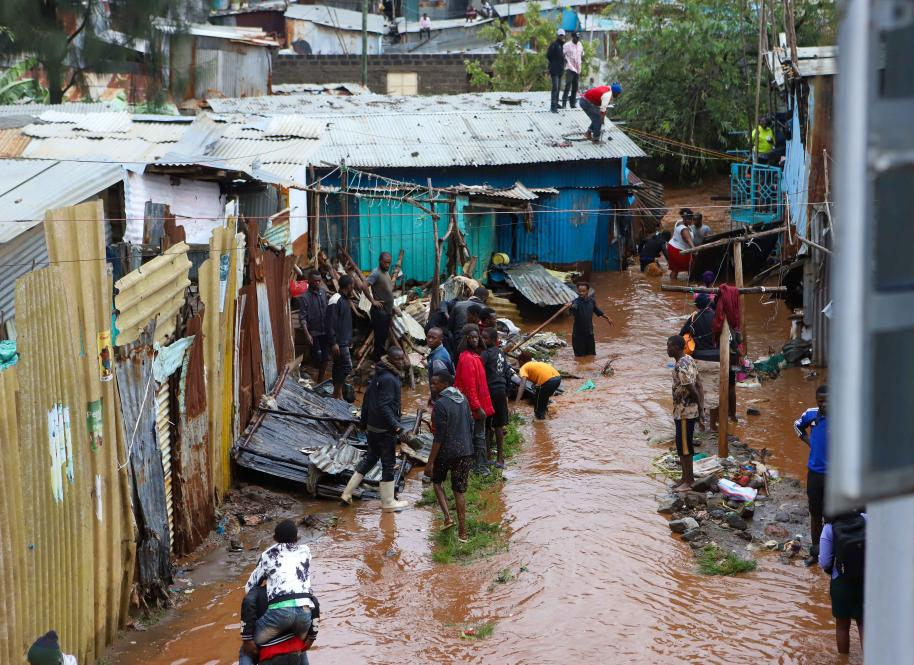
Every year, as the long rains pour down on Kenya from March to May, cities like Nairobi, Mombasa, and Kisumu become a watery nightmare come true. Roads become rivers, houses become lakes, and lives are at stake. In 2024, the flooding displaced over 280,000 people, killed more than 260, and ruined 41,000 acres of farming land in 42 counties across the country. In Nairobi, in a slum like Mathare, which has half a million people, clogged drains are filled with sewage water, and people are forced out into the streets with whatever little they can carry from their homes. This yearly submergence of Kenyan cities in water is not a coincidence; it is a failure of drainage systems that cannot cope with nature and human carelessness. What are the reasons why Kenyan cities are consistently failing this watery test? acaps.org
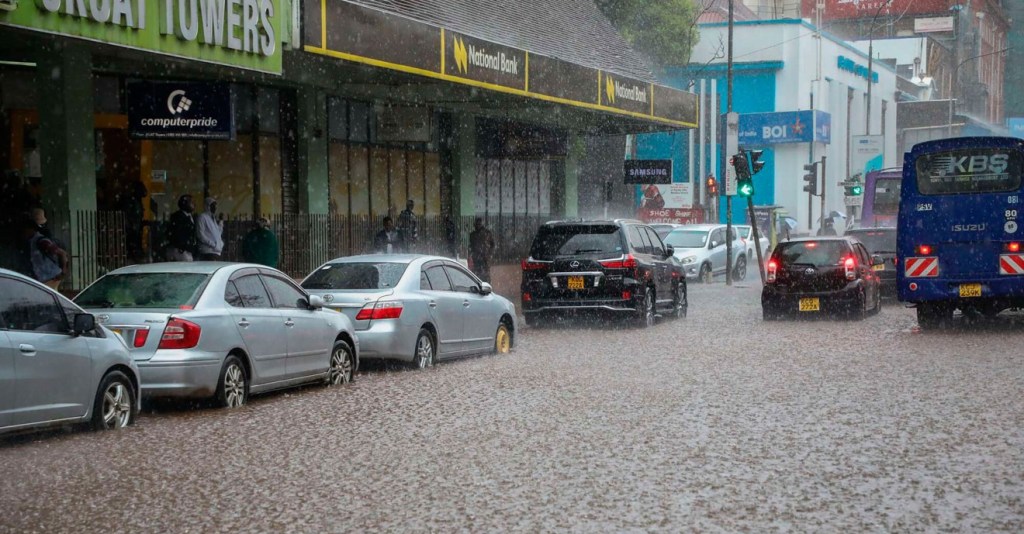
city like a river while rain pours
At the heart of this issue is Kenya’s bimodal rainfall pattern that is worsened by climate change. The “long rains” season is characterized by heavy rainfall as a result of the Inter-Tropical Convergence Zone. However, other factors like the Indian Ocean Dipole and El Niño events enhance rainfall. For instance, in 2024, warming in the Indian Ocean saw evaporation rates rise dramatically, resulting in unprecedented rainfall. Global climate change is also affecting this issue. For instance, climate change makes rainfall twice as intense as normal. This was witnessed during the 2023 short rains that caused flooding in East Africa. Global warming is causing erratic weather that makes rainfall catastrophic. However, this natural occurrence does not fully explain why there was flooding in Kenya’s urban areas. Human actions are what turn this issue into a disaster. apnews.com aljazeera.com
Rapid urbanization is one of the major causes. The cities in Kenya are growing very fast. Nairobi’s population has grown, and the slums are spreading to floodplains and riverbanks. In Mathare and Kibera, the slums are built along the riversides, without any concrete foundation or drainage. In Aberdare Ranges and the Great Rift Valley, the deforestation of major water sources increases runoff because the bare hillsides cannot absorb water, which goes directly to the cities. Mombasa is also facing the same problem. Low-lying areas such as Likoni and Ganjoni are flooded due to sea-level rise and improper land use planning, where mangroves are being encroached upon. Kisumu, which is on the shores of Lake Victoria, is experiencing an increase in lake levels due to rainfall upstream, flooding the slums. africaclimateinsights.org climateadaptationplatform.com apjcriweb.org
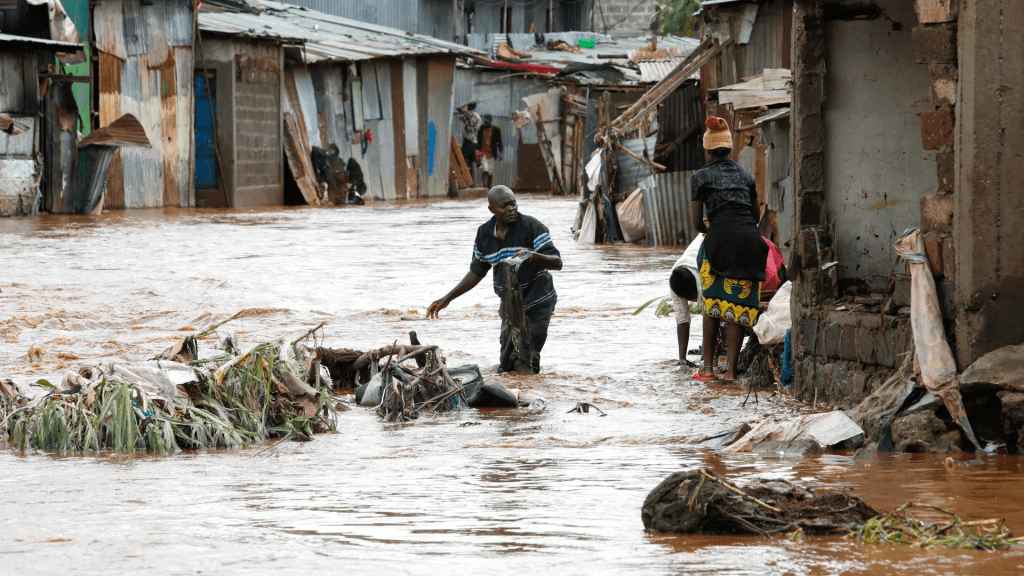
whom to blame during a raining disaster
In addition, the lack of infrastructure exacerbates these problems. The drainage infrastructure in Kenyan cities is grossly inadequate, with systems that are often antiquated, poorly planned, and choked with uncollected trash. In Nairobi’s South C and Thika Road, choked sewers result in flash floods even after light rainfall. Corruption and a lack of enforcement mean that illegal structures are built along waterways, while a lack of funding means that maintenance is neglected. Human Rights Watch observes that slum neighborhoods are hardest hit because of “less solid structures, density, and inadequate sanitation infrastructure.” In Mombasa’s Bombolulu, residents point to government neglect for the failure to dredge drains and enforce building codes. This urban metabolism, in which cities devour resources without a sustainable flow, creates a cycle of poverty, as poverty leads to people being forced into high-risk areas, further entrenching inequality. youtube.com aljazeera.com apjcriweb.org
The effects are catastrophic. Apart from the loss of life and displacement, flooding causes health disasters, with cases of cholera rising from contaminated water, as witnessed in the current outbreaks caused by flooded latrines. Economic costs escalate as businesses close, roads deteriorate, and agricultural production declines, with losses in 2024 already over KES 4 billion (USD 35 million). In Kisumu, flooding along riverine areas affects fishing and commerce on Lake Victoria. Socially, women and children are most affected, either fetching water from danger zones or not attending school, as over 60 roads and bridges were destroyed in the last floods. acaps.org
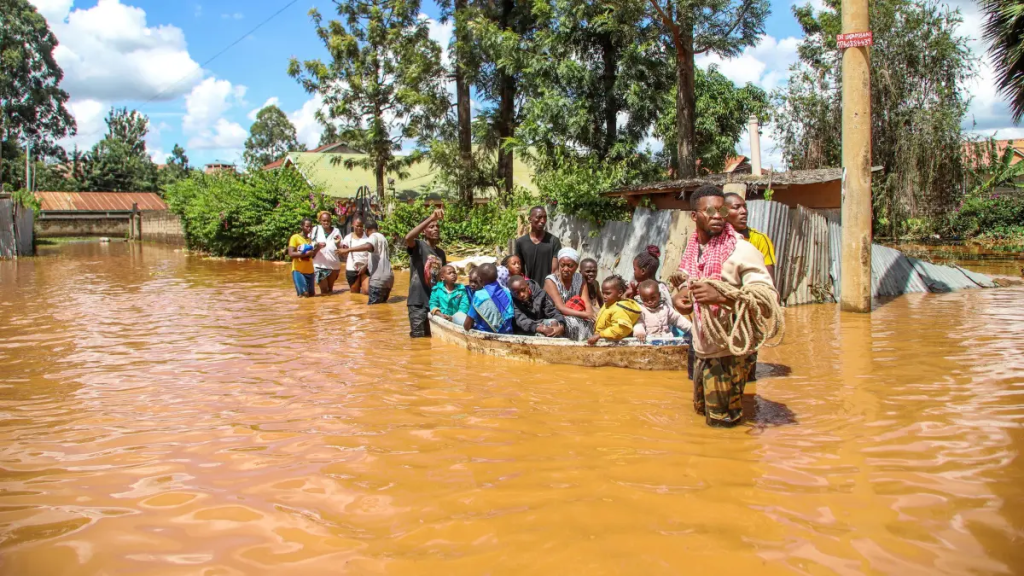
the disaster that awaits the marginalized people
However, there are solutions to this problem. According to the National Climate Change Action Plan, there is a need to ensure that there is urban planning that incorporates green infrastructure such as permeable pavements and wetland restoration. Community-based early warning systems, as tested in Nairobi, help the public to be aware of the risks through the sending of SMS messages. Spending in drainage widening channels and the installation of trash traps can also help to reduce the risks. Reforestation in the catchment areas, zoning, and addressing informal settlements are also important. The UN can provide international assistance to help in the adaptation strategies, but it is up to the local government to prioritize action over words. climateadaptationplatform.com
As Kenya seeks to rise from the floods that ravaged it in 2024, the rains’ test will come annually. If the root causes of floods are not addressed, climate change adaptation with equitable urban development will only mean that cities will continue to be flooded with avoidable danger. It is time to drain dysfunction and build afloat.




 Sure Media Magazine
Leave a comment