
Walls That Speak: Street Art and Political Debate in Bogotá
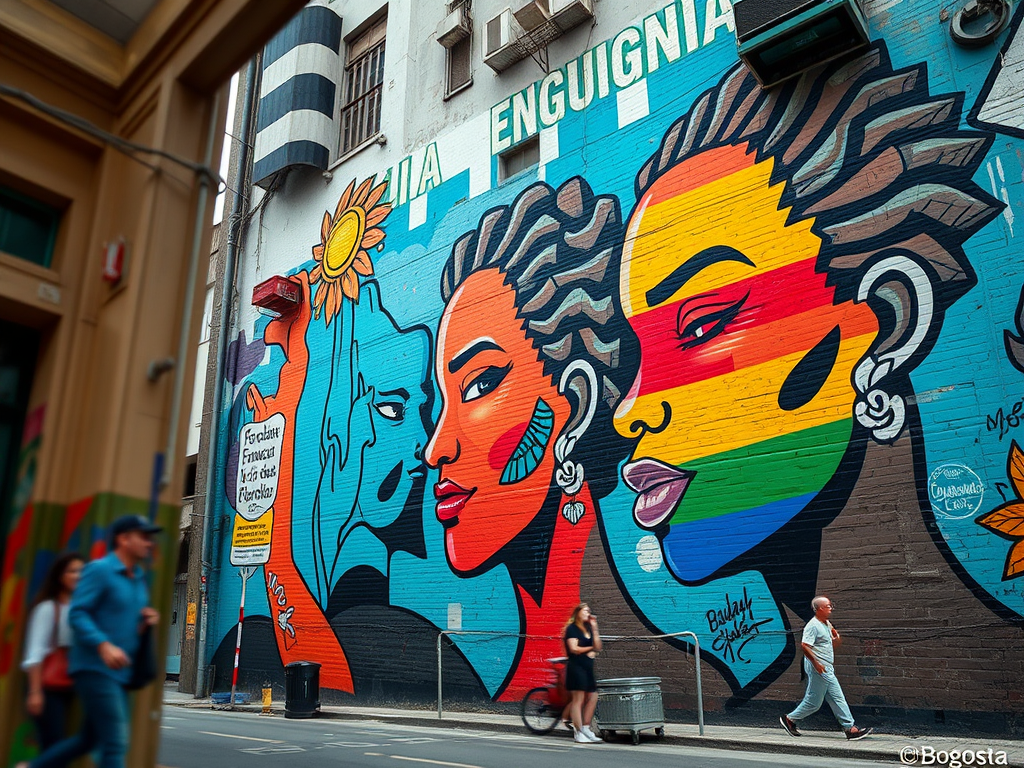
Bogotá’s streets are more than thoroughfares—they are canvases, forums, and archives of civic debate. Across neighborhoods such as La Candelaria, Chapinero, and Ciudad Bolívar, murals, graffiti, and public installations convey messages about social justice, gender equality, urban inequality, and governance. In a city historically marked by political conflict, street art has emerged as a powerful medium for political expression, enabling citizens, particularly youth and marginalized communities, to participate in debates that might otherwise be inaccessible.
From murals commemorating victims of violence to public depictions of feminist and indigenous movements, Bogotá’s walls function as visual forums where ideas circulate and identities are articulated. Street artists deliberately engage with local and global political discourse, creating works that not only provoke reflection but also challenge power structures. Coverage of events such as the annual Bogotá Graffiti Festival and reports in local media reveal how these artistic interventions operate as informal sites of education and civic engagement, shaping the city’s intellectual and cultural landscape.
Street art in Bogotá is characterized by both diversity and intentionality. In Chapinero, murals address LGBTQ+ rights and gender equality, providing a platform for community dialogue on inclusion. In Ciudad Bolívar, murals document social inequalities and urban displacement, offering residents a way to claim space and narrate their experiences. Meanwhile, La Candelaria’s historic streets showcase murals that reinterpret national history through the lens of contemporary social movements. Across these spaces, art functions as a participatory medium, inviting passersby to read, reflect, and engage with ideas—transforming urban infrastructure into instruments of debate.
Researching Bogotá’s street art scene through media coverage, social media platforms, and festival archives highlights how these visual interventions foster intellectual engagement outside traditional institutions. Unlike classrooms, government forums, or formal political organizations, murals are accessible, public, and often participatory. They enable communities to convey complex political ideas visually and poetically, reaching audiences who might not engage with conventional media. In doing so, street art bridges cultural expression and civic discourse, producing a hybrid intellectual and artistic space that reflects the city’s social consciousness.
These murals also contribute to identity formation and collective memory. Artists frequently draw on historical and contemporary events, connecting present-day social struggles to Bogotá’s turbulent past. By visually narrating stories of resistance, resilience, and aspiration, the city’s walls educate, provoke, and inspire, creating a dynamic feedback loop between artist, community, and civic debate. The murals become both a record of public sentiment and a catalyst for new ideas, demonstrating the potential of urban culture to shape political thought.
In a broader Latin American context, Bogotá’s street art mirrors movements across cities like Valparaíso, Buenos Aires, and São Paulo, where public art serves as an arena for debate, activism, and cultural experimentation. By mapping thematic trends, geographic distribution, and artist networks, it is possible to trace how visual culture contributes to political discourse, amplifies marginalized voices, and fosters intellectual communities. Bogotá’s murals thus represent not only artistic expression but also a sophisticated form of civic engagement, blending culture, debate, and social critique in a single urban canvas.
The impact of Bogotá’s street art extends beyond aesthetics. Murals have influenced local policy discussions, inspired community initiatives, and informed educational programs. Social media documentation allows the works to circulate internationally, connecting local debates to global audiences and situating Bogotá as a hub of intellectual and cultural experimentation in the Global South. By examining these visual interventions, one can observe how ideas travel, gain traction, and influence both local and regional discourse.
Ultimately, Bogotá’s street art scene exemplifies how cities themselves can become incubators of ideas. Walls, alleys, and public squares operate as intellectual spaces, fostering dialogue, reflection, and critical engagement in ways that conventional forums cannot replicate. This dynamic underscores the potential of cultural production to shape social and political thought, making Bogotá a living laboratory of visual, civic, and intellectual experimentation. Through analysis of public murals, festival archives, and social media discourse, it becomes clear that street art is not merely decorative—it is a medium for debate, education, and idea formation, reflecting the ingenuity and agency of urban communities across the Global South.




 Sure Media Magazine
Leave a comment