
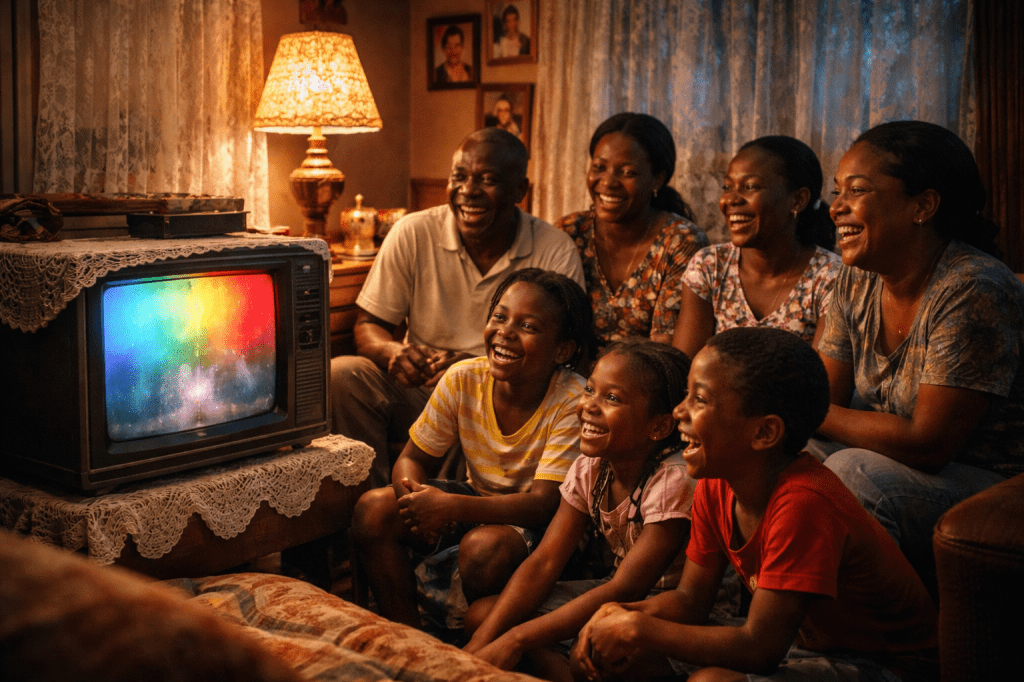
There was a time when television and movies were not just forms of entertainment, but shared experiences that shaped our daily rhythms and social lives. Shows like The Rich Also Cry, Wild Rose, No One But You, Sinbad and the emotionally charged Escrava Isaura were more than programs on a screen they were moments that brought families and neighborhoods together.
After school, children hurried home, not to scroll through phones or stream endless options, but to complete chores quickly and secure a seat before the episode began. Once the opening theme played the world paused. Nothing mattered more than the story unfolding in front of us.
For many families, owning a color television was a luxury. Some parents improvised by buying plastic color covers that were taped over black and white screens, creating the illusion of color. Yet no one complained. The joy was in the storytelling, not the technology. What mattered was that the show was on and everyone was watching.
Beyond our homes, shopping centers often hosted small community cinemas. A white cloth would be hung as a screen and a projector would cast moving images that felt nothing short of magical. These films became part of school compositions, playground debates and endless predictions about what would happen next. Stories did not end when the credits rolled they continued in classrooms, on footpaths and around dinner tables.
Television stations also played a strong educational and cultural role. Programs encouraged imagination, career dreams and curiosity about the wider world. Some shows became national talking points influencing popular culture and even inspiring songs about famous characters such as Carlota. Entertainment was not consumed privately it was lived collectively.
Those years were marked by simplicity and presence. Weekends meant attending events, visiting friends and participating in community life. People showed up for each other. Time felt slower and joy was often found in shared moments rather than individual screens.
Today, the landscape has changed dramatically.
Televisions are affordable, smartphones are everywhere and streaming platforms offer unlimited content. Yet, the excitement of rushing home for a specific episode has largely disappeared. Community cinemas have vanished from shopping centers and discussions about last night’s movie are rare.
Modern life is defined by constant motion. Work demands, economic pressures and digital distractions have reshaped how people spend their time. While technology has increased access to entertainment, it has also reduced the sense of togetherness that once made it meaningful. Families may sit in the same room each focused on a different screen consuming different stories alone.
This shift is not simply about nostalgia for the past. It raises important questions about what is lost when communal experiences disappear. Shared storytelling once strengthened social bonds, created common cultural references and offered moments of collective escape in difficult times.
Progress has brought many benefits but it has also quietly altered how we relate to one another.
Perhaps the lesson is not that we should return to plastic TV covers or white-cloth cinema screens but that we should remember the value of shared experiences. In a fast, digitally driven world, intentionally creating moments to watch, talk, laugh and reflect together may be more important than ever.
Because what made those evenings special was not the screen it was the sense of connection that came with it.





 Sure Media Magazine
Leave a comment