
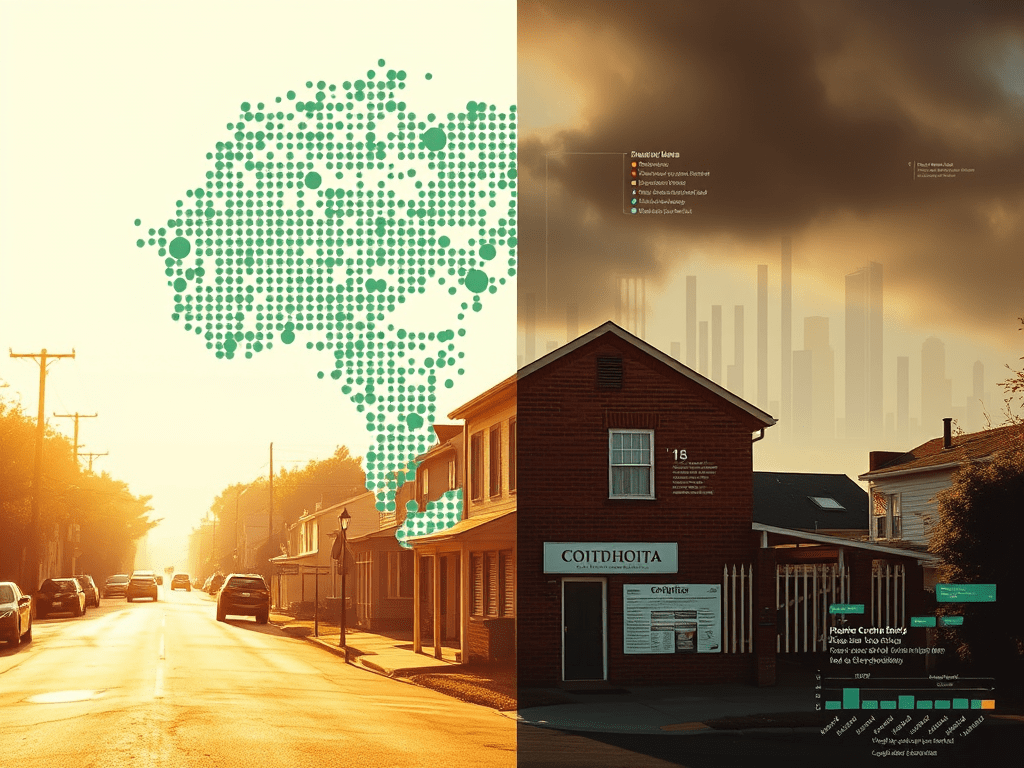
In science, what gets measured often determines what gets fixed. But across medicine, environmental research, and technology, Black and underrepresented communities are frequently absent from the data that shapes policy, funding, and innovation. This absence—sometimes called “data invisibility”—has real consequences, affecting health outcomes, environmental risk, and access to new technologies.
The problem is not that science lacks data, but that it often lacks representative data.
Medical research provides one of the clearest examples. Studies published in journals such as The New England Journal of Medicine and The Lancet have repeatedly shown that Black patients are underrepresented in clinical trials, particularly in studies related to cardiovascular disease, cancer, and pain management. When trial populations skew white, treatment guidelines and drug dosages are calibrated to bodies that do not reflect the full population. The result is misdiagnosis, delayed treatment, and higher mortality rates.
This issue extends beyond medicine. Environmental science often relies on monitoring systems that overlook low-income or predominantly Black neighborhoods. Air quality sensors, flood risk models, and heat-mapping tools are more likely to be deployed in well-funded urban areas, leaving informal settlements and marginalized communities undermeasured. Research from the United States Environmental Protection Agency and global climate institutions shows that communities most exposed to pollution are often the least represented in environmental datasets.
Data invisibility also shapes the digital world. Algorithms trained on incomplete or biased datasets replicate existing inequalities. Facial recognition systems, for example, have been shown to perform significantly worse on darker-skinned faces, a flaw documented in peer-reviewed research by the MIT Media Lab. Similarly, health AI tools trained on predominantly white populations can fail to identify symptoms in Black patients, reinforcing disparities under the guise of technological objectivity.
Yet this gap has not gone unnoticed. Black scientists and researchers have been at the forefront of efforts to correct data bias and expand who is counted. Publicly available research highlights initiatives that center community-based data collection, participatory research models, and open-access datasets designed to reflect diverse populations. These approaches challenge the assumption that scientific objectivity requires distance from lived experience.
In public health, for instance, community-driven research projects have used local surveys, mobile health tools, and neighborhood-level data to document maternal mortality, chronic illness, and environmental exposure in Black communities. By combining scientific rigor with local knowledge, these projects generate data that traditional methods miss.
The implications are profound. When Black communities are excluded from datasets, they become invisible in policy decisions. Funding flows elsewhere. Risks are underestimated. Solutions are misaligned. Conversely, when data reflects lived reality, it becomes a tool for accountability and change.
Clear science communication plays a crucial role here. Translating technical findings into accessible language helps communities understand how data affects them—and empowers them to demand inclusion. Reports from organizations like the World Health Organization and the National Academies emphasize that equitable science requires transparency, representation, and public engagement.
Importantly, data gaps are not always accidental. They reflect historical power structures that determine whose lives are considered worthy of study. Recognizing this does not undermine science; it strengthens it. A more inclusive evidence base leads to better models, better predictions, and better outcomes for everyone.
Science advances not only through discovery, but through correction. Addressing data invisibility is part of that process. By expanding who is counted, science moves closer to its stated goal: understanding the world as it actually is, not as partial datasets suggest it to be.
In making the invisible visible, researchers are not simply adding numbers to spreadsheets. They are reshaping whose experiences matter—and ensuring that the benefits of scientific progress are shared more equitably.




 Sure Media Magazine
Leave a comment