
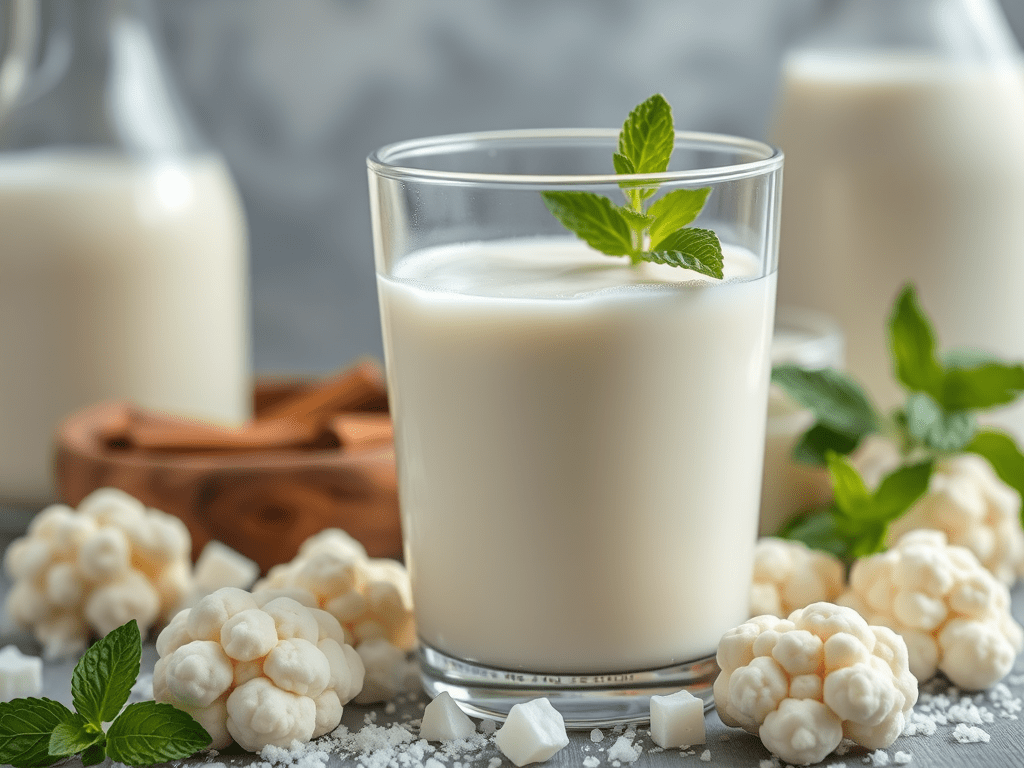
Milk kefir is a fermented dairy drink with a long history and a growing fan base in the modern wellness world. For years, it has been prized for both its refreshing taste and its potential health benefits. Today, it’s recognized as one of the most potent natural probiotic foods available.
What Is Milk Kefir?
Milk kefir is made by fermenting milk with kefir grains—small, cauliflower-like clusters composed of beneficial bacteria and yeasts. Despite their name, kefir grains are not actual grains but a living culture that feeds on the lactose in milk. Over 12 to 24 hours, this fermentation process transforms milk into a tangy, slightly fizzy beverage with a consistency similar to drinkable yogurt.
Kefir can be made from natural cow’s, goat’s, or sheep’s milk, and even from lactose-free milk, though the flavor and texture may vary.
Nutritional Profile
Milk kefir is rich in essential nutrients, including:
- Protein
- Calcium
- Phosphorus
- B vitamins (especially B12 and riboflavin)
- Vitamin K2 (in traditionally fermented kefir)
What truly sets kefir apart, however, is its probiotic diversity. Milk kefir can contain 30–50 different strains of beneficial bacteria and yeasts—far more than most yogurts.
Health Benefits of Milk Kefir
1. Improved Gut Health
The probiotics in milk kefir help balance the gut microbiome, supporting digestion and reducing issues like bloating, constipation, and diarrhea.
2. Enhanced Immune Function
A healthy gut plays a key role in immunity. Kefir’s beneficial microbes may help the body fight infections and reduce inflammation.
3. Easier Digestion of Dairy
During fermentation, much of the lactose in milk is broken down. This makes milk kefir easier to digest for people with mild lactose intolerance.
4. Bone Health
Thanks to its calcium and vitamin K2, milk kefir supports strong bones and may reduce the risk of osteoporosis.
5. Potential Mental Health Support
Research suggests regular consumption of probiotic foods like kefir may support mood and cognitive health.
Taste and Uses
Milk kefir has a tangy, slightly sour flavor—often compared to yogurt with a hint of yeastiness. It can be enjoyed on its own or used in a variety of ways:
- Blended into smoothies
- Poured over cereal or granola
- Used as a base for salad dressings
- Substituted for buttermilk in baking
Making Milk Kefir at Home
One of kefir’s unique advantages is how easy it is to make at home. All that’s needed is milk, kefir grains, and a glass jar. The grains can be reused indefinitely, making homemade kefir both economical and sustainable.
Simply put :
Milk kefir is more than just a trendy health drink—it’s a time-tested, nutrient-dense food with impressive probiotic power. Whether you’re looking to improve digestion, support immunity, or simply enjoy a flavorful fermented beverage, it offers a natural and accessible way to support overall health.






 Sure Media Magazine
Leave a comment