
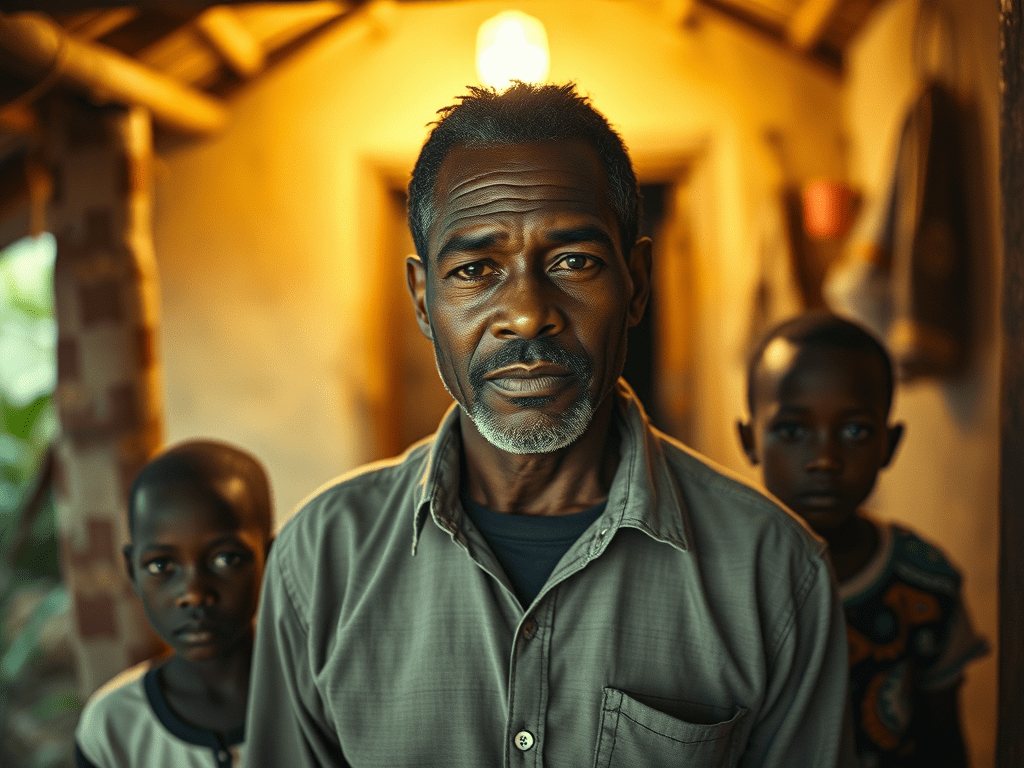
At 40, moving back home in Kenya rarely happens alone.
You don’t return with just a suitcase and bruised pride you return with children. A daughter who needs school shoes. A son whose fees deadline is tomorrow. A family that depends on you, even as you depend on others to survive.
The house feels fuller, louder, tighter. Not just with people but with pressure.
When Employment Disappears, Parenthood Doesn’t
Unemployment in Kenya is brutal at any age. At 40, with children, it becomes existential.
Jobs are scarce. Interviews are few. Age quietly works against you. Employers want “fresh energy,” yet expect years of experience. The gap between qualifications and opportunity widens until hope feels impractical.
But children still wake up hungry. School still demands fees. Life doesn’t pause because your income has.
So you move back home — into your parents’ house, your aunt’s compound, or a relative’s spare room — carrying both responsibility and dependence.
The Psychological Cost of Dependency
Relying on relatives to help pay school fees or provide food reshapes your sense of self.
Asking for help once is humbling. Asking repeatedly becomes emotionally corrosive.
Each request carries shame:
- “Can you help with fees this term?”
- “Can the children eat here today?”
- “Can I borrow fare to go look for work?”
For men, the strain often clashes with deeply rooted expectations of provision. Not being able to support one’s children financially is internalized as failure, even when structural unemployment is the real cause.
For women, the burden is doubled — caregiving remains expected, even without income. Society is quicker to judge unemployed mothers, questioning choices, relationships, and morality.
In both cases, dignity erodes quietly.
Parenting Under Someone Else’s Roof
Living with parents while raising children creates layered tensions.
You are an adult, but not fully autonomous. A parent, but not fully in control. Decisions about discipline, meals, routines, and even schooling are scrutinized or overridden.
Children feel it too. They sense the instability. They hear whispers. They learn early what it means to depend.
Some internalize guilt — believing they are the reason for strain. Others become resentful. Few remain untouched.
The Gendered Reality of Going Back Home
For men, returning home with children can feel like public failure. Community perception is harsh. Respect shifts. Authority within the household weakens.
For women, the judgment is different but relentless — questions about marriage, abandonment, or “poor choices” surface quickly. Single mothers face sharper scrutiny, even when circumstances are complex and beyond control.
Yet both genders share the same quiet fears:
- What happens if my parents get sick?
- What if my relatives can’t help anymore?
- What future am I offering my children?
The Mental Health Toll We Don’t Name
This life produces invisible wounds:
- Chronic anxiety
- Depression masked as irritability or withdrawal
- Insomnia fueled by financial worry
- Loss of confidence and identity
Many parents stop dreaming. Survival replaces aspiration. The future shrinks to the next meal, the next term’s fees.
Mental health support remains inaccessible or stigmatized. Suffering is normalized as resilience.
The Role — and Limits — of the Extended Family
Kenya’s extended family system is both a lifeline and a pressure cooker.
Relatives step in — paying fees, feeding children, sharing space — often at great personal cost. But support comes with conditions, expectations, and eventual fatigue.
Gratitude coexists with humiliation. Help is appreciated, but never neutral.
Still, without this system, many families would collapse entirely.
Redefining Success and Survival
Being unemployed at 40 with children is not laziness. It is not moral failure. It is the intersection of economic collapse, shrinking opportunities, and rising costs of living.
Survival in this context looks different:
- Informal work
- Short-term hustles
- Shared parenting within extended families
- Starting over without savings or safety nets
Progress is slow, uneven, and deeply personal.
What Children Learn From This Season
Children raised in these circumstances learn resilience early — but also precarity.
They witness struggle firsthand. They learn that family matters. They learn that life is not linear. But they also absorb stress that no child should carry.
The challenge is ensuring they inherit strength, not shame.
A Quiet Truth
Going back home at 40 with children is not the end of the road.
It is a pause forced by circumstances — a reminder that adulthood is not immune to collapse, and that rebuilding often happens without applause, privacy, or certainty.
In Kenya, where family remains the final safety net, survival is collective. Dignity is negotiated daily. And hope, though fragile, still finds ways to exist — even in crowded rooms, borrowed meals, and second chances.




 Sure Media Magazine
Leave a comment